
Which industries are legally required to use FMEA?
FMEA is a formal legal or regulatory requirement in the automotive, medical device, aerospace, and nuclear industries. In these sectors, failure to conduct and document FMEA can result in product rejection, loss of certification, regulatory penalties, or liability exposure. The requirement is embedded either directly in law or in the mandatory standards that govern market access.
The industries where FMEA carries the strongest mandatory weight are:
- Automotive: FMEA is required under IATF 16949, the international quality management standard for automotive production. Both Design FMEA (DFMEA) and Process FMEA (PFMEA) are expected as part of the Advanced Product Quality Planning (APQP) process. Suppliers to major OEMs face contractual requirements that mirror these regulatory expectations.
- Medical devices: Under EU Regulation 2017/745 (MDR) and the FDA's Quality System Regulation in the United States, risk analysis is a legal obligation. ISO 14971 is the recognized standard for medical device risk management, and FMEA is the most commonly applied methodology to satisfy it.
- Aerospace and defense: MIL-STD-1629A and SAE ARP5580 establish FMEA as a core analytical requirement for systems used in military and commercial aviation. Airworthiness certification processes conducted by EASA and the FAA rely on failure analysis documentation that FMEA directly supports.
- Nuclear: Safety case requirements in nuclear facilities across Europe and North America mandate systematic failure analysis. FMEA is one of the accepted methodologies for demonstrating that safety-critical systems meet prescribed reliability thresholds.
Outside these industries, FMEA is rarely mandated by statute. However, the line between legally required and practically required can be thin when sector-specific standards are incorporated into contracts, procurement specifications, or certification schemes.
What regulations and standards reference FMEA by name?
Several internationally recognized standards and regulations reference FMEA directly by name or require a methodology that FMEA satisfies. These are not optional guidelines in regulated contexts - they carry compliance weight that links directly to market access, product approval, or certification status.
The most significant references include:
- IATF 16949:2016 - References FMEA explicitly within its risk management and product realization requirements. It is supported by the AIAG-VDA FMEA Handbook, which became the automotive industry standard reference in 2019.
- ISO 14971:2019 - The medical device risk management standard does not mandate FMEA by name, but identifies it as a recognized technique for hazard identification and risk estimation. Regulatory bodies routinely expect FMEA documentation as evidence of compliance.
- IEC 60812:2018 - The international standard specifically dedicated to FMEA methodology. It defines procedures, terminology, and documentation requirements for applying FMEA across industries. Referencing this standard in a quality plan signals methodological rigor to auditors and customers.
- MIL-STD-1629A - The US military standard that established FMEA as a formal analytical procedure for defense systems. Though primarily a defense procurement document, its influence extends into commercial aerospace and critical infrastructure sectors.
- EU Machinery Directive 2006/42/EC and its successor Regulation (EU) 2023/1230 - These do not name FMEA explicitly, but require manufacturers to conduct risk assessments for machinery placed on the European market. FMEA is a widely accepted method for satisfying this obligation.
Understanding which standards apply to your product or process is the starting point for determining whether FMEA is a compliance obligation or a best-practice choice.
Is FMEA required in industrial manufacturing and process industries?
In general industrial manufacturing and process industries such as chemicals, water treatment, oil and gas, and food production, FMEA is not universally required by law. However, it is strongly expected by quality frameworks, insurance underwriters, and major industrial customers, and in certain process safety contexts it functions as a de facto requirement.
Several factors make FMEA effectively mandatory in industrial settings even without an explicit legal obligation:
- ISO 9001 quality management: ISO 9001:2015 requires organizations to identify risks and opportunities and take action to address them. While it does not prescribe FMEA, auditors frequently expect documented risk analysis for processes where failures have significant consequences. FMEA is the most recognized tool for providing that evidence.
- Process safety regulations: The EU Seveso III Directive (Directive 2012/18/EU) and equivalent legislation in other jurisdictions require major hazard sites to produce Safety Reports demonstrating systematic hazard identification. FMEA, alongside HAZOP, is a recognized methodology for meeting this requirement in chemical and petrochemical facilities.
- Customer and supply chain requirements: Tier-1 suppliers to automotive, aerospace, or defense primes often cascade FMEA requirements down the supply chain. A component manufacturer supplying a regulated industry may face contractual FMEA obligations even if no direct regulatory mandate applies to them.
- Insurance and liability: Industrial insurers increasingly request evidence of systematic failure analysis as part of risk assessment. An organization that cannot demonstrate structured failure mode analysis after an incident faces significant liability exposure.
For rotating equipment-intensive industries such as oil and gas, mining, and water and wastewater treatment, the practical case for FMEA is reinforced by the cost of unplanned downtime and the safety consequences of equipment failure. Even where it is not legally mandated, the risk of not conducting it often outweighs the effort of doing so.
What happens if you skip FMEA when it is required?
Skipping FMEA when it is a regulatory or contractual requirement carries serious consequences ranging from product rejection and certification loss to legal liability and financial penalties. The specific consequences depend on the industry, the applicable standard, and whether a failure event occurs that could have been identified through proper analysis.
The most significant risks of non-compliance include:
- Loss of certification or market access: In automotive, a supplier without documented FMEA cannot achieve IATF 16949 certification. Without that certification, major OEMs will not qualify them as an approved supplier. In medical devices, absent risk documentation can result in CE marking refusal or FDA import alerts.
- Regulatory enforcement action: Regulatory bodies in the medical device and aerospace sectors have authority to issue warning letters, mandate product recalls, or impose fines when required documentation is missing or inadequate.
- Liability exposure after a failure event: If a product or system fails and causes harm, the absence of FMEA documentation is treated as evidence of inadequate due diligence. Courts and regulators examine whether foreseeable failure modes were identified and addressed. A missing FMEA significantly weakens a manufacturer's legal defense.
- Contract termination: Industrial supply contracts increasingly include quality plan requirements. A customer audit that finds missing FMEA documentation can trigger non-conformance reports, corrective action demands, or contract termination clauses.
- Operational consequences: Beyond regulatory risk, skipping FMEA means failure modes that could have been identified in advance will instead be discovered during operation. In asset-intensive industries, this translates directly into unplanned downtime, emergency maintenance, and the cascading costs that follow.
When should a company use FMEA even if it is not legally required?
A company should apply FMEA whenever the cost of an undetected failure exceeds the cost of conducting the analysis. This threshold is reached quickly in any operation that depends on rotating equipment, continuous production processes, or safety-critical systems - regardless of whether a regulator has mandated it.
The strongest cases for voluntary FMEA adoption include:
- High-consequence failure environments: Where equipment failure causes production stoppages, safety incidents, or environmental damage, proactive failure analysis is a rational investment. The cost of an unplanned shutdown in a continuous process plant routinely exceeds the cost of a thorough FMEA by an order of magnitude.
- Asset lifecycle planning: Organizations applying ISO 55000 asset management principles use FMEA as a tool for identifying which failure modes warrant predictive maintenance, condition monitoring, or design modification. This directly supports decisions about maintenance intervals, spare parts strategy, and capital replacement planning.
- Reliability-centred maintenance programs: FMEA is the analytical foundation of RCM. Companies implementing RCM in asset-intensive environments use it to move from time-based to condition-based maintenance, reducing both maintenance spend and unplanned failures simultaneously.
- New equipment or process introduction: Before commissioning new rotating equipment or modifying an existing process, FMEA identifies potential failure modes before they manifest in operation. This is particularly valuable during the design and procurement phase, when changes are still low-cost to implement.
- Supplier and procurement risk management: Requiring FMEA documentation from equipment suppliers provides assurance that failure modes have been systematically considered in the design. It also creates a shared analytical baseline for maintenance planning and spare parts specification.
The most operationally mature organizations treat FMEA not as a compliance exercise but as a structured thinking tool that improves every decision in the asset lifecycle. The question is not whether you can afford to do it, but whether you can afford the failures that happen without it.
How Zytec Supports Failure Mode Reduction in Rotating Equipment
FMEA helps organizations identify failure modes before they cause damage. But the most effective risk reduction strategy eliminates failure modes by design rather than managing them through analysis and maintenance procedures alone. That is exactly the engineering principle behind Zytec's non-contact magnetic drives.
For rotating equipment applications, Zytec's technology directly removes the failure modes that FMEA most commonly surfaces in drivetrain assessments:
- No wear components: Zytec's non-contact drives contain no elastomers, no lubrication systems, no gear teeth, and no friction elements. The failure modes associated with elastomer degradation, lubricant contamination, and wear element fatigue are eliminated from the drivetrain entirely.
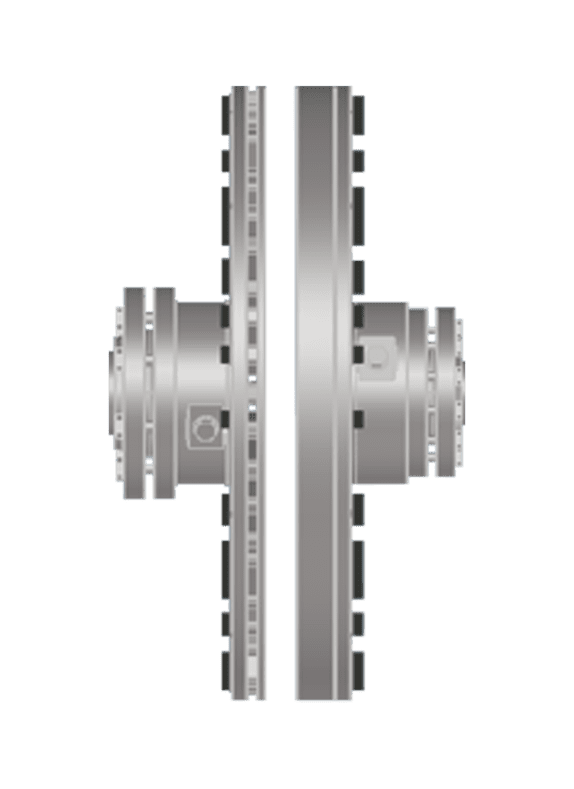
- Misalignment tolerance by design: Dynamic misalignment is consistently identified in FMEA as a root cause of bearing and seal failures. Zytec's F-TORQ transmits torque across an air gap, meaning operational misalignment generates no reaction forces in connected bearings or seals.
- Reduced maintenance intervention risk: Each maintenance intervention on rotating equipment is a probability event for human error. By eliminating scheduled coupling element replacement and laser alignment requirements, Zytec structurally reduces the number of these events over the asset's life, directly lowering the risk profile that FMEA is designed to expose.
- ATEX-rated operation without electronic ignition risk: In hazardous area applications, the F-TORQ.EX series eliminates the ignition risks associated with friction, elastomer hot spots, and lubricant failure that conventional couplings introduce into ATEX Zone 1 and Zone 2 environments.
- Extended PF curve: By removing coupling-induced torsional oscillations and vibration from the drivetrain, Zytec technology extends the time between detectable degradation onset and functional failure across all downstream components, giving maintenance teams more lead time to act.
If your FMEA process is surfacing recurring failure modes in rotating equipment, the next step is to evaluate whether those failure modes can be engineered out rather than managed. Contact Zytec to discuss how non-contact drive technology can reduce the failure modes on your critical rotating assets.
Frequently Asked Questions
How do I determine which FMEA standard applies to my specific product or process?
Start by identifying the regulatory framework governing your target market and industry sector. Map your product or process against the standards listed by your certification body, customer contracts, and any applicable EU directives or national regulations. If you supply into a regulated supply chain — such as automotive or aerospace — your Tier-1 customer's quality plan will typically specify the applicable standard directly, such as AIAG-VDA for automotive or MIL-STD-1629A for defense applications.
What is the difference between a Design FMEA and a Process FMEA, and do I need both?
A Design FMEA (DFMEA) analyzes potential failure modes inherent in the product design itself — such as material selection, geometry, or component tolerances — before manufacturing begins. A Process FMEA (PFMEA) focuses on failures that can occur during the manufacturing or assembly process, regardless of whether the design is sound. In regulated industries like automotive, both are typically required as part of APQP, since a product can be well-designed but still fail due to process variation, and vice versa.
How often should an existing FMEA be reviewed and updated?
An FMEA should be treated as a living document, not a one-time compliance exercise. It must be reviewed whenever a design change, process modification, new failure event, or change in operating conditions occurs. In practice, most regulated industries also expect periodic scheduled reviews — typically aligned with product lifecycle milestones, major maintenance events, or audit cycles — to ensure the analysis remains current and reflects real-world operating experience.
Can a small or medium-sized manufacturer realistically implement FMEA without a dedicated reliability engineering team?
Yes, and many do. FMEA is a structured team exercise, not a specialist-only activity — it is most effective when conducted collaboratively by people with direct knowledge of the design, process, or equipment, including maintenance technicians, operators, and engineers. Starting with a focused, functional FMEA on your highest-consequence assets or processes is far more valuable than attempting a comprehensive program all at once. Tools such as IEC 60812 provide clear procedural guidance, and software platforms exist to support documentation without requiring deep reliability engineering expertise.
What is the most common mistake organizations make when conducting FMEA for the first time?
The most common mistake is treating FMEA as a documentation exercise rather than an analytical one — filling in the template to satisfy an audit rather than genuinely working through failure scenarios as a cross-functional team. This produces FMEAs that look complete on paper but fail to surface the failure modes that actually matter. A related mistake is assigning Risk Priority Numbers (RPNs) without following through on the recommended actions, which leaves identified risks unmitigated and the organization no better protected than before the analysis was done.
How does FMEA interact with a Reliability-Centred Maintenance (RCM) program in practice?
FMEA is the analytical engine that drives RCM. The process works by first identifying all functional failure modes through FMEA, then using the consequences and detectability of each failure mode to determine the most appropriate maintenance strategy — whether predictive, preventive, condition-based, or run-to-failure. Without a rigorous FMEA as its foundation, an RCM program cannot make defensible decisions about maintenance task selection, intervals, or resource allocation, and risks defaulting to the same time-based schedules it was designed to replace.
If FMEA identifies a high-risk failure mode, what are the options for addressing it beyond adding a maintenance task?
Maintenance tasks are the last line of defense, not the first. The engineering hierarchy for addressing a high-risk failure mode runs from elimination — removing the failure mode through redesign or technology substitution — through mitigation via design safeguards, to detection and monitoring, and finally to scheduled maintenance. Where FMEA consistently surfaces the same failure modes in rotating equipment, for example, the most cost-effective long-term response is often to engineer out the root cause entirely rather than managing the symptom through recurring maintenance interventions.