What causes engine bearings to fail?
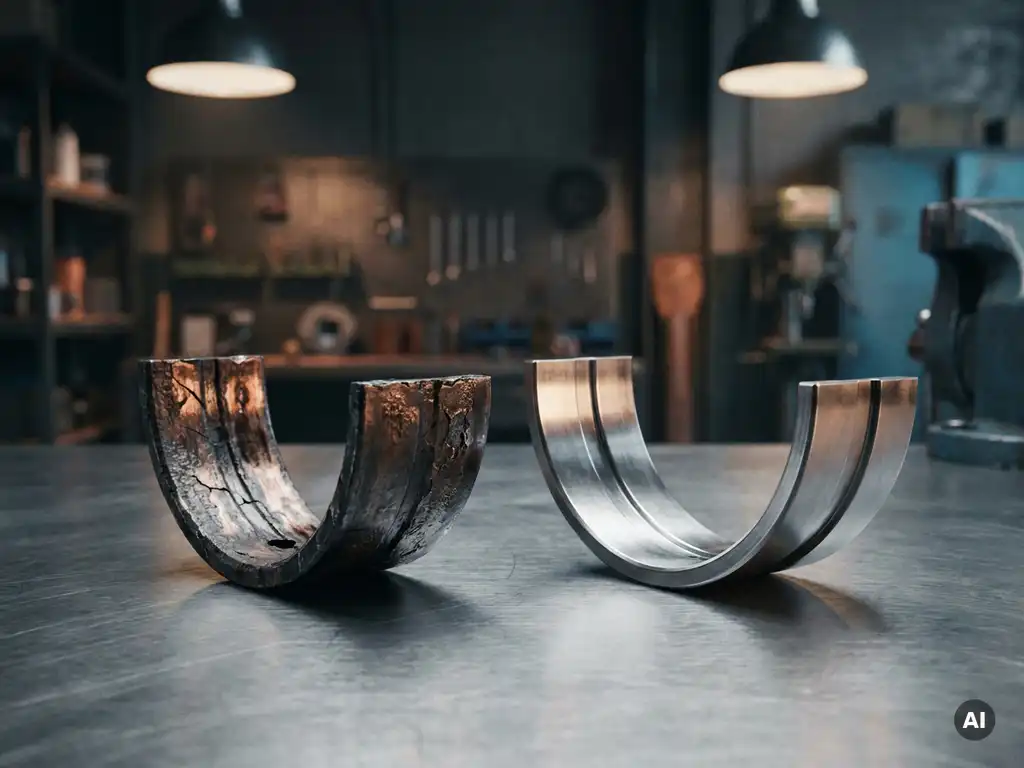
Engine bearings fail primarily due to inadequate lubrication, contaminated oil, or excessive mechanical load. When the oil film between the bearing and the rotating shaft breaks down, metal-to-metal contact occurs, generating heat and wear that progressively destroys the bearing surface. Most failures trace back to one of a handful of root causes that compound over time.
The most common cause is oil starvation. This can happen when oil levels run too low, when an oil pump fails, or when a blocked oil passage prevents lubricant from reaching the bearing. Without a consistent oil film, the bearing surface degrades rapidly. Even brief episodes of oil starvation can score the bearing material and begin a wear cycle that accelerates with every subsequent engine start.
Contaminated oil is the second major culprit. Dirt, metal particles, and combustion byproducts suspended in degraded oil act as abrasives. When these particles circulate through the lubrication system, they embed in the soft bearing material or scratch the hardened journal surface of the crankshaft. This is why neglected oil change intervals are so frequently linked to premature bearing failure.
Other contributing factors include:
- Incorrect bearing clearances during assembly, leading to insufficient oil film thickness
- Overloading the engine through sustained high-rpm operation or towing beyond rated capacity
- Coolant or fuel contamination of the oil, which dilutes its viscosity and reduces its load-carrying ability
- Corrosion from moisture ingress, particularly in engines that sit idle for extended periods
- Detonation or pre-ignition, which creates abnormal pressure spikes that hammer the bearings
How much does engine bearing replacement cost?
Engine bearing replacement typically costs between $1,500 and $4,500 for most passenger vehicles, though complex cases involving crankshaft damage or full engine rebuilds can push costs significantly higher. The wide range reflects differences in labor time, parts pricing, and the extent of secondary damage discovered once the engine is disassembled.
Labor is the dominant cost driver. Accessing engine bearings requires removing the oil pan at minimum for main and rod bearings, and often requires partial or full engine disassembly. A straightforward rod bearing replacement on an accessible engine might take 8 to 12 hours of shop time. At typical labor rates of $100 to $150 per hour, that alone accounts for $800 to $1,800 before parts are factored in.
Parts costs
Bearing sets themselves are not particularly expensive. A full set of main and rod bearings for a common four-cylinder engine typically costs $50 to $200 in parts. However, if the crankshaft journals are scored or out of tolerance, the crankshaft must either be machined (adding $200 to $500) or replaced entirely, which can cost $300 to $1,500 or more depending on the engine. Connecting rod damage adds further expense.
Additional variables that affect the final bill
- Vehicle make and model: Luxury, performance, and diesel engines carry higher parts and labor costs
- Engine configuration: V8 and V6 engines have more bearings and are more labor-intensive than inline four-cylinder units
- Shop rates: Dealer labor rates are typically higher than independent specialist rates
- Extent of damage: If the engine has been run with bad bearings for an extended period, additional components such as the oil pump, camshaft, or cylinder walls may also need attention
What are the symptoms of worn or damaged engine bearings?
The most recognizable symptom of worn engine bearings is a deep, rhythmic knocking sound from the engine — often described as a "rod knock" — that increases in frequency with engine speed. Other warning signs include low oil pressure readings, excessive oil consumption, and metallic particles in the oil. Catching these symptoms early dramatically reduces repair costs.
A low oil pressure warning light that illuminates during normal operation, especially at idle, is a serious indicator that bearing clearances have worn beyond specification. As bearings wear, the gap between the bearing surface and the journal widens, allowing oil to escape more freely and dropping system pressure.
Common symptoms to watch for include:
- Knocking or rumbling noise from the lower engine, most pronounced under load or at low rpm
- Oil pressure warning light activating at idle or during normal driving
- Metallic debris visible during an oil change, either in the drained oil or on the drain plug magnet
- Excessive oil consumption without visible external leaks
- Vibration felt through the engine at idle that was not previously present
It is worth noting that these symptoms can overlap with other engine problems, including worn main bearings, timing chain issues, or low oil level. A mechanic should perform an oil pressure test and inspect the oil for metal contamination before confirming a bearing diagnosis.
Can you drive a car with bad engine bearings?
No — driving with confirmed bad engine bearings is not advisable and can turn a repairable problem into a total engine failure. Once bearing surfaces begin to deteriorate, the damage accelerates with every mile driven. What starts as a fixable bearing replacement can quickly escalate to a destroyed crankshaft, damaged connecting rods, or a seized engine requiring full replacement.
The risk compounds because a failing bearing disrupts oil circulation to surrounding components. As the bearing breaks down, metal particles enter the oil supply and circulate throughout the engine, damaging other bearings, the oil pump, and cylinder walls. Running the engine in this condition essentially uses contaminated oil as a grinding compound against precision-machined surfaces.
If you hear a knock or see a low oil pressure warning, the safest course of action is to stop driving immediately, have the vehicle towed to a workshop, and avoid starting the engine again until a diagnosis is made. Every additional mile driven with a known bearing problem increases the likelihood that a $2,000 repair becomes a $5,000 engine replacement.
Is it cheaper to replace the engine or repair the bearings?
In most cases, repairing the bearings is cheaper than replacing the entire engine — but only if the damage is caught before the crankshaft and other major components are destroyed. Once the engine has been run extensively with failed bearings, the cost of repair can approach or exceed the cost of a remanufactured or used engine replacement, making the comparison less straightforward.
A remanufactured engine for a common passenger vehicle typically costs between $2,500 and $5,000 installed, while a used engine from a salvage yard might cost $1,000 to $3,000 installed, depending on mileage and availability. These figures often compete directly with the cost of a full in-situ bearing repair on a heavily damaged engine.
The decision generally comes down to three factors:
- Crankshaft condition: If the crankshaft is undamaged or can be machined within tolerance, bearing repair is almost always more cost-effective. If the crankshaft needs replacement, the economics shift significantly.
- Overall engine condition: An engine with high mileage and other wear-related issues may not justify the cost of a precision bearing repair. A replacement engine may offer better value and reliability.
- Vehicle value: If the total repair cost approaches or exceeds the market value of the vehicle, replacement or sale may be the more rational choice.
An experienced mechanic should perform a full assessment after disassembly before committing to either path. Quotes for both options allow for an informed comparison.
How can premature engine bearing wear be prevented?
The most effective way to prevent premature engine bearing wear is to maintain consistent oil changes using the correct oil specification, check oil levels regularly, and address any oil leaks or pressure warnings immediately. Most engine bearing failures are preventable with disciplined maintenance rather than complex or expensive interventions.
Oil is the only thing standing between the bearing surface and the rotating crankshaft journal. When oil degrades, loses viscosity, or becomes contaminated, its ability to maintain a protective film under load diminishes. Following the manufacturer's recommended oil change interval — and using the specified viscosity grade — is the single highest-impact preventive measure available.
Practical prevention steps include:
- Check oil level monthly and top up as needed — never allow the level to drop below the minimum mark
- Change oil and filter on schedule, or more frequently in severe-duty conditions such as towing, short trips, or dusty environments
- Use the manufacturer-specified oil viscosity — substituting a thinner or thicker grade affects film strength at operating temperatures
- Warm the engine gently before high loads — cold oil is thicker and circulates more slowly, leaving bearings temporarily under-lubricated at startup
- Address oil leaks promptly — even small leaks reduce the total oil volume available for lubrication
- Respond immediately to warning lights — a low oil pressure warning is an emergency, not a reminder
- Use quality oil filters — cheap filters with inadequate bypass valves can allow unfiltered oil to circulate when the filter is cold or partially blocked
For high-performance or high-mileage engines, periodic oil analysis can detect metal contamination before it reaches levels that cause audible damage, providing an early warning that bearing wear is occurring.
How Zytec's non-contact drives address rotating equipment wear at its source
Engine bearing failures in vehicles illustrate a universal problem in rotating machinery: wherever mechanical contact exists between moving parts, wear is inevitable. In industrial settings, this same principle drives enormous maintenance costs, unplanned downtime, and shortened component life across pumps, fans, compressors, and conveyors.
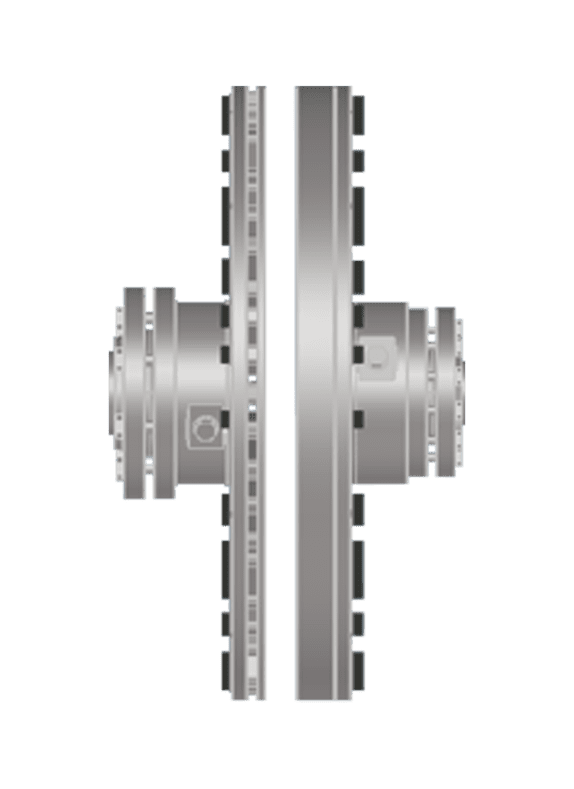
Zytec's non-contact magnetic drives eliminate this contact entirely. Rather than transmitting torque through physical coupling between the motor and driven equipment, Zytec's technology uses powerful magnets to transfer power across an air gap. The result is a fundamentally different wear profile:
- No coupling wear components — no elastomers, no gear teeth, no friction elements that degrade over time
- No alignment-induced bearing overload — dynamic misalignment is absorbed across the magnetic gap rather than transmitted into bearings and seals
- Vibration reduction up to 80% — lower vibration means extended bearing and seal life throughout the drivetrain
- 20+ year maintenance-free coupling lifespan — no scheduled element replacement, no lubrication, no laser realignment
- Energy savings up to 50% — with payback periods often under two years
For industrial operations where bearing failures and coupling-related downtime represent a significant share of maintenance spend, Zytec's non-contact drives offer a structural solution rather than a recurring repair cycle. Explore Zytec's product range to find out how magnetic drive technology can reduce your total cost of ownership and eliminate the root causes of rotating equipment wear in your facility.
Frequently Asked Questions
How do I know if my engine knock is a bearing issue or something else?
A bearing-related knock typically produces a deep, repetitive thudding sound that changes in rhythm with engine speed — it speeds up as you rev the engine and may be most noticeable at idle or under load. By contrast, a lighter, higher-pitched ticking often points to valve train issues, while a knock that only appears on cold starts and disappears quickly may indicate piston slap rather than bearing failure. The most reliable way to confirm a bearing diagnosis is to have a mechanic perform an oil pressure test and inspect the drained oil or drain plug magnet for metallic debris — both are strong indicators of bearing wear.
What happens if I ignore a low oil pressure warning light and keep driving?
Ignoring a low oil pressure warning is one of the fastest ways to turn a manageable repair into a total engine loss. Without adequate oil pressure, the protective film between your bearings and crankshaft journals collapses within seconds, causing direct metal-to-metal contact that generates extreme heat and accelerates wear exponentially. In severe cases, a connecting rod can break through the engine block — a catastrophic failure that makes the engine irreparable. Treat a low oil pressure warning as an emergency: pull over safely, shut the engine off immediately, and do not restart it until the cause has been identified.
Can engine bearings be repaired as a DIY job, or does this always require a professional?
Engine bearing replacement is a precision job that demands specialized tools, a clean environment, and exact measurements — making it unsuitable for most home mechanics without significant experience in engine rebuilding. Bearing clearances must be measured with plastigage or a micrometer to within thousandths of an inch, and incorrect installation torque or contamination during assembly can cause the new bearings to fail almost immediately. While a skilled and experienced DIYer with the right equipment can technically perform the work, the consequences of errors are severe enough that professional shop work is strongly recommended for the vast majority of vehicle owners.
How long does engine bearing replacement typically take at a shop?
A straightforward rod or main bearing replacement on an accessible four-cylinder engine generally takes between 8 and 15 hours of shop time, which often means your vehicle will be in the shop for two to four business days. More complex jobs — such as those involving crankshaft machining, V6 or V8 engines, or engines mounted in tight bays — can extend that timeline to a week or more. It is worth asking your shop whether they can perform crankshaft inspection and machining in-house or need to send it out, as that step alone can add several days to the turnaround.
What oil change interval should I follow to best protect my engine bearings?
The safest approach is to follow your vehicle manufacturer's recommended interval — typically found in the owner's manual — and to shorten that interval if you regularly operate in severe-duty conditions such as frequent towing, stop-and-go city driving, short trips under 10 miles, or dusty environments. For most modern engines using full synthetic oil, this means an interval of 5,000 to 10,000 miles, but older engines or those with high mileage often benefit from more frequent changes at 3,000 to 5,000 miles. Regardless of mileage, oil should also be changed if it appears black and gritty or if the vehicle has sat unused for more than six months, as oil degrades chemically even without use.
Is it worth repairing engine bearings on a high-mileage vehicle?
The answer depends on the overall condition of the engine and the vehicle's market value relative to the repair cost. If the engine has high mileage but is otherwise in good mechanical condition — good compression, no excessive oil consumption from worn rings or valve seals, and no other major issues — a bearing repair can extend the engine's life significantly and may be worth the investment. However, if the engine has multiple wear-related problems or the repair cost approaches the vehicle's resale value, a used or remanufactured engine replacement — or even selling the vehicle — may make more financial sense. Getting a full mechanical assessment from a trusted mechanic before committing to either path is always the right first step.
Can using the wrong engine oil viscosity actually damage my bearings?
Yes — using an oil viscosity that differs from the manufacturer's specification can meaningfully affect bearing protection, particularly at startup and under high load. Oil that is too thin may not maintain a sufficient film thickness between the bearing and journal under high temperatures or heavy loads, accelerating wear. Oil that is too thick circulates more slowly on cold starts, leaving bearings temporarily starved of lubrication during the critical first seconds of operation. Always use the viscosity grade specified on the oil filler cap or in the owner's manual, and if you are unsure, consult a mechanic before switching grades — especially on turbocharged or high-performance engines where bearing tolerances are tighter.