Uptime monitoring is the continuous tracking of whether industrial equipment is operational and performing within acceptable parameters. It gives facilities a real-time view of machine availability so that problems can be detected and addressed before they result in unplanned shutdowns. The sections below answer the most common questions about how uptime monitoring works, what it measures, and how industrial facilities can use it to protect production.
How does uptime monitoring work in industrial settings?
Uptime monitoring works by collecting continuous data from sensors and control systems attached to rotating equipment, then comparing that data against defined thresholds to determine whether a machine is running, degraded, or stopped. When a deviation is detected, the system triggers an alert so maintenance teams can respond before a failure occurs.
In practice, sensors are installed on motors, pumps, fans, compressors, and other critical assets to measure parameters such as vibration, temperature, current draw, and run time. This data flows into a monitoring platform, either on-site or cloud-based, where it is logged and analyzed. The platform maintains a continuous record of each machine's operational state, calculating availability percentages and flagging anomalies in real time.
Most industrial uptime monitoring setups operate on three layers. The first is data acquisition, handled by sensors, PLCs, and SCADA systems. The second is data processing, where algorithms identify patterns and deviations. The third is alerting and reporting, where maintenance teams and plant managers receive actionable notifications. Together, these layers transform raw machine data into a structured picture of equipment uptime across an entire facility.
What metrics does uptime monitoring actually track?
Uptime monitoring tracks a combination of availability, performance, and health indicators. The core metrics are machine availability (the percentage of scheduled time a machine is operational), Mean Time Between Failures (MTBF), Mean Time To Repair (MTTR), and Overall Equipment Effectiveness (OEE). Supporting metrics include vibration levels, bearing temperature, current signature, and air gap or alignment drift.
Each metric serves a specific purpose. MTBF tells you how reliable a machine is over time. MTTR tells you how quickly your team recovers from failures. OEE combines availability, performance rate, and quality to give a single efficiency score. These three together are the foundation of any serious industrial uptime program.
Beyond the headline numbers, effective monitoring also tracks leading indicators, the early warning signals that precede failure. Vibration amplitude trending upward, bearing temperatures rising gradually, or increased current draw under the same load conditions are all signs that something is changing inside a machine. Capturing these trends is what separates reactive monitoring from genuinely useful downtime prevention.
What's the difference between uptime monitoring and predictive maintenance?
Uptime monitoring tells you whether equipment is running. Predictive maintenance uses the data collected during monitoring to forecast when a failure is likely to occur. Uptime monitoring is the foundation; predictive maintenance is what you build on top of it once you have enough data and analytical capability in place.
The distinction matters operationally. A basic uptime monitoring system records that a pump ran for 22 hours out of a 24-hour period and flags the two-hour gap as downtime. A predictive maintenance system analyzes the vibration trend from that pump over the past three months and calculates that bearing wear is progressing at a rate that suggests failure within the next six weeks. One describes what happened; the other anticipates what will happen.
In practice, most industrial facilities begin with rotating equipment monitoring focused on availability and then layer in predictive analytics as data matures. The two approaches are complementary rather than competing. Predictive maintenance without reliable uptime data has no baseline to predict from, and uptime monitoring without predictive analysis leaves value on the table by only detecting problems after they have already affected production.
What causes poor uptime in rotating equipment?
Poor uptime in rotating equipment is most commonly caused by mechanical wear, misalignment, inadequate lubrication, vibration-induced fatigue, and maintenance-induced failures during routine interventions. These failure modes compound each other, meaning a machine suffering from misalignment will also experience accelerated bearing and seal wear, which in turn increases vibration and accelerates further degradation.
Misalignment is one of the most persistent contributors to low machine availability. Industry experience consistently identifies misalignment as responsible for a substantial share of rotating machinery failures. Even when a machine is correctly aligned during installation, thermal expansion, pipe strain, and foundation movement during operation cause the alignment condition to drift. Conventional mechanical couplings transmit these misalignment forces directly into bearings and seals, shortening their service life.
Maintenance interventions themselves are a significant but often underestimated cause of downtime. Every time a technician opens a machine for inspection, replaces a coupling element, or re-aligns a drivetrain, there is a probability of error. Incorrect bolt torque, imperfect reassembly, or residual misalignment after realignment all introduce new failure modes. Reducing the number of required interventions is therefore a direct strategy for improving equipment uptime, not just a cost-saving measure.
Other common causes include electrical faults in motors, process-related overloads, inadequate cooling, and the gradual aging of wear components such as elastomers, seals, and lubricated gear teeth. Each of these failure pathways generates a detectable signal before the machine fails, which is precisely why continuous monitoring adds so much value.
How can industrial facilities improve equipment uptime?
Industrial facilities improve equipment uptime by combining continuous condition monitoring with engineering changes that reduce the underlying causes of failure. The most effective approach addresses both the detection layer and the root cause simultaneously, rather than relying on faster response to failures that should not be occurring in the first place.
Practical steps to improve uptime include:
- Install condition monitoring sensors on all critical rotating equipment to establish baselines and detect early degradation signals
- Define alert thresholds based on equipment-specific operating conditions rather than generic defaults
- Reduce unnecessary maintenance interventions by extending inspection intervals where condition data supports it
- Address misalignment at the design level rather than relying solely on precision alignment procedures that degrade during operation
- Track MTBF and MTTR trends over time to identify which assets consume the most maintenance resources and target them for engineering improvement
- Adopt reliability-centered maintenance principles so that maintenance schedules are driven by condition data rather than fixed time intervals
Facilities that achieve the highest machine availability rates typically combine real-time monitoring with drivetrain engineering choices that reduce wear, vibration, and alignment sensitivity. Eliminating mechanical contact points in couplings, for example, removes an entire category of failure modes and extends the PF curve, giving monitoring systems more time to detect and respond to developing issues elsewhere in the drivetrain.
What is a good uptime percentage for industrial equipment?
A good uptime percentage for industrial equipment is generally considered to be 90% or above, with world-class operations in continuous process industries targeting 95% to 99% for critical assets. The right benchmark depends on the type of equipment, the industry, and whether the figure is measured against calendar time or scheduled production time.
Context matters significantly here. A pump in a water treatment facility running 24 hours a day, 365 days a year has a very different availability requirement than a conveyor in a manufacturing plant that operates one shift. Comparing raw availability percentages without accounting for scheduled downtime, planned maintenance windows, and production profiles leads to misleading conclusions.
A more useful way to evaluate uptime vs downtime performance is to track trends over time rather than comparing a single number against an industry average. If a facility's average availability for centrifugal pumps improves from 87% to 94% over two years following the introduction of condition monitoring and drivetrain improvements, that trend is a meaningful indicator of progress regardless of where the absolute number sits relative to a benchmark.
For critical assets where unplanned downtime carries severe production or safety consequences, the target should be defined by the cost of failure rather than industry norms. When a single unplanned shutdown costs more than a full year of monitoring investment, the economic case for pushing availability toward 99% is straightforward.
How Zytec helps improve industrial uptime
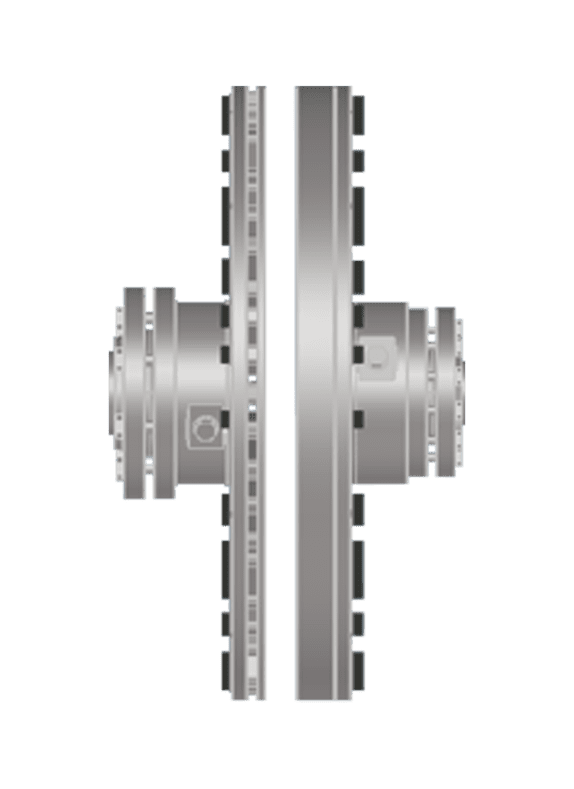
Zytec's non-contact magnetic drives address uptime challenges at the engineering level, removing the mechanical failure modes that monitoring systems are typically built to detect. Rather than only improving how quickly problems are identified, Zytec's technology reduces the frequency at which those problems occur in the first place.
Key ways Zytec's drives support higher equipment uptime:
- Elimination of wear components: Zytec's non-contact drives contain no elastomers, no gear teeth, no lubrication systems, and no friction elements, removing the most common sources of coupling-related degradation
- Misalignment tolerance: The drives accommodate up to 12 mm of radial dynamic misalignment without transmitting forces into bearings or seals, protecting downstream components from the leading cause of rotating equipment failure
- Vibration reduction: By decoupling the motor from the driven machine magnetically, torsional oscillations and vibration peaks are absorbed rather than propagated through the drivetrain, reducing bearing and seal wear by up to 80%
- Maintenance-free operation: With a rated service life exceeding 20 years and no scheduled coupling element replacement, the number of maintenance interventions and associated human error events is structurally reduced
- Air gap monitoring as a diagnostic tool: Changes in the air gap between the drive's magnetic elements serve as an indicator of system-level issues such as bearing degradation or foundation movement, giving condition monitoring systems a reliable early warning signal
For facilities operating pumps, fans, compressors, generators, or conveyors where downtime prevention is a strategic priority, Zytec's non-contact drives offer a proven path to measurable availability improvement. Contact Zytec to find out how non-contact drive technology can reduce unplanned downtime in your installation.
Frequently Asked Questions
How long does it typically take to see measurable uptime improvements after installing condition monitoring?
Most facilities begin seeing actionable data within the first few weeks of deployment, as baselines are established and early anomalies surface. However, meaningful uptime improvements — reflected in MTBF and availability trends — typically become measurable over a 3–6 month period, once the monitoring system has enough historical data to distinguish normal variation from genuine degradation signals. The facilities that see the fastest results are those that pair monitoring deployment with immediate corrective action on flagged issues rather than waiting for a full data set before responding.
What's the best way to prioritize which machines to monitor first?
Start with your highest-consequence assets — the machines whose failure would cause the most production loss, safety risk, or repair cost. A simple criticality ranking that scores each asset on failure frequency, downtime impact, and repair complexity will quickly surface the 20% of equipment responsible for 80% of your unplanned downtime. Once critical assets are covered, expand monitoring to secondary machines that feed or depend on those critical assets, since a failure upstream or downstream can be just as disruptive as a failure on the primary machine itself.
Can uptime monitoring be retrofitted onto older equipment, or does it require new machinery?
Uptime monitoring can be retrofitted onto virtually any existing rotating equipment, regardless of age. Modern wireless vibration and temperature sensors attach directly to motor housings, pump casings, and bearing housings without requiring machine modifications or production shutdowns for installation. The key consideration with older equipment is establishing a reliable baseline, since machines that have been running without monitoring may already have developing faults, so an initial inspection before sensor deployment is recommended to ensure you are baselining from a known condition.
What are the most common mistakes facilities make when implementing an uptime monitoring program?
The most common mistake is setting alert thresholds based on generic defaults rather than equipment-specific operating conditions, which leads to either alert fatigue from too many false positives or missed detections when thresholds are set too wide. A close second is treating monitoring as a standalone solution without addressing the root causes of failure — collecting data on recurring bearing failures without investigating the underlying misalignment or lubrication issue that keeps causing them. Successful programs treat monitoring data as a diagnostic input that drives engineering decisions, not just a dashboard to observe.
How does vibration monitoring specifically help prevent unplanned downtime?
Vibration monitoring detects the mechanical signatures of developing faults — such as imbalance, misalignment, bearing defects, and looseness — long before those faults progress to failure. Each fault type produces a characteristic vibration frequency pattern, allowing analysts or automated systems to identify not just that something is wrong, but specifically what is wrong and which component is affected. This specificity is what makes vibration monitoring so valuable for maintenance planning: rather than scheduling a broad inspection, your team can go into a machine knowing exactly which bearing to replace or which coupling to check, minimising both repair time and intervention risk.
Is there a meaningful difference between cloud-based and on-premise uptime monitoring platforms for industrial use?
The core monitoring functionality is comparable between the two, but the right choice depends on your facility's connectivity, data security requirements, and IT infrastructure. Cloud-based platforms offer easier scalability, remote access for multi-site operations, and lower upfront infrastructure costs, making them a practical choice for facilities without dedicated industrial IT teams. On-premise systems are preferred in environments with strict data sovereignty requirements, limited or unreliable internet connectivity, or where real-time control loop integration requires sub-millisecond latency that cloud communication cannot reliably support.
At what point does it make financial sense to replace a frequently failing asset rather than continuing to monitor and maintain it?
The crossover point is reached when the cumulative cost of reactive repairs, planned maintenance interventions, and production losses from a single asset exceeds the installed cost of a replacement — typically within a 2–3 year window for high-failure assets. A useful calculation is to compare the asset's annual maintenance spend plus downtime cost against the annualised cost of replacement including installation and commissioning. If your monitoring data shows that MTBF is not improving despite repeated interventions, that is a strong signal that the failure mode is structural rather than operational, and engineering replacement — potentially with a more reliable drivetrain design — will deliver better long-term availability than continued maintenance investment.