Identify the ATEX zone classification of your site
Before selecting any equipment or reviewing documentation, you must establish exactly which ATEX zones are present in your facility. Zone classification defines the frequency and duration of explosive atmosphere presence, and every subsequent decision — equipment category, installation method, documentation — depends on getting this right.
Carry out a formal hazardous area classification study for your site. This is typically performed by a competent person or specialist engineer and must account for all potential sources of flammable gas, vapour, mist, or dust release. The output is a set of zone drawings that map each area of the facility to a specific zone designation.
- Identify all potential release sources: flanges, pump seals, valve glands, vents, open tanks, and process connections where flammable substances can escape.
- Classify each area using the standard zone designations: Zone 0 (gas/vapour present continuously or for long periods), Zone 1 (likely to occur in normal operation), and Zone 2 (not likely in normal operation, but possible). For dust atmospheres, use the Zone 20, 21, and 22 equivalents.
- Define the extent of each zone — the physical boundary within which the hazardous classification applies — based on ventilation conditions, release grade, and substance properties.
- Document the gas group and temperature class requirements for each zone. Gas group IIA covers propane-like substances, IIB covers ethylene-like substances, and IIC covers hydrogen and acetylene — the most demanding category, with ignition energy thresholds below 0.02 millijoules.
Once complete, your zone drawings become the governing reference document for all equipment selection. Verify that the classification has been reviewed and signed off by a qualified competent person, and that it reflects any recent changes to your process layout or substance inventory.
Select equipment rated for the correct ATEX category
With zone drawings in hand, you can now select rotating equipment rated for the appropriate equipment category. ATEX equipment categories define the level of protection required and must match the zone in which the equipment will operate: Category 1 for Zone 0/20, Category 2 for Zone 1/21, and Category 3 for Zone 2/22.
For rotating equipment specifically — pumps, fans, compressors, conveyors — pay close attention not just to the motor but to every component in the drivetrain, including the coupling. This is a point where many facilities fall short. A motor may carry full ATEX certification, but if the coupling connecting it to the driven load introduces ignition risks through friction, elastomer wear, or misalignment-induced heat, the assembly as a whole is not safe for the zone.
- Confirm the equipment category matches the zone: for Zone 1 installations, you need Category 2G equipment as a minimum.
- Check the gas group rating on the equipment certificate. If your zone contains IIC substances such as hydrogen, every component must be rated for IIC — not just IIA or IIB.
- Verify the temperature class. The maximum surface temperature of any equipment component must remain below the auto-ignition temperature of the substances present. Common ratings are T4 (135°C maximum surface temperature) and T3 (200°C).
- Review the protection concept marked on the equipment. For example, Ex h indicates constructional safety — ignition sources are eliminated by design rather than contained within an enclosure. Ex d indicates a flameproof enclosure. Each concept has specific installation and maintenance implications.
- Assess the coupling type independently. Conventional mechanical contact couplings introduce latent ignition risks through misalignment-induced frictional heating, elastomer wear, and unpredictable surface temperatures from degrading wear components. Dynamic misalignment during operation cannot be fully eliminated through alignment procedures alone, making this a persistent risk in Zone 1 and Zone 2 environments.
After selection, confirm that every item of equipment carries a valid EU Declaration of Conformity and that the ATEX marking on the nameplate matches the zone and substance requirements in your zone drawings. Any discrepancy at this stage must be resolved before installation.
Verify installation requirements for ATEX rotating equipment
Correct equipment selection is necessary but not sufficient. How rotating equipment is installed in a hazardous area directly affects whether it remains compliant in operation. Installation requirements for ATEX zones go beyond standard mechanical practices and address specific ignition risk pathways that arise from the way equipment is assembled and connected.
Mechanical installation
Install rotating equipment in accordance with the manufacturer's installation instructions, which form part of the ATEX certification basis. Deviating from these instructions — even in seemingly minor ways — can invalidate the certification and create undocumented ignition risks.
- Ensure all rotating components are properly guarded to prevent contact with personnel and to contain any debris in the event of a component failure.
- Verify that the coupling installation method matches the certified configuration. Shrink disc mounting and slip-fit clearance-fit hubs, for example, must be installed to the specified tolerances.
- Confirm that bonding and earthing connections are made correctly to prevent electrostatic charge accumulation on rotating parts — a particular concern in Zone 1 and Zone 2 gas environments.
Electrical installation
For electrically driven rotating equipment, the installation of the motor and any associated variable speed control equipment requires careful attention. If a Variable Frequency Drive (VFD) is used for speed control, it typically cannot be located in the hazardous zone without being housed in an Ex d or Ex p enclosure, and the motor must be upgraded to inverter-duty specification with reinforced winding insulation and insulated bearings. The interconnecting cable must be replaced with VFD-rated shielded cabling, which carries significant cost implications.
- Confirm the location of any variable speed drive equipment relative to the zone boundary. Safe-area installation is the most common approach for larger drives.
- Verify that cable entry into Ex-rated equipment uses certified cable glands appropriate for the zone and cable type.
- Check that the motor protection relay settings are configured to prevent overheating — a motor running above its rated temperature class is an ignition source regardless of its ATEX certification.
After installation, carry out a pre-commissioning inspection to confirm that all mechanical and electrical connections are correct, all guards are in place, and the installation matches the certified configuration documented by the manufacturer.
Complete the required ATEX documentation and conformity assessment
ATEX compliance is not only a physical engineering task — it requires a complete and auditable documentation trail. EU Directive 2014/34/EU places obligations on both equipment manufacturers and the operators of hazardous area installations. As an operator, you are responsible for maintaining documentation that demonstrates your installation is safe and compliant.
- Collect and file the EU Declaration of Conformity for every piece of ATEX-certified equipment installed. This document must be retained for the life of the equipment.
- Compile the ATEX equipment dossier for each installation point, including the equipment certificate number, the notified body that issued it, the protection concept, the gas group, and the temperature class.
- Prepare or update the Explosion Protection Document (EPD) for your facility. This is a legal requirement under the ATEX Workplace Directive (1999/92/EC) and must describe the hazardous areas, the measures taken to prevent explosive atmospheres, and the measures taken to protect workers if an explosive atmosphere does occur.
- Ensure that any modifications to the installation — including coupling replacements, motor changes, or process changes that alter the zone classification — trigger a formal change management review and an update to the EPD.
- Confirm that the installation has been inspected by a competent person before it is put into service, and that this initial inspection is recorded.
A complete documentation package should allow an external auditor or regulatory inspector to trace every item of equipment in a hazardous area back to its certification, understand the basis on which it was selected, and confirm that the installation matches the certified configuration. Gaps in this trail are a common finding in regulatory inspections and can result in enforcement action even when the physical installation is sound.
Establish an inspection and maintenance schedule for compliance
ATEX compliance is an ongoing obligation, not a one-time activity. The ATEX Workplace Directive requires that hazardous area installations are maintained in a safe condition and inspected at appropriate intervals. For rotating equipment, the inspection and maintenance schedule must address both the equipment itself and the continued validity of the zone classification.
- Define inspection intervals based on the equipment type, the zone, and the manufacturer's recommendations. Initial inspections are required before first use; periodic inspections are required throughout the operating life.
- Carry out detailed inspections that include checking the integrity of Ex protection features: enclosure condition, cable entry seals, earthing and bonding connections, and the condition of any wear components that could generate heat or sparks if degraded.
- For couplings, inspect for signs of wear, elastomer degradation, lubrication loss, or misalignment-induced damage. Conventional contact couplings require regular element replacement and re-alignment checks — each intervention is a maintenance event that must be documented and carried out by competent personnel.
- Review the zone classification periodically, particularly after any process changes, facility modifications, or changes to the substances handled on site.
- Record all inspections, findings, and corrective actions in a maintained log. This record forms part of the compliance evidence required under the Workplace Directive.
One practical consideration worth noting: the more maintenance interventions a coupling or drive component requires, the more frequently personnel must work in or near the hazardous zone. Fewer interventions mean fewer hours of exposure, a lower risk of maintenance-induced failures, and a simpler compliance record to maintain. When evaluating equipment for ATEX zones, the maintenance burden of each component is a direct factor in your ongoing compliance workload — not just a cost consideration.
How Zytec helps with ATEX compliant rotating equipment
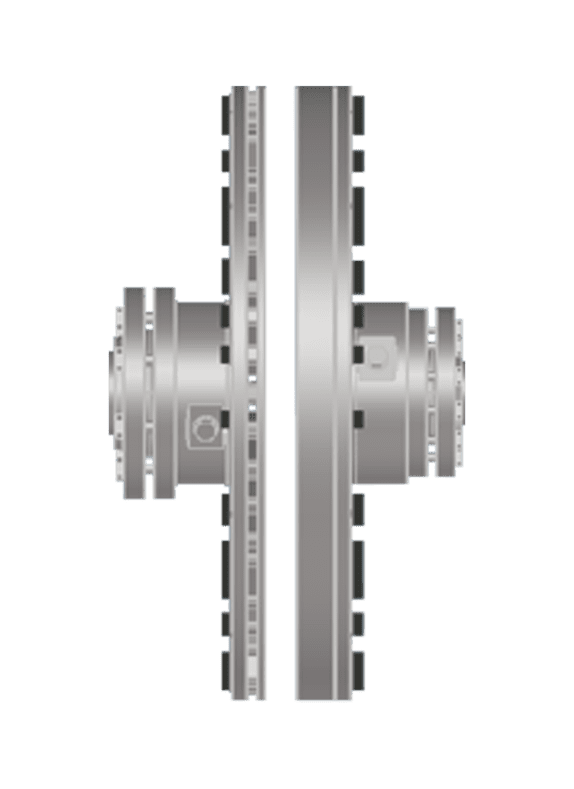
Zytec's F-TORQ.EX non-contact coupling is purpose-built for rotating equipment in ATEX Zone 1 and Zone 2 environments. Rather than managing ignition risks through enclosures or procedures, the F-TORQ.EX eliminates them at the source. Because torque is transmitted across an air gap using eddy current magnetic coupling, there is no friction, no elastomers, no lubricants, and no mechanical contact — removing the ignition risk pathways that conventional couplings introduce by design.
For facilities looking to simplify ATEX compliance for rotating equipment, Zytec offers:
- Full ATEX certification to EU Directive 2014/34/EU under the Ex h constructional safety concept, covering Zone 1 (Category 2G) and Zone 2 (Category 3G), gas groups IIA, IIB, and IIC, with a T4 temperature class rating for IIC applications
- No maintenance coupling design with a rated service life exceeding 20 years, dramatically reducing the number of interventions required in the hazardous zone and simplifying your ongoing inspection schedule
- Drop-in retrofit capability for all conventional coupling types, reusing existing motors, cabling, and foundations — no laser alignment required during installation
- Variable speed control without VFD electronics in the Ex zone, through the NCD V-Drive, which eliminates the IGBT, capacitor, and electronic aging risks that compound VFD compliance complexity over time
- Complete technical documentation including an EU Declaration of Conformity and installation instructions that support your Explosion Protection Document requirements
If you are reviewing your ATEX compliance for rotating equipment or evaluating alternatives to conventional couplings and VFDs in hazardous areas, contact Zytec to discuss your specific application and receive a technical assessment tailored to your zone classification and equipment configuration.
Frequently Asked Questions
What happens if we change a process substance after our ATEX zone classification has already been completed?
Any change to the substances handled in your facility can alter the gas group, temperature class, or zone extent requirements — meaning equipment that was compliant under the original classification may no longer be suitable. You must trigger a formal change management review, update your hazardous area classification study and zone drawings, and reassess every piece of installed equipment against the revised requirements. This review must be completed and documented before the process change goes live, and your Explosion Protection Document must be updated accordingly.
Can we use a standard commercial coupling in a Zone 2 area if we control the risk through procedures alone?
No — procedural controls alone are not a sufficient substitute for correctly rated equipment in a classified hazardous area. ATEX Directive 2014/34/EU requires that equipment installed in any classified zone carries the appropriate category certification for that zone, including Zone 2. A standard commercial coupling without ATEX certification introduces undocumented ignition risks through friction, elastomer degradation, and misalignment-induced heat that cannot be reliably mitigated by operational procedures. Using uncertified equipment also invalidates your Explosion Protection Document and exposes your facility to regulatory enforcement.
How do we handle ATEX compliance when a motor is replaced with a different model during a breakdown?
A like-for-like replacement with an identically certified motor is the safest approach and the one least likely to require a full conformity review. If the replacement motor differs in any meaningful way — protection concept, gas group rating, temperature class, frame size, or power rating — it must be assessed as a new installation and all relevant documentation updated before the equipment is returned to service. Emergency breakdowns create pressure to cut corners at exactly this point, so it is worth maintaining a pre-approved spares list of ATEX-certified motors for your most critical rotating equipment to avoid compliance gaps during unplanned outages.
What qualifications does a 'competent person' need to carry out ATEX inspections on rotating equipment?
The ATEX Workplace Directive (1999/92/EC) does not prescribe a specific qualification, but the competent person must have demonstrable knowledge and experience of hazardous area installations, relevant equipment protection concepts, and the applicable standards — particularly IEC/EN 60079-17, which covers inspection and maintenance of electrical equipment in explosive atmospheres. In practice, this typically means an engineer or technician with formal training in Ex equipment inspection, such as CompEx certification or equivalent, combined with hands-on experience with the specific equipment types being inspected. Using unqualified personnel for ATEX inspections is a common regulatory finding and can invalidate your inspection records.
Is laser alignment still required when installing an ATEX-certified coupling, and what are the compliance implications if alignment is poor?
Laser alignment requirements depend entirely on the coupling type and its certified installation instructions, which form part of the ATEX certification basis. For conventional mechanical contact couplings, precise shaft alignment is both a mechanical necessity and a compliance requirement — misalignment generates frictional heat in the coupling element, which can exceed the rated temperature class and create an ignition source regardless of the coupling's certification. For non-contact magnetic couplings such as the F-TORQ.EX, which transmit torque across an air gap, alignment tolerances are significantly more forgiving and do not introduce the same frictional heating risk. Always follow the manufacturer's installation instructions exactly, as any deviation can invalidate the certification.
How often should periodic ATEX inspections be carried out on rotating equipment, and what determines the interval?
There is no single mandatory interval prescribed by the ATEX Workplace Directive — inspection frequency must be determined based on the equipment type, the zone classification, the severity of the operating environment, and the manufacturer's recommendations. IEC/EN 60079-17 provides guidance on inspection categories ranging from visual checks to detailed and close inspections, each with different recommended frequencies. In practice, many facilities carry out visual inspections monthly, close inspections annually, and detailed inspections every three to five years, but high-wear components such as coupling elements in aggressive environments may require more frequent attention. The key principle is that inspection intervals must be justified and documented, not simply inherited from a generic schedule.
What are the most common compliance failures found during regulatory inspections of ATEX rotating equipment installations?
The most frequently cited findings include incomplete or missing EU Declarations of Conformity, Explosion Protection Documents that have not been updated to reflect process or equipment changes, equipment with ATEX markings that do not match the zone or gas group requirements in the zone drawings, and maintenance records that are absent or insufficiently detailed. On the physical installation side, inspectors commonly find degraded cable gland seals, missing or damaged earthing and bonding connections, and coupling components that have been replaced with non-ATEX-rated parts during maintenance. Addressing documentation gaps is often as urgent as correcting physical deficiencies, since an otherwise sound installation can still result in enforcement action if the compliance evidence trail cannot be reconstructed.