How do the 5 RCA principles work together as a system?
The five RCA principles work together as a system by forming a logical sequence: each principle depends on the one before it and enables the one after it. You cannot apply corrective action effectively without a verified causal chain, and you cannot build a causal chain without evidence. The principles are not independent tools but interconnected steps in a single analytical process.
Think of the five principles as a pipeline. The first principle, focusing on causes rather than symptoms, sets the direction of inquiry. The second, relying on evidence, ensures that inquiry is grounded in fact. The third, tracing the causal chain, structures the investigation so it reaches the origin of the failure rather than stopping at a convenient explanation. The fourth, applying corrective action, converts the analysis into operational change. The fifth, applying RCA consistently and systematically, ensures the process becomes a repeatable discipline rather than a one-off exercise.
When one principle is skipped or weakened, the entire system degrades. Teams that skip evidence gathering tend to build causal chains on assumptions, which leads to corrective actions that address the wrong problem. Teams that apply corrective actions without tracing the full causal chain often fix one failure mode while leaving a related one intact. The strength of root cause analysis methodology lies precisely in the fact that each principle reinforces the others, making the whole more reliable than any single step applied in isolation.
What does 'focus on causes, not symptoms' mean in RCA?
Focusing on causes rather than symptoms means directing the investigation toward the conditions that produced the failure, not toward the failure event itself. In RCA methodology, a symptom is what you observe: a pump that stopped, a bearing that failed, a production line that went offline. The cause is the underlying condition that made that outcome inevitable. Treating the symptom restores function temporarily; treating the cause prevents recurrence.
This distinction sounds straightforward but is consistently one of the hardest principles to apply in practice. Under production pressure, the fastest path is to replace the failed component and restart the equipment. That action resolves the symptom. If the bearing failed because of chronic misalignment, replacing the bearing without correcting the misalignment means the next bearing will fail on the same timeline for the same reason.
In industrial maintenance, the most common symptom-level responses include component replacement without investigation, process parameter adjustments that compensate for an underlying defect, and procedure updates that add inspection steps without removing the failure driver. Root cause analysis principles push investigators to ask why the failure occurred, not just what failed. That shift in framing is the foundation of every other step in the RCA process.
Why must RCA rely on evidence rather than assumptions?
RCA must rely on evidence rather than assumptions because assumptions introduce bias into the causal chain, which leads to corrective actions that address the wrong root cause. Evidence anchors the investigation to what actually happened. Assumptions reflect what investigators expect to find based on prior experience, which is useful for forming hypotheses but dangerous when treated as conclusions.
In rotating equipment maintenance, the distinction matters enormously. An experienced technician may assume that a bearing failure was caused by inadequate lubrication because that is the most common cause in their experience. If the actual cause was torsional vibration transmitted through a worn coupling, the lubrication-focused corrective action will not prevent the next failure. The evidence, in this case, vibration data, oil analysis results, and wear pattern inspection, would have pointed in a different direction.
Evidence in an industrial RCA investigation can include several categories:
- Physical evidence: failed components, wear patterns, fracture surfaces, debris
- Operational data: process logs, alarm histories, production records, sensor readings
- Maintenance records: inspection reports, work orders, parts replacement history
- Environmental data: temperature records, vibration measurements, load profiles
- Human factors: shift handover notes, procedure compliance records, training records
Gathering evidence before forming conclusions is not a bureaucratic formality. It is the mechanism that keeps the investigation honest and ensures that corrective actions are targeted at the real failure driver.
How does the causal chain principle prevent recurring failures?
The causal chain principle prevents recurring failures by requiring investigators to trace each failure event back through a sequence of linked causes until they reach the origin condition. Rather than stopping at the first plausible explanation, this RCA principle demands that every identified cause is interrogated further: what caused that cause? The process continues until the investigation reaches a point where no further upstream cause exists within the system's control.
The most widely used tool for applying this principle is the "five whys" technique, where each answer to a "why" question becomes the subject of the next. A pump failure might trace back to a bearing failure, which traces back to elevated vibration, which traces back to misalignment, which traces back to thermal expansion during operation, which traces back to a coupling design that transmitted misalignment forces into the drivetrain rather than absorbing them. Each step in that chain is a cause. Only the last step is the root cause.
Without the causal chain principle, investigations tend to stop at the most visible or most recent cause, which is rarely the origin. This produces corrective actions that are correct but incomplete. The failure recurs because the upstream condition that initiated the chain remains in place. Tracing the full causal chain is what separates a genuine root cause analysis from a structured incident report.
What role does corrective action play as an RCA principle?
Corrective action is the principle that converts a completed root cause analysis into operational change. Without it, even the most thorough investigation produces no value. In RCA methodology, corrective action is not simply repairing what broke. It is a deliberate intervention at the identified root cause level, designed to eliminate the conditions that allowed the failure to occur and recur.
Effective corrective actions share several characteristics. They address the root cause directly, not a symptom or an intermediate cause in the chain. They are specific and assignable, with a named owner and a defined completion date. They are verifiable, meaning there is a way to confirm that the action was completed and that it produced the intended change. And they are proportionate to the risk and frequency of the failure being addressed.
In industrial operations, corrective actions typically fall into one of three categories:
- Engineering controls: Physical changes to equipment, design, or layout that eliminate the failure condition at its source
- Process controls: Changes to operating parameters, procedures, or monitoring practices that prevent the failure condition from developing
- Administrative controls: Changes to training, documentation, or organizational practices that reduce the likelihood of human error contributing to the failure
Engineering controls are generally the most durable because they remove the failure mechanism from the system rather than relying on procedural compliance to manage it. When root cause analysis identifies a design or equipment selection issue as the origin of a recurring failure, an engineering-level corrective action is the appropriate response.
When should RCA be applied in industrial operations?
RCA should be applied in industrial operations whenever a failure event has significant consequences, recurs despite previous corrective actions, or reveals a systemic condition that could affect other equipment or processes. Not every fault warrants a full root cause analysis, but any failure that causes unplanned downtime, safety exposure, or repeated maintenance cost should trigger one.
In practice, most industrial organizations apply RCA based on a threshold system. Minor faults with obvious causes and low consequence are handled through standard maintenance procedures. Significant events, including unplanned shutdowns, equipment damage, near-misses, and high-cost repairs, trigger a formal RCA investigation. Recurring failures, even low-severity ones, also warrant RCA because their cumulative cost and the signal they send about underlying system conditions justify the investigation effort.
Timing matters as well. RCA is most effective when initiated promptly after a failure event, while physical evidence is still available, operational conditions are fresh in the minds of those involved, and the equipment has not yet been reassembled or repaired. Delayed investigations rely more heavily on documentation and recollection, which increases the risk that assumptions fill the gaps left by missing evidence.
In asset-intensive sectors such as water and wastewater, chemical processing, oil and gas, and manufacturing, RCA is increasingly embedded into reliability-centered maintenance programs as a standard response to significant failure events rather than an exceptional measure. This shift reflects a broader recognition that recurring failures are not inevitable. They are symptoms of conditions that can be identified, traced, and eliminated.
How Zytec Supports Root Cause Elimination in Rotating Equipment
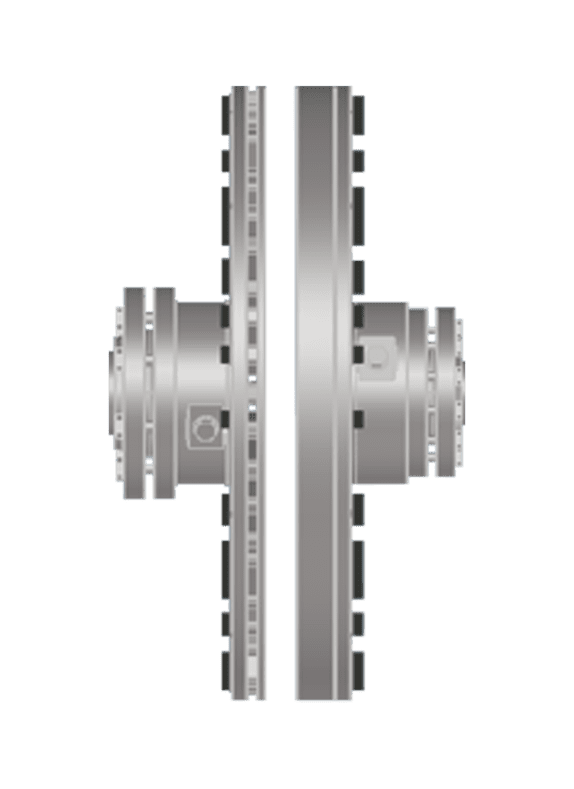
Applying RCA principles in industrial operations often reveals that recurring failures in rotating equipment trace back to a common root cause: the mechanical coupling. Misalignment, torsional vibration, wear, and maintenance-induced errors are consistently identified as upstream causes in bearing, seal, and shaft failure investigations. Zytec's non-contact magnetic drives address these root causes at the engineering level, removing the failure mechanisms from the drivetrain rather than managing their consequences.
- Misalignment eliminated by design: The F-TORQ Non-Contact Coupling transmits torque across an air gap with no physical contact, meaning dynamic misalignment forces never reach bearings or seals regardless of thermal expansion or foundation movement
- No wear components: With no elastomers, lubrication systems, or friction elements, the coupling introduces no degradation pathway of its own, extending the PF curve for the entire drivetrain
- Maintenance interventions reduced: Eliminating scheduled coupling element replacement and laser alignment requirements removes recurring human error exposure from the maintenance cycle
- Energy savings up to 50%: The A-TORQ drive eliminates overcapacity in pump and fan applications, addressing energy waste that RCA investigations frequently identify as a systemic operational issue
- 20+ year maintenance-free service life: The coupling's service life matches the installation lifetime, removing the coupling as a recurring variable in future failure investigations
When your RCA investigations consistently point to coupling-related failure drivers, the most durable corrective action is an engineering-level solution. Contact Zytec to find out how non-contact drive technology can eliminate the root causes your maintenance team keeps investigating.
Frequently Asked Questions
How do I know when my RCA investigation has reached the true root cause and not just an intermediate cause?
You have reached the true root cause when further 'why' questioning leads outside the boundary of what your organization can influence or control, or when the identified cause is a physical, latent, or systemic condition rather than an event. A practical test is to apply the corrective action mentally: if fixing the identified cause would definitively prevent the failure from recurring under all normal operating conditions, you are at the root cause. If there is still a plausible upstream condition that could reproduce the same failure chain, the investigation is not yet complete.
What are the most common mistakes teams make when applying RCA for the first time?
The most common mistake is stopping the investigation at the first technically plausible explanation, which is almost always an intermediate cause rather than the root cause. A close second is forming the causal chain before all evidence has been gathered, which causes investigators to unconsciously filter evidence through a conclusion they have already reached. Teams new to RCA also frequently confuse corrective actions with containment actions — replacing a failed component gets the equipment running again, but it is a containment step, not a corrective action, unless it is paired with an intervention that removes the failure driver.
How long should a formal RCA investigation typically take in an industrial setting?
The timeline depends on the complexity of the failure and the availability of evidence, but most industrial RCA investigations for rotating equipment failures should be completable within three to ten working days from the time evidence is secured. Investigations that drag on for weeks typically indicate that evidence was not preserved promptly, that there is organizational disagreement about the findings, or that the scope has expanded beyond the original failure event. Keeping the scope tightly defined to the specific failure and its causal chain is the most effective way to maintain momentum and reach actionable conclusions quickly.
Can RCA principles be applied to near-miss events and not just actual failures?
Yes, and applying RCA to near-miss events is often more valuable than waiting for an actual failure to occur. A near-miss means the causal chain was present and progressing — the failure was interrupted before completion, not prevented at its source. Investigating near-misses while the conditions are still present and the evidence is fresh allows teams to eliminate the root cause before it produces downtime, equipment damage, or a safety incident. In high-consequence environments such as oil and gas or chemical processing, near-miss RCA is considered a leading indicator practice precisely because it addresses systemic conditions before they escalate.
How should corrective actions from an RCA be tracked and verified to ensure they are actually implemented?
Each corrective action should be entered into a formal tracking system — whether a CMMS, a dedicated action register, or a reliability management platform — with a named owner, a defined completion date, and a verification criterion that specifies how completion will be confirmed. Verification should be independent of the person responsible for implementation; a supervisor, reliability engineer, or quality function should confirm that the action was completed and that the intended change was achieved. Closing an RCA without verifying that corrective actions produced measurable change is one of the most common reasons recurring failures persist despite repeated investigations.
What is the difference between root cause analysis and reliability-centered maintenance (RCM), and how do they work together?
RCA is a reactive methodology applied after a failure event to identify and eliminate its origin. RCM is a proactive methodology applied during the design or maintenance planning phase to identify potential failure modes and determine the most effective maintenance strategy for each. In practice, the two are complementary: RCA findings feed into RCM programs by revealing actual failure modes that were not anticipated in the original maintenance plan, and RCM frameworks help prioritize which failures warrant formal RCA investigation based on their consequence and criticality. Organizations with mature reliability programs use both, with RCA continuously improving the accuracy of their RCM-based maintenance strategies.
How do you build organizational buy-in for consistent RCA application when production pressure pushes teams toward quick fixes?
The most effective approach is to make the cost of recurrence visible by tracking and reporting the cumulative maintenance cost, downtime hours, and production loss associated with failures that received only symptomatic fixes. When teams can see that a bearing replaced three times in eighteen months has cost more in labor, parts, and lost production than a full RCA investigation and engineering-level corrective action would have, the business case for consistent RCA becomes concrete rather than abstract. Leadership commitment is also essential: if supervisors and managers routinely override RCA processes under schedule pressure, the methodology will not take hold regardless of how well it is documented in procedure.