What types of incidents actually require an RCA?
An RCA is required when an incident produces consequences serious enough that preventing recurrence is worth a structured investigation. In industrial settings, this typically means any unplanned equipment failure causing production loss, any safety-related event, any quality defect reaching a customer, or any near-miss with high potential severity. The defining criterion is whether the underlying cause, left unaddressed, could produce the same or worse outcome again.
In practice, the types of incidents that consistently warrant a root cause analysis in manufacturing and process industries include:
- Unplanned downtime events that halt production or reduce throughput, particularly those affecting rotating equipment such as pumps, fans, compressors, or conveyors
- Safety incidents and near-misses, including any event that triggered an emergency stop, personnel injury, or hazardous exposure
- Equipment failures requiring corrective maintenance, especially when the failure was unexpected rather than end-of-life
- Quality escapes where a defective product or output reached the next stage of production or the end customer
- Environmental or regulatory incidents, including spills, emissions breaches, or compliance violations
- Repeated minor failures on the same asset or process, even if each individual event seems manageable
It is worth noting that the severity threshold for triggering an RCA varies by industry. In oil and gas or chemical processing, a near-miss with no actual damage may still mandate a formal investigation because the potential consequences of the same event under slightly different conditions would be catastrophic. In lower-risk environments, the threshold may be set at actual production impact or a defined cost threshold.
How soon after an incident should an RCA be started?
An RCA should be initiated as soon as the immediate emergency is resolved and the situation is stabilized, typically within 24 to 72 hours of the incident. Starting quickly matters because physical evidence degrades, conditions change, and human memory fades. Waiting more than a week significantly reduces the quality and reliability of the investigation findings.
The first priority is always to make the situation safe and restore minimum viable operations. Once that is done, the RCA clock should start. The practical sequence looks like this:
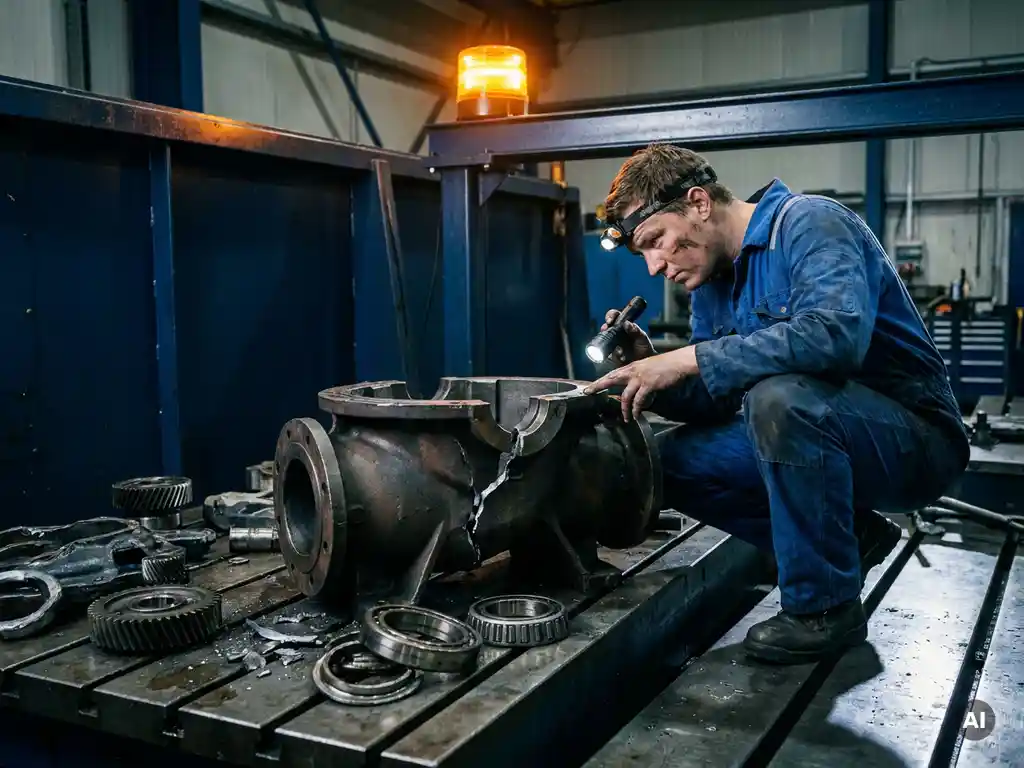
- Preserve the scene: Before anything is repaired or cleaned up, document the physical state of failed components, capture photographs, and record all relevant operating data, alarms, and logs from the period leading up to the failure.
- Secure witness accounts: Speak to operators, maintenance technicians, and anyone present during or immediately before the event while their recollections are fresh and uncontaminated by group discussion.
- Formally open the investigation: Assign ownership, define scope, and set a target completion date within the first 24 to 48 hours.
- Conduct the structured analysis: Depending on complexity, this phase may take several days to several weeks, but it should begin immediately, not after repairs are complete.
A common mistake in industrial environments is to repair the failed equipment first and begin the investigation later. By that point, the failed component may have been discarded, the operating conditions that contributed to the failure may have changed, and the people involved may have moved on to other tasks. Delaying the start of an RCA almost always compromises the depth of the findings.
What conditions make an RCA unnecessary?
An RCA is unnecessary when the cause of an incident is already fully understood, the corrective action is obvious, and there is no meaningful risk of recurrence. If a component failed because it reached its documented end of service life and was replaced on schedule, a formal root cause investigation adds no value. Similarly, one-off events caused by clearly identifiable external factors with no systemic implication do not require a full RCA process.
Conditions that typically do not warrant a formal root cause analysis include:
- Planned maintenance replacements where wear or aging was anticipated and the failure mode was expected
- Isolated human errors with no underlying systemic cause, where the corrective action is straightforward retraining or a simple procedural reminder
- Minor incidents with no production impact, no safety risk, and no likelihood of recurrence based on available evidence
- Events caused by clearly external, non-controllable factors such as a confirmed lightning strike or a supplier delivering a damaged component, where the root cause is external and the corrective action is a supplier claim rather than an internal process change
The risk of skipping an RCA too readily is that what appears to be a simple, obvious cause often has a contributing systemic factor that is not visible on the surface. A bearing that failed "because it wore out" may actually point to persistent misalignment, inadequate lubrication intervals, or chronic vibration loading from upstream equipment. The decision to forgo an RCA should itself be a deliberate, documented judgment rather than a default response to a busy schedule.
How does failure frequency affect the decision to run an RCA?
Failure frequency is one of the strongest signals that a root cause analysis is needed, even when individual events appear minor. When the same failure mode recurs on the same asset or class of assets, it indicates that the underlying cause was never properly identified or addressed. A single small failure may not justify a full investigation, but the same failure happening three or more times on the same system almost always does.
In rotating equipment environments, frequency-based triggers are particularly valuable. A pump seal that fails once might be attributed to normal wear. The same seal failing every four to six months on the same pump is a pattern, and patterns have root causes. Common frequency-related drivers in industrial RCA decisions include:
- Mean time between failures (MTBF) falling below the equipment design expectation, which signals that something in the operating environment, maintenance practice, or installation is accelerating degradation
- The same component type failing across multiple assets, suggesting a systemic issue with specification, procurement, or operating conditions rather than a one-off event
- Repeated corrective maintenance on the same asset within a short period, which drives up total cost of ownership and often indicates an unresolved underlying condition
- A cluster of similar failures within a defined time window, which may point to a common cause such as a process change, a batch of substandard parts, or a recent maintenance intervention
Industry experience in maintenance-intensive sectors shows that a disproportionate share of maintenance costs and unplanned downtime traces back to a small number of chronic failure modes that were never properly investigated. Frequency analysis, often through a Pareto review of maintenance work orders, is one of the most effective ways to identify where RCA effort will deliver the highest return.
Who decides whether an RCA should be conducted?
The decision to conduct an RCA is typically made by the operations or maintenance manager responsible for the asset, often in consultation with the plant manager or reliability engineer. In regulated industries or where safety is involved, the decision may be mandated by a quality management system, a regulatory requirement, or a corporate standard rather than left to individual judgment.
In well-structured organizations, the decision framework is not left entirely to discretion. A defined trigger matrix specifies which event types and severity levels automatically require an RCA, which require a simplified investigation, and which can be closed with a basic corrective action. This removes ambiguity and ensures that high-stakes events are never quietly resolved without proper investigation.
Across organizational levels, different roles typically carry different responsibilities in the RCA decision process:
- Maintenance engineers and reliability engineers are usually the first to identify that a failure pattern or event warrants investigation and will escalate the recommendation
- Operations or plant managers authorize the investigation, assign resources, and set the scope and timeline
- Process engineers contribute technical input on operating conditions, process parameters, and equipment specifications
- C-level or senior management may be involved when the incident has significant financial, safety, or reputational implications, or when the RCA findings require capital investment to implement
The most effective RCA cultures are those where the decision to investigate is treated as a professional responsibility rather than an optional response to pressure. When the decision is driven by a clear framework rather than by who has time or who is being held accountable, investigations are more consistent, findings are more credible, and corrective actions are more likely to be implemented and sustained.
How Zytec helps reduce the frequency of RCAs in rotating equipment
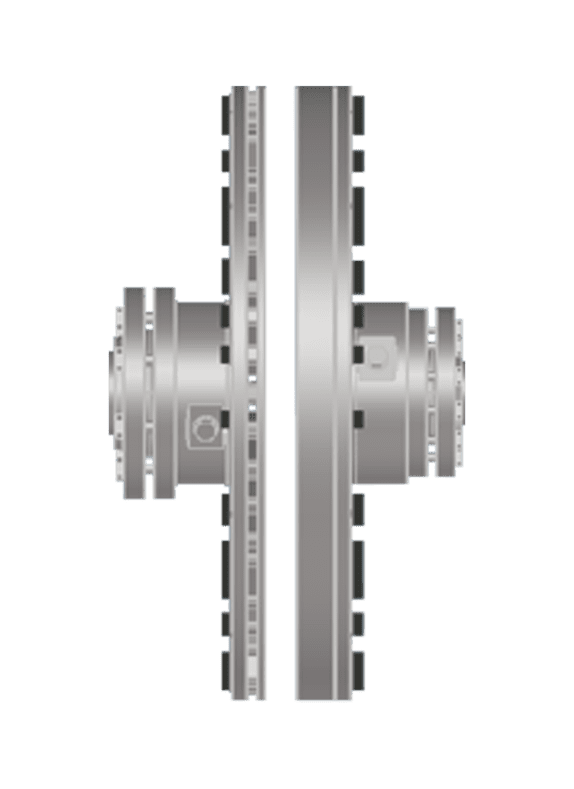
One of the most effective ways to reduce how often an RCA is needed is to eliminate the failure modes that trigger investigations in the first place. For rotating equipment, a significant share of unplanned failures and recurring maintenance events trace back to mechanical coupling issues: misalignment, wear, vibration transmission, and shock loading. Zytec's non-contact drives address these root causes directly.
- No mechanical contact means no wear: Without physical coupling between the motor and driven equipment, there are no wear components to degrade, no coupling elements to replace, and no alignment-induced bearing or seal overload
- Vibration reduction up to 80%: Lower vibration reduces fatigue loading across the entire drivetrain, extending the service life of bearings, seals, and connected components
- Inherent overload protection: The magnetic torque limit acts as a built-in slip mechanism, preventing shock loads from propagating into the drivetrain during fault conditions
- Maintenance-free operation: With no lubrication, no periodic element replacement, and no laser alignment requirement, the number of maintenance interventions and associated human-error events drops significantly
- Energy savings up to 50%: By eliminating overcapacity and enabling precise speed control, Zytec drives reduce the thermal and mechanical stress that accelerates component aging
For industrial organizations where rotating equipment failures are a recurring source of downtime and investigation effort, Zytec's non-contact drive technology offers a structural reduction in failure frequency rather than a better way to respond after failure occurs. Contact Zytec to discuss how non-contact drive technology can be applied to your specific rotating equipment challenges.
Frequently Asked Questions
How do I build a trigger matrix to standardize RCA decisions across our facility?
Start by categorizing incidents along two axes: severity (safety impact, production loss, cost, regulatory exposure) and likelihood of recurrence. Assign each combination a required response level — full RCA, simplified investigation, or basic corrective action. Involve your maintenance engineers, reliability team, and plant manager in defining the thresholds so the matrix reflects operational reality, then embed it into your work order system so it is applied consistently at the point of incident reporting rather than left to case-by-case judgment.
What's the minimum team size needed to run an effective RCA, and who should be in the room?
A functional RCA team typically needs three to five people: a facilitator who owns the methodology, at least one person with direct knowledge of the failed equipment or process, and one person with authority to approve and resource corrective actions. For rotating equipment failures, this usually means a reliability or maintenance engineer, the operator or technician who was present during the event, and a process engineer who understands the operating conditions. Larger teams can dilute accountability — keep the core group small and bring in subject-matter experts only for specific technical questions.
Which RCA method is best suited for rotating equipment failures — 5 Whys, fishbone, or fault tree analysis?
For most rotating equipment failures, the 5 Whys method is a practical starting point because it follows the physical failure chain logically and is accessible to maintenance and operations teams without specialized training. Fault tree analysis (FTA) is more appropriate when there are multiple potential failure paths or when the event had safety-critical consequences requiring a more rigorous, documented investigation. Fishbone (Ishikawa) diagrams are useful in the early brainstorming phase to ensure that categories like lubrication, alignment, operating conditions, and maintenance practices are all considered before narrowing down to the most probable cause.
How do we prevent corrective actions from being closed on paper but never fully implemented?
The most common reason corrective actions stall is that they are assigned without a specific owner, a hard deadline, and a verification step. Each action should be logged in your CMMS or action-tracking system with a named responsible person, a completion date, and a defined evidence requirement — such as a photo, a revised procedure, or a confirmed work order. Schedule a formal close-out review 30 to 90 days after implementation to verify that the fix is holding and that the failure mode has not recurred, rather than closing the RCA the moment the paperwork is signed off.
Can RCA findings from one asset or site be applied to similar equipment elsewhere in our operation?
Yes, and this is one of the highest-value outcomes of a well-documented RCA. When a root cause is identified on one asset — such as a specific seal failure mode linked to misalignment or a bearing degradation pattern tied to inadequate lubrication intervals — the same finding should be reviewed against all similar equipment in your fleet. This horizontal application, sometimes called a u0022fleet-wide corrective actionu0022 or u0022lessons learned transfer,u0022 can prevent failures on assets that have not yet failed but share the same vulnerability. Build a step into your RCA close-out process that explicitly asks: does this finding apply anywhere else?
What data should we be collecting on an ongoing basis to make future RCAs faster and more accurate?
The most valuable data for RCA purposes includes timestamped alarm and event logs from your control system, vibration and temperature trend data from condition monitoring sensors, a complete maintenance history for the asset (including who performed work and what was replaced), and operating parameter records such as flow rates, pressures, and load profiles in the period leading up to the failure. If this data is not being captured continuously, you will always be reconstructing the failure timeline from memory and incomplete records — which is one of the main reasons RCA findings are shallow or inconclusive. Investing in basic condition monitoring and structured CMMS data entry pays direct dividends in investigation quality.
At what point should we consider redesigning or replacing equipment rather than continuing to investigate recurring failures?
When RCA investigations consistently identify the same root cause but corrective actions fail to prevent recurrence, or when the root cause is an inherent design limitation rather than an operational or maintenance issue, the right response shifts from investigation to engineering change. A practical signal is when the total cost of recurring failures — including maintenance labor, parts, downtime, and investigation time — approaches or exceeds the cost of a design upgrade or equipment replacement over a two- to three-year horizon. At that point, the RCA process has done its job by identifying a chronic systemic issue, and the next step is a capital or engineering decision rather than another investigation cycle.