What tasks in SRE are already being automated by AI?
AI is currently automating the most repetitive, high-volume observability tasks in SRE: alert triage, anomaly detection, incident classification, log correlation, and first-level root cause suggestions. These are areas where pattern recognition at scale gives AI a clear advantage over human engineers working through thousands of signals manually.
In practical terms, AI-driven platforms can ingest telemetry from distributed systems and surface the most likely failure source before an on-call engineer has even acknowledged the page. Tools built on large language models can summarize incident histories, draft postmortem templates, and suggest remediation steps based on previous similar events. Automated runbooks can execute standard recovery procedures without human intervention in well-defined failure scenarios.
- Alert noise reduction: AI clusters and deduplicates alerts, reducing the volume of notifications engineers must evaluate manually
- Anomaly detection: Machine learning models identify deviations from baseline behavior across latency, error rate, and saturation metrics faster than threshold-based rules
- Incident triage: AI ranks incidents by likely severity and impact, helping on-call engineers prioritize without reading through every log line
- Automated remediation: Predefined playbooks triggered automatically by AI for known failure patterns such as pod restarts, cache flushes, or traffic rerouting
- Capacity forecasting: Predictive models project resource consumption trends, enabling proactive scaling decisions
What AI is not yet doing reliably is handling novel failure modes, making judgment calls about risk tradeoffs, or understanding the organizational context behind a reliability decision. That remains human territory.
How does AI change the role of an SRE engineer?
AI shifts the SRE role from reactive firefighting toward proactive system design and strategic reliability ownership. As AI absorbs the high-frequency, low-complexity work, engineers spend less time triaging alerts and more time defining service level objectives, architecting resilient systems, and improving the feedback loops that make automation smarter over time.
This is a meaningful shift in how SRE work is distributed across a day. In teams that have adopted AI-assisted observability, engineers report spending significantly less time on manual log analysis and alert acknowledgment. That recovered time flows into work that has historically been deprioritized under operational pressure: chaos engineering, capacity planning, dependency mapping, and reliability roadmaps.
The role also becomes more collaborative. SREs increasingly work alongside data scientists and platform engineers to train and validate the AI models that power their own tooling. Understanding what the model is optimizing for, where its training data is weak, and how to interpret its outputs becomes a core engineering competency rather than a niche skill.
There is also a governance dimension. As AI systems take automated action in production environments, SREs are responsible for defining the boundaries of that autonomy: what decisions require human approval, what failure modes should trigger escalation, and how to audit automated actions after the fact. This is judgment work that cannot be delegated to the system itself.
What's the difference between AI Ops and traditional SRE practices?
AIOps is a tooling and data analysis discipline focused on applying machine learning to IT operations data to improve detection, correlation, and automation. Traditional SRE is an engineering philosophy and organizational practice built around reliability as a software problem, using engineering methods to manage and improve system behavior. The two are complementary, not competing approaches.
Traditional SRE, as originally defined at Google and widely adopted since, centers on a set of principles: error budgets, service level indicators, service level objectives, toil reduction, and treating operations as a software engineering problem. It is as much about culture and organizational structure as it is about tooling.
AIOps, by contrast, refers specifically to platforms and capabilities that use AI and machine learning to process operational data at a scale and speed humans cannot match. It addresses the tooling layer: how alerts are processed, how incidents are correlated, how anomalies are surfaced.
Where AIOps fits within SRE
AIOps is best understood as an accelerant for SRE practice rather than a replacement for it. An SRE team that has defined clear SLOs and error budgets can use AIOps tooling to monitor those objectives more effectively and respond to breaches faster. Without the underlying SRE framework, AIOps tooling produces data without context and automation without guardrails.
Where the approaches diverge
Traditional SRE emphasizes human judgment in reliability decisions, particularly around risk tolerance and the tradeoff between velocity and stability. AIOps optimizes for speed and scale in data processing. The risk of over-relying on AIOps without SRE discipline is that automated systems optimize for the metrics they are given, which may not fully capture what reliability means for a specific service or user population.
Which SRE skills will remain irreplaceable as AI advances?
The SRE skills that AI cannot replicate are those requiring contextual judgment, systems thinking, organizational influence, and the ability to reason about failure modes that have never occurred before. These are the skills that become more valuable, not less, as AI handles routine operational work.
- Defining reliability targets: Deciding what level of reliability a service actually needs, based on user impact and business context, is a judgment call that requires understanding both the technology and the organization
- Postmortem facilitation: Extracting genuine learning from incidents, managing blameless culture, and translating findings into systemic improvements requires human communication and organizational awareness
- Novel failure analysis: When a system fails in a way it has never failed before, pattern-matching AI has no prior data to draw on. Engineers who can reason from first principles about distributed system behavior are essential
- Cross-team influence: Convincing development teams to invest in reliability, negotiating error budgets, and embedding reliability thinking into product decisions requires interpersonal and political skills
- Chaos engineering design: Designing meaningful resilience experiments that surface real weaknesses requires creative thinking about how complex systems fail under adversarial conditions
- Ethical and risk governance: Deciding when automated systems should act autonomously versus escalate to humans, and auditing those decisions, is a responsibility that must remain with engineers
The engineers who will thrive are those who treat AI as a powerful tool they direct, rather than a process that directs them. Deep knowledge of distributed systems, reliability theory, and organizational dynamics becomes the differentiator.
Should organizations reduce SRE headcount because of AI?
Organizations should not reduce SRE headcount based on AI automation alone, and those that do are likely to create reliability debt they will pay back later. AI reduces toil and increases the leverage of each engineer, but it does not reduce the complexity of the systems SREs are responsible for. In most organizations, system complexity is growing faster than automation can absorb it.
The more productive framing is not "how many SREs do we need now that AI handles alerts?" but rather "what can our SRE team accomplish now that they are no longer buried in alert noise?" Teams that redeploy recovered capacity toward reliability architecture, SLO programs, and platform engineering consistently see better outcomes than those that treat automation savings as a headcount reduction opportunity.
There are also risk considerations. AI systems in production require oversight. Automated remediation can make wrong decisions at machine speed, creating cascading failures faster than a human team can respond. The engineers needed to govern, audit, and correct AI-driven operations are the same engineers organizations might otherwise consider eliminating.
The realistic picture for 2026 is that organizations with mature SRE practices are using AI to do more with existing teams, not smaller teams. Headcount decisions driven purely by automation savings, without accounting for growing system scope and AI governance requirements, tend to produce short-term savings and long-term reliability problems.
How Zytec's approach to reliability thinking applies beyond software
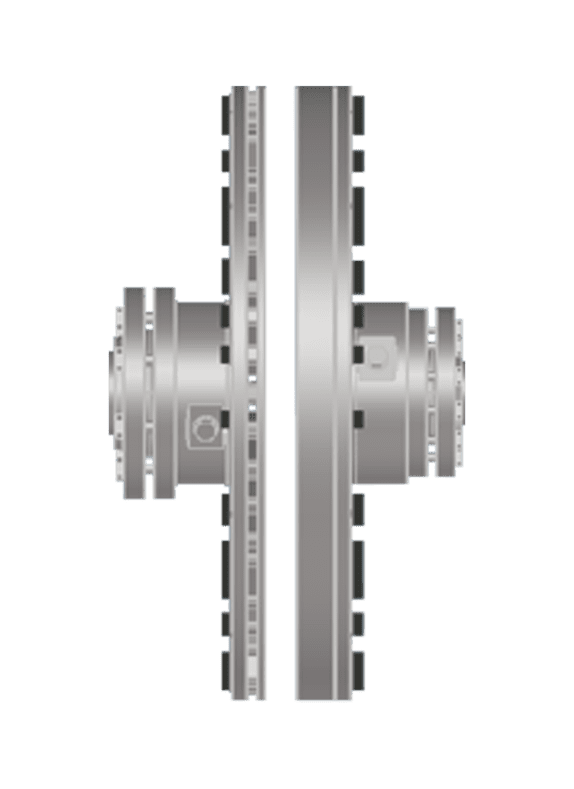
The question of whether AI replaces human expertise is not unique to software engineering. In industrial operations, the same tension exists between automation and engineering judgment. Zytec's non-contact magnetic drive technology illustrates what genuine reliability engineering looks like when it is built into the system by design rather than managed reactively.
- Eliminating failure modes at the source: Zytec's F-TORQ and A-TORQ drives remove wear components entirely, meaning there is nothing to degrade, no alignment to drift, and no lubrication to fail. Reliability is structural, not monitored.
- Reducing human error exposure: Fewer maintenance interventions mean fewer opportunities for incorrect reassembly, missed torque specs, or alignment errors. Each eliminated intervention is an eliminated risk event.
- Extending the PF curve: By removing coupling-induced vibration and torsional shock from the drivetrain, Zytec's technology extends the detectable degradation window for downstream components, giving engineers more time to respond before functional failure.
- Supporting ISO 55000 asset management principles: Lifecycle thinking, risk-based decision-making, and whole-system optimization are baked into the product design, not added as a monitoring layer on top of an unreliable system.
Whether the domain is software reliability or rotating equipment reliability, the principle is the same: the most durable reliability gains come from engineering out failure modes, not from monitoring them more closely. If your organization is evaluating how to build more reliable industrial operations with fewer unplanned interventions, explore Zytec's non-contact drive solutions to see what structural reliability looks like in practice.
Frequently Asked Questions
How do I know if my SRE team is ready to adopt AI-assisted observability tools?
The clearest signal of readiness is whether your team has defined SLOs and error budgets for your critical services. AI tooling needs a reliability framework to operate within — without it, you get automation without guardrails. If your team is still in reactive firefighting mode with no structured SLO program, investing in that foundation first will produce better returns than layering AIOps tooling on top of an undefined reliability practice.
What are the most common mistakes teams make when introducing AI into SRE workflows?
The most frequent mistake is treating AI-generated alerts and recommendations as ground truth rather than as a starting point for human judgment. Engineers who stop questioning model outputs lose the ability to catch the edge cases where AI is confidently wrong. A close second is automating remediation actions before thoroughly validating them in non-production environments — automated systems can execute incorrect decisions at machine speed, turning a minor incident into a cascading failure.
How should SRE engineers be developing their skills to stay relevant as AI takes over more routine tasks?
Focus on the skills that sit above and around the automation layer: SLO design, chaos engineering, postmortem facilitation, and cross-team reliability advocacy. It is also worth building enough familiarity with machine learning fundamentals to understand what your AI tooling is optimizing for, where its training data may be weak, and how to interpret its confidence signals critically. Engineers who can both direct AI systems and audit their outputs will be significantly more valuable than those who simply consume their recommendations.
What guardrails should be in place before allowing AI to take automated remediation actions in production?
At minimum, automated remediation should be scoped to well-defined, previously validated failure scenarios with a clear rollback path — pod restarts, cache flushes, and traffic rerouting to known-healthy endpoints are reasonable candidates. Every automated action should be logged with enough context to reconstruct the decision chain during a postmortem. Human escalation thresholds should be set conservatively at first and loosened only after the system has demonstrated consistent accuracy across a statistically meaningful number of real incidents.
Is there a risk that over-reliance on AI observability tools creates skill atrophy in SRE teams?
Yes, and it is one of the more underappreciated risks of AIOps adoption. When engineers stop manually reading logs and tracing failure paths, they gradually lose the deep systems intuition that makes them effective when AI tools fail or encounter novel failure modes — exactly the moments when that expertise matters most. Teams can mitigate this by deliberately preserving hands-on investigation practices through chaos engineering exercises, manual incident drills, and structured postmortems that require engineers to reason from first principles rather than just reviewing AI-generated summaries.
How does the principle of engineering out failure modes — rather than just monitoring them — apply to SRE practice?
The most durable reliability improvements in software systems come from architectural decisions that eliminate entire failure categories: removing single points of failure, decoupling services to contain blast radius, or replacing fragile integrations with more resilient patterns. AI-assisted monitoring is valuable, but it is a detection and response layer — it does not reduce the underlying fragility of the system. SRE teams that use recovered capacity from AI automation to invest in architectural reliability improvements will consistently outperform teams that treat better monitoring as a substitute for better design.
What does a realistic AI-augmented SRE workflow look like on a day-to-day basis in 2026?
In practice, on-call engineers in AI-augmented teams spend far less time triaging raw alert streams and far more time reviewing AI-surfaced incident summaries, validating automated remediation decisions, and investigating the cases the AI flagged as uncertain or novel. Strategic work — SLO reviews, reliability roadmap planning, chaos experiment design, and cross-team reliability conversations — fills time that would previously have been consumed by manual log analysis. The role feels less like firefighting and more like reliability product ownership, with AI handling the high-volume pattern recognition while engineers focus on judgment, governance, and system improvement.