How do the 5 P's work in a root cause analysis?
The 5 P's work by dividing a problem investigation into five distinct categories, each representing a different domain where a root cause might originate. Instead of asking one broad question like "why did this fail?", the framework prompts investigators to examine the situation from five specific angles simultaneously, reducing the risk of missing a contributing factor.
In practice, a team begins by clearly defining the problem statement, then systematically works through each of the five categories, gathering evidence, interviewing relevant personnel, and reviewing documentation. The goal is not to assign blame but to identify systemic gaps. Each category acts as a lens, and a thorough investigation uses all five before drawing conclusions.
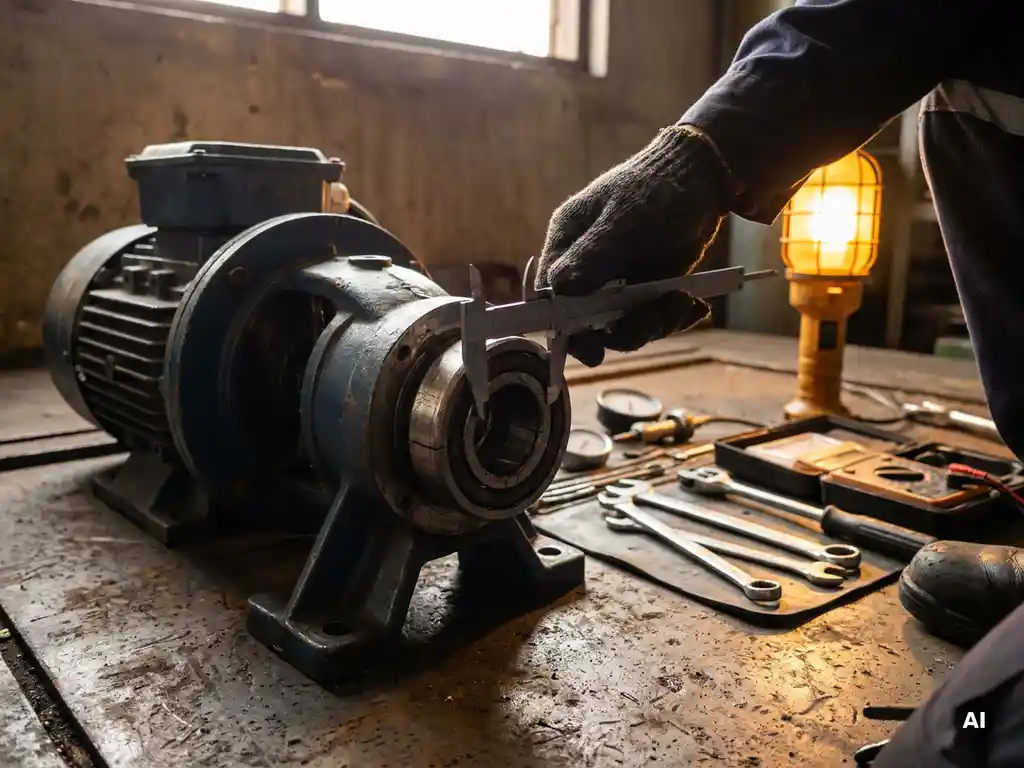
The strength of the approach lies in its comprehensiveness. Many industrial failures have multiple contributing causes spanning more than one category. A pump failure, for example, might trace back to an undertrained operator (People), an inadequate maintenance schedule (Process), and a worn coupling that was not flagged during inspection (Parts). By working through all five categories, investigators avoid the trap of stopping at the first plausible explanation.
What does each of the 5 P's stand for?
Each of the 5 P's represents a distinct investigative domain: People, Process, Parts (sometimes called Plant), Policy, and Place (sometimes called Position or Program). Understanding what each category covers is essential to using the framework correctly.
- People: Human factors including operator error, skill gaps, fatigue, communication failures, and inadequate training. This category examines whether the individuals involved had the knowledge, capability, and information needed to perform their tasks correctly.
- Process: The procedures, workflows, and methods in use at the time of the incident. This includes whether a documented process existed, whether it was followed, and whether the process itself was fit for purpose.
- Parts (Plant): Equipment, materials, components, and machinery. This category examines whether the right parts were used, whether they were in acceptable condition, and whether they were correctly specified for the application.
- Policy: The rules, standards, regulations, and organizational guidelines that govern operations. Investigators ask whether relevant policies existed, whether they were communicated, and whether they were enforced.
- Place (Position): The physical environment and working conditions, including temperature, humidity, layout, lighting, noise, and any environmental factors that may have contributed to the failure or incident.
Some organizations adapt the fifth P to fit their context, using terms like "Program" or "Paradigm" depending on the industry. What matters is that all five domains are examined with equal rigor, rather than defaulting to the category that feels most familiar or convenient.
How does the 5 P's method compare to other RCA techniques?
The 5 P's method is a category-based framework, which distinguishes it from causal-chain methods like the 5 Whys or fault tree analysis. Where the 5 Whys drills vertically into a single causal chain by repeatedly asking "why," the 5 P's casts a wider net horizontally across five distinct domains before drilling deeper into any one area.
5 P's versus 5 Whys
The 5 Whys is faster and works well for straightforward, single-cause problems. Its weakness is that it can lead investigators down one causal path while missing parallel contributing factors in other domains. The 5 P's is better suited to complex failures where multiple systems or categories are involved because it forces investigators to consider all five domains before converging on a conclusion.
5 P's versus Fishbone (Ishikawa) Diagram
The fishbone diagram uses a similar category-based logic, often organizing causes under headings like Man, Machine, Method, Material, Measurement, and Environment. The 5 P's framework is leaner and arguably faster to apply in field investigations, while the fishbone diagram is often more useful in structured workshop settings where a visual map of contributing factors adds clarity for cross-functional teams.
In industrial manufacturing environments, practitioners frequently combine methods: the 5 P's to identify which domain the root cause lives in, followed by 5 Whys to trace the causal chain within that domain. This hybrid approach balances breadth with depth.
When should the 5 P's framework be applied?
The 5 P's framework is best applied when a failure or incident involves multiple possible contributing factors across different operational domains, and when a quick single-cause explanation would be insufficient or risky. It is particularly well suited to recurring equipment failures, safety incidents, quality defects, and unplanned production downtime.
In asset-intensive industries, the framework is most valuable in the following situations:
- Equipment failures that have occurred more than once without a satisfactory resolution
- Incidents where human behavior, equipment condition, and procedural compliance all appear to be factors
- Post-incident reviews where the organization needs a defensible, documented investigation process
- Situations where corrective actions from previous investigations have not prevented recurrence
The 5 P's is less appropriate for very simple, isolated problems with an obvious single cause. In those cases, a faster method like the 5 Whys is more efficient. The framework also requires access to relevant personnel, documentation, and physical evidence, so it works best when applied promptly after an incident while information is still fresh and accessible.
What are common mistakes when using the 5 P's in RCA?
The most common mistake when using the 5 P's in root cause analysis is treating the framework as a checklist rather than a genuine investigation. Teams that rush through each category without gathering real evidence tend to produce superficial findings that do not hold up under scrutiny and fail to prevent recurrence.
Other frequent errors include:
- Stopping at the symptom: Identifying that a component failed without asking why it failed. The 5 P's framework surfaces categories, but investigators must still dig deeper within each one.
- Skipping uncomfortable categories: Teams sometimes avoid the Policy or People categories to protect individuals or avoid organizational criticism. This undermines the entire purpose of the investigation.
- Assigning blame rather than identifying causes: Root cause analysis is a systems-level exercise. Concluding that "operator error" is the root cause without examining what training, procedures, or equipment conditions contributed to that error is incomplete and counterproductive.
- Involving too few perspectives: A maintenance engineer and a process engineer will notice different things in the same incident. Investigations that draw on only one discipline routinely miss contributing factors in other domains.
- Failing to document findings rigorously: Without a clear record of what was examined in each category, findings cannot be reviewed, challenged, or built upon in future investigations.
How do you turn 5 P's findings into corrective actions?
Turning 5 P's findings into corrective actions requires mapping each identified root cause to a specific, measurable intervention that addresses the underlying gap rather than the surface symptom. For every cause identified in the investigation, the corrective action must target the same domain: a People finding requires a training or communication response; a Policy finding requires a procedural or governance change; a Parts finding requires a specification, procurement, or maintenance response.
Effective corrective actions share several characteristics:
- They address the cause, not the symptom. Replacing a failed component without changing the conditions that caused it to fail is not a corrective action, it is a repair.
- They are assigned to a named owner with a deadline. Actions without accountability rarely get implemented consistently.
- They are verifiable. The team should define in advance what evidence will confirm the action has been completed and is effective.
- They are prioritized by risk. Not all findings carry equal consequences. Actions that address safety-critical or high-frequency causes should be implemented first.
- They are reviewed for effectiveness. A follow-up review after a defined period confirms whether the corrective action has actually prevented recurrence.
In practice, organizations that close the loop between RCA findings and verified corrective actions see measurable reductions in repeat failures over time. The 5 P's framework is only as valuable as the quality of the actions it generates.
How Zytec helps eliminate recurring root causes in rotating equipment
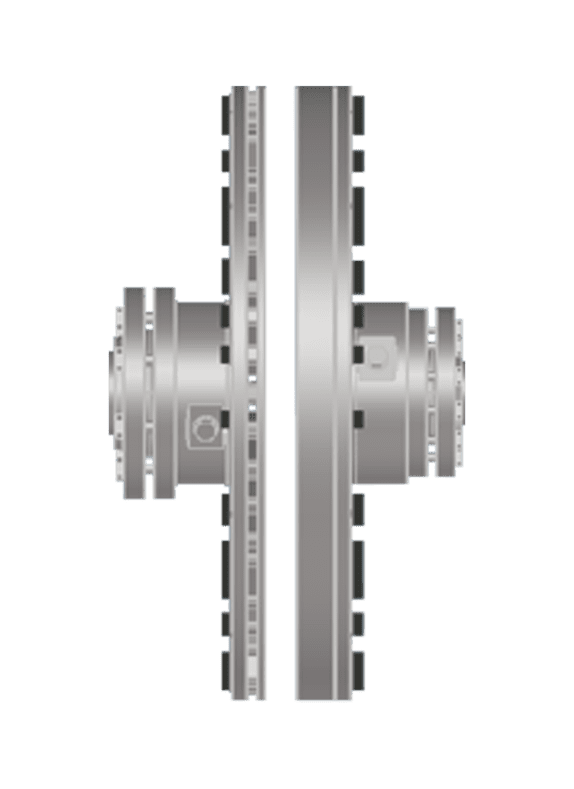
Many root cause investigations in industrial facilities trace failures back to the same categories: worn components (Parts), misalignment during maintenance (Process), and human error during coupling replacement (People). Zytec's non-contact magnetic drives address these root causes at a structural level, removing the failure mechanisms entirely rather than managing them through procedures.
- No wear components: Zytec drives contain no elastomers, no lubrication systems, and no friction elements, eliminating the Parts-related root causes that drive the majority of coupling failures.
- No laser alignment required: Because torque is transmitted across a magnetic air gap without physical contact, installation misalignment and dynamic operational misalignment do not generate bearing or seal overload, removing a major Process-related cause of rotating equipment failures.
- Reduced human intervention: With a maintenance-free operational span of 20 or more years, Zytec drives structurally reduce the number of maintenance events that create exposure to People-related error.
- Vibration reduction up to 80%: Lower vibration levels extend the service life of downstream components including bearings, seals, and gearboxes, reducing the frequency of future RCA investigations.
- Energy savings up to 50%: In applications where overcapacity is a contributing factor, Zytec's A-TORQ drive provides intelligent speed control that eliminates the energy and reliability costs of oversized installations.
If your RCA investigations keep surfacing the same root causes in rotating equipment, contact Zytec to find out how non-contact drive technology can remove those failure mechanisms from your installations permanently.
Frequently Asked Questions
How many people should be involved in a 5 P's root cause analysis investigation?
A 5 P's investigation works best with a cross-functional team of three to six people who collectively cover the domains being examined — typically including a maintenance engineer, a process or operations specialist, and a frontline operator who was present during the incident. Larger teams can introduce coordination overhead without adding proportional value, while solo investigations almost always miss contributing factors in at least one category. The key principle is that each of the five domains should have at least one team member with direct, relevant knowledge of it.
How long does a 5 P's root cause analysis typically take to complete?
The timeline depends heavily on the complexity of the failure and the availability of evidence, but a well-run 5 P's investigation for a single equipment failure or safety incident typically takes between two and five working days from problem definition to documented findings. Simple incidents with clear evidence can be completed faster, while complex failures involving multiple systems, contractor personnel, or regulatory implications may take longer. Starting the investigation within 24–48 hours of the incident is strongly recommended, as physical evidence degrades and witness recall fades quickly.
Can the 5 P's framework be used proactively, or is it only for post-incident investigations?
While the 5 P's is most commonly applied reactively after a failure or incident, it can be used proactively as a risk assessment tool before introducing changes to equipment, processes, or personnel. By working through each of the five categories during a pre-implementation review, teams can identify potential failure points before they materialize — essentially asking 'where could this go wrong?' across all five domains. This proactive application is particularly valuable during planned maintenance shutdowns, equipment upgrades, or process modifications where the cost of a failure would be high.
What is the best way to document a 5 P's investigation so findings can be used in future RCAs?
The most effective documentation approach uses a structured template with a dedicated section for each of the five categories, capturing what evidence was reviewed, what was found, and what conclusion was reached — including categories where no contributing cause was identified. Each finding should be linked directly to its corresponding corrective action, owner, deadline, and verification criteria in the same document. Storing completed RCA reports in a centralized, searchable system allows future investigation teams to identify recurring patterns across incidents, which is often where the most valuable systemic insights emerge.
What should I do if the 5 P's investigation points to a Policy gap but changing the policy is outside my authority?
Document the finding clearly and escalate it through the appropriate channel with the supporting evidence from the investigation — a well-documented RCA finding is a far more persuasive case for policy change than an informal observation. In the interim, consider whether a temporary local procedure, additional supervision, or a compensating control can reduce risk while the formal policy change is reviewed. Leaving a known Policy gap unaddressed and undocumented is the highest-risk outcome; even if you cannot resolve it directly, recording it formally creates accountability and a traceable audit trail.
How do I know if a corrective action from a 5 P's investigation has actually worked?
Effectiveness verification should be defined before the corrective action is implemented, not after — the team should agree in advance on what measurable evidence will confirm success, such as zero recurrence of the failure mode over a defined period, a passing result on a follow-up inspection, or confirmation that updated training has been completed and assessed. Schedule a formal effectiveness review at a fixed interval after the action is closed, typically 30, 60, or 90 days depending on the failure frequency. If the same root cause resurfaces after a corrective action was supposedly implemented, the investigation should reopen and examine whether the action was actually completed as intended and whether it addressed the right level of cause.
Is the 5 P's framework suitable for industries outside of manufacturing and heavy industry?
Yes — while the 5 P's framework is most commonly discussed in manufacturing, maintenance, and industrial operations contexts, the underlying logic applies to any environment where failures have multiple contributing factors across human, procedural, material, policy, and environmental domains. Healthcare, logistics, construction, and food production organizations all use category-based RCA frameworks with very similar structures. The specific terminology may shift slightly (for example, 'Parts' becomes less relevant in a purely service environment and may be replaced by 'Programs' or 'Platforms'), but the core discipline of examining a failure across five distinct domains before drawing conclusions translates directly.