What are the steps involved in performing FMEA?
Performing an FMEA follows a structured sequence: define the scope, assemble a cross-functional team, identify all potential failure modes, analyze their effects and causes, assign severity and likelihood ratings, calculate risk scores, and develop action plans to reduce the highest-priority risks. The process ends with verification that corrective actions have been implemented and are effective.
Breaking that sequence into concrete steps makes the process easier to manage in practice:
- Define scope and purpose. Clarify which system, subsystem, or process is being analyzed, and whether the FMEA is design-focused (DFMEA) or process-focused (PFMEA). A tightly defined scope prevents the analysis from becoming unmanageable.
- Map the system or process. Create a functional block diagram or process flow chart. This visual foundation ensures no component or step is overlooked during the failure mode identification stage.
- Identify failure modes. For each component or process step, ask: in what ways could this fail to perform its intended function? A rotating pump seal, for example, could fail by leaking, seizing, or degrading prematurely.
- Determine effects of each failure. Analyze what happens downstream when each failure mode occurs. Effects may be local (affecting only one component), system-level (disrupting a production line), or end-user-level (causing safety or quality issues).
- Identify root causes. For each failure mode, determine the most likely underlying cause. This step distinguishes a symptom from its origin and guides the selection of corrective actions.
- Assign ratings and calculate risk scores. Rate each failure mode on severity, occurrence, and detectability, then calculate the Risk Priority Number (RPN) or use an alternative risk matrix.
- Develop and assign corrective actions. Focus resources on the highest-risk failure modes. Assign a responsible owner and a target completion date for each action.
- Verify and update. After actions are implemented, reassess the ratings to confirm that risk has been reduced to an acceptable level.
Who should be involved in an FMEA?
An FMEA requires a cross-functional team that includes everyone with direct knowledge of the system being analyzed. At minimum, this means a facilitator with FMEA experience, design or process engineers, maintenance technicians, quality engineers, and a representative from operations or production. The right team composition is one of the most important factors in producing a reliable analysis.
Each role contributes a different perspective. Maintenance engineers and technicians bring firsthand knowledge of how equipment actually behaves in the field, including failure patterns that never appear in technical drawings. Process engineers understand how one failure propagates through a larger system. Quality engineers connect failure effects to product or service outcomes. Operations representatives flag the production impact of potential downtime scenarios.
In asset-intensive industries such as water and wastewater, chemical processing, or oil and gas, it is also valuable to include reliability engineers and, where applicable, safety officers. Their involvement ensures that both operational risk and regulatory compliance are addressed within the same analysis. Keeping the team to around five to eight people maintains focus and avoids analysis paralysis, while still covering the necessary knowledge domains.
How do you calculate the Risk Priority Number in FMEA?
The Risk Priority Number (RPN) is calculated by multiplying three ratings: Severity (S), Occurrence (O), and Detection (D). Each is scored on a scale of 1 to 10, giving an RPN range of 1 to 1,000. The formula is: RPN = S x O x D. Higher scores indicate failure modes that demand the most urgent corrective attention.
Understanding what each factor measures helps teams assign ratings consistently:
- Severity (S): How serious are the consequences if this failure mode occurs? A score of 1 means no noticeable effect; a score of 10 represents a safety-critical failure or regulatory violation.
- Occurrence (O): How likely is this failure mode to happen? A score of 1 means the failure is extremely unlikely; a score of 10 means it occurs repeatedly under normal operating conditions.
- Detection (D): How likely is it that the failure will be caught before it reaches the end user or causes a system failure? A score of 1 means existing controls will almost certainly detect it; a score of 10 means there is no detection mechanism in place.
One important limitation of the RPN is that it treats all three factors as equally weighted. A failure mode with a severity of 10, an occurrence of 1, and a detection of 1 produces an RPN of 10, which looks low, but the catastrophic severity still warrants attention. For this reason, many teams use the RPN alongside a severity threshold rule: any failure mode with a severity rating of 9 or 10 is automatically escalated, regardless of its overall RPN score.
What is the difference between FMEA and FMECA?
FMEA (Failure Mode and Effects Analysis) identifies failure modes and their effects. FMECA (Failure Mode, Effects, and Criticality Analysis) extends this by adding a formal criticality analysis that quantifies the probability of failure and its consequences in a more rigorous, often mathematically structured way. FMECA is the more detailed of the two and is most common in defense, aerospace, and safety-critical industrial applications.
In practical terms, the core FMEA worksheet is identical in both methods. The difference lies in the criticality analysis step that FMECA adds. This step assigns a criticality number to each failure mode based on its failure rate, the probability that the failure mode will occur given a failure of the component, and the severity category. The result is a criticality matrix that plots failure modes by severity category against their frequency of occurrence.
For most industrial maintenance and reliability programs, standard FMEA with RPN scoring provides sufficient risk prioritization. FMECA becomes the preferred approach when regulatory standards require it, when the consequences of failure are potentially catastrophic, or when failure rate data from field experience or reliability databases is available to support the quantitative analysis.
When should FMEA be updated or repeated?
An FMEA should be updated whenever a significant change occurs to the system, process, or operating environment it covers. This includes design modifications, changes in operating conditions, the introduction of new equipment, process alterations, or after an actual failure event that was not anticipated in the original analysis. FMEA is a living document, not a one-time exercise.
Specific triggers for revisiting an FMEA include:
- A failure mode that was rated low-risk actually occurs in service
- A component is replaced with a different model or specification
- Operating parameters such as speed, load, temperature, or process fluid change
- New regulatory requirements or safety standards apply to the system
- Corrective actions from the original FMEA have been implemented and need verification
- Scheduled periodic reviews as part of an asset management or reliability-centered maintenance program
Industry guidance aligned with ISO 55000 asset management principles treats FMEA reviews as part of a broader lifecycle approach to risk. In rotating equipment applications, where wear patterns and failure mechanisms evolve over time, scheduling a formal FMEA review every two to three years, or after any significant maintenance intervention, is a sound baseline practice.
What are the most common mistakes made during FMEA?
The most common FMEA mistakes are defining the scope too broadly, involving the wrong team members, treating the RPN as the only decision criterion, and failing to follow through on corrective actions. These errors reduce the analysis from a genuine risk management tool to a compliance checkbox that adds cost without improving reliability.
Other frequently observed problems include:
- Identifying symptoms rather than root causes. Listing "pump fails" as a failure mode rather than the specific mechanism behind the failure produces vague corrective actions that do not address the real problem.
- Inconsistent rating scales. When different team members interpret the 1-to-10 scales differently, the RPN loses meaning. Calibrating the team with examples before scoring begins prevents this.
- Ignoring high-severity, low-RPN failure modes. As noted in the RPN section, a mathematically low score does not make a catastrophic failure mode acceptable. Teams that rely solely on RPN thresholds can miss genuinely dangerous scenarios.
- No ownership or deadlines for actions. An FMEA that produces a list of recommendations without assigning a responsible person and a completion date rarely results in meaningful change.
- Treating FMEA as a one-time document. Organizations that complete an FMEA during commissioning and never revisit it lose the benefit of accumulated operational knowledge and changing risk profiles over time.
The underlying principle is straightforward: the quality of an FMEA is determined not by the completeness of the worksheet, but by the quality of the decisions it drives.
How Zytec Supports Risk Reduction in Rotating Equipment
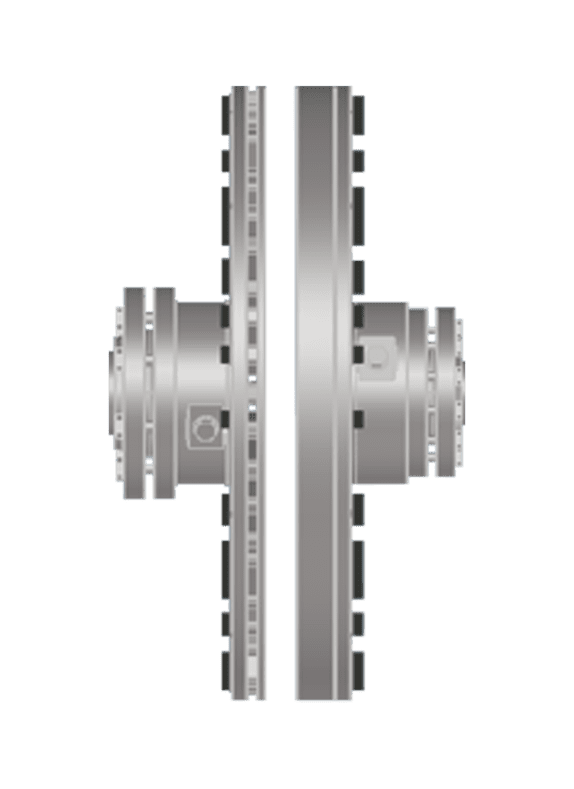
When FMEA is applied to rotating equipment, the analysis consistently surfaces failure modes linked to mechanical wear, misalignment, and maintenance interventions. Zytec's non-contact magnetic drives directly address these root causes by eliminating the physical contact between the motor and driven equipment that generates the majority of coupling-related failure modes. For maintenance engineers and reliability teams conducting a failure mode and effects analysis on pump, fan, or compressor systems, Zytec's technology changes the risk profile at a fundamental level:
- No wear components means wear-related failure modes are removed from the FMEA entirely, rather than managed through inspection intervals
- No lubrication requirements eliminates lubricant degradation, leakage, and contamination failure modes
- Built-in misalignment tolerance removes misalignment-induced bearing and seal overload, one of the leading root causes identified in rotating equipment FMEAs
- Inherent overload protection prevents torque peaks from propagating into the drivetrain, reducing the severity rating of downstream failure effects
- Fewer maintenance interventions near rotating equipment reduces human-error-related failure modes and the associated safety and downtime risk
The result is a measurably shorter FMEA worksheet, lower RPNs across the coupling-related failure modes, and a lower total cost of ownership. If your team is conducting a reliability analysis on rotating equipment and wants to understand how non-contact drive technology can reduce your highest-priority failure modes, contact Zytec to discuss your specific application.
Frequently Asked Questions
How long does it typically take to complete an FMEA for a rotating equipment system?
The time required depends on the complexity of the system and the team's familiarity with the process. A focused FMEA on a single pump or fan assembly with a well-prepared team typically takes two to four facilitated sessions of two to three hours each. More complex systems, such as a full compressor train or a multi-stage process line, may require several weeks of iterative work. Investing time upfront in a thorough system map and a pre-populated failure mode library significantly reduces session time and improves output quality.
What is a good starting RPN threshold for prioritizing corrective actions?
There is no universal RPN threshold that applies to every industry or system, and relying on a single cutoff number can be misleading. Many organizations use an RPN of 100 to 125 as a general action trigger, but this should always be combined with a hard rule that any failure mode with a severity rating of 9 or 10 is escalated regardless of its RPN. A more robust approach is to rank all failure modes by RPN, then apply engineering judgment to the top 20%, ensuring that high-severity, low-frequency scenarios are never deprioritized purely on statistical grounds.
Can FMEA be used reactively after a failure has already occurred, or is it only a proactive tool?
FMEA can and should be used reactively as well as proactively. When an unexpected failure occurs, revisiting the existing FMEA to understand why that failure mode was rated low-risk — or why it was missed entirely — is one of the most valuable learning exercises a reliability team can perform. This reactive review updates the analysis with real field data, recalibrates the team's scoring assumptions, and often surfaces related failure modes that share the same root cause. Treating every significant failure event as a trigger for an FMEA update is a core principle of a mature reliability program.
What software tools are commonly used to document and manage FMEA worksheets?
Many teams start with structured spreadsheet templates in Microsoft Excel, which are practical for smaller analyses and widely understood across disciplines. Dedicated reliability software platforms such as Relyence, Isograph, or PTC Windchill FMEA offer more robust features including RPN tracking, action item management, revision history, and integration with CMMS or asset management systems. For organizations managing multiple FMEAs across a large asset base, a purpose-built tool is worth the investment because it enforces consistency, simplifies periodic reviews, and provides an auditable record of risk decisions over the asset lifecycle.
How does FMEA relate to Reliability-Centered Maintenance (RCM), and should we do both?
FMEA is a core analytical component within a full Reliability-Centered Maintenance (RCM) process, so the two methods are complementary rather than alternatives. RCM uses FMEA-style failure mode analysis as its foundation, then applies a structured decision logic to determine the most appropriate maintenance strategy for each failure mode — whether that is condition monitoring, time-based replacement, redesign, or run-to-failure. For organizations that are not yet ready to implement a full RCM program, standalone FMEA delivers significant value on its own. For asset-intensive operations seeking to optimize maintenance strategies across an entire facility, RCM built on a solid FMEA foundation is the more comprehensive path.
How do you handle failure modes where historical failure rate data is not available?
Lack of historical data is common, especially for new equipment or processes, and it should not prevent an FMEA from moving forward. In the absence of field data, teams can draw on manufacturer reliability specifications, industry databases such as MIL-HDBK-217 or OREDA, published case studies from similar applications, and the collective experience of the cross-functional team. Occurrence ratings assigned without data should be clearly flagged in the worksheet and treated as estimates pending validation. As the equipment accumulates operating hours and maintenance records, those estimates should be revisited and updated with actual performance data.
What is the difference between a Design FMEA (DFMEA) and a Process FMEA (PFMEA), and how do I know which one to use?
A Design FMEA (DFMEA) focuses on potential failure modes that originate in the design of a component or system — asking whether the design itself is capable of meeting its intended function under all expected operating conditions. A Process FMEA (PFMEA) focuses on failures that can occur during manufacturing, assembly, installation, or maintenance — asking whether the process used to build, install, or service the equipment could introduce failure modes. In practice, maintenance and reliability engineers working on installed rotating equipment will most often conduct a PFMEA, since the design is fixed and the variables under their control are maintenance procedures, operating practices, and process conditions. DFMEA is most relevant during the equipment selection, specification, or redesign phases.