Identify the root causes of bearing failure
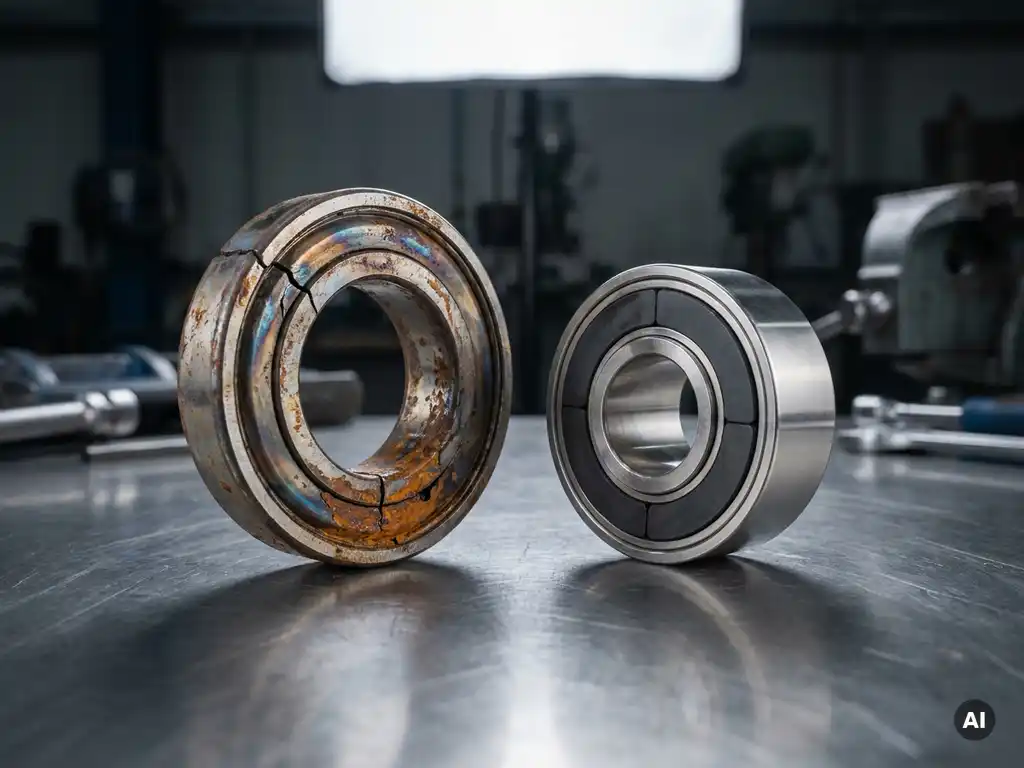
Before you can stop bearing failure, you need to understand what is actually causing it. Bearing wear rarely happens in isolation. In most industrial rotating equipment installations, the failure is the visible symptom of an underlying mechanical condition that has been present for some time. Misdiagnosing the symptom without addressing the cause means you will simply replace the bearing and experience the same failure again.
The most common root causes of bearing failure in rotating equipment fall into a well-established set of categories. Work through each one systematically rather than assuming you already know the answer:
- Misalignment: Both static misalignment at installation and dynamic misalignment caused by thermal expansion, pipe strain, and foundation movement during operation. Industry experience consistently identifies misalignment as responsible for a substantial proportion of rotating machinery failures, with estimates ranging from 30 to 50% of all bearing and seal problems.
- Vibration and torsional shock: Torsional oscillations and shock loads transmitted through mechanical couplings place cyclic stress on bearing races and rolling elements, accelerating fatigue wear.
- Lubrication failures: Over-lubrication, under-lubrication, contaminated grease, or the wrong lubricant specification for the operating temperature range.
- Overloading: Radial or axial forces exceeding the bearing's rated capacity, often caused by misalignment-induced reaction forces or incorrect coupling selection.
- Maintenance-induced damage: Incorrect reassembly after a previous intervention, improper bearing fitting technique, or misalignment introduced during reinstallation.
- Electrical bearing currents: In variable frequency drive applications, high-frequency switching can induce currents that discharge through bearing races, causing pitting and fluting damage.
After reviewing this list, examine your failure history. Pull maintenance records for the last two to three years and look for patterns: which bearings are failing, how frequently, and what the operating conditions are at the time of failure. If the same bearings are failing repeatedly on the same equipment, that is a strong indicator of a structural mechanical cause rather than a random component defect.
Audit your current installation for failure risks
With the root causes mapped out, the next step is to inspect your actual installation and measure the conditions that are driving bearing wear. A structured audit gives you objective data to work with rather than assumptions.
- Check shaft alignment: Use a laser alignment tool to measure both angular and parallel misalignment at the coupling. Record the values and compare them against the coupling manufacturer's tolerances. Remember that thermal growth during operation can introduce additional dynamic misalignment well beyond what you measure cold at standstill.
- Measure vibration levels: Use a vibration analyser to take baseline readings at the bearing housings in both the radial and axial directions. Elevated vibration at specific frequencies can point directly to misalignment, imbalance, looseness, or bearing defect frequencies.
- Inspect the coupling: Examine the coupling element for wear, cracking, hardening, or deformation. Worn elastomers and flexible elements in jaw, pin-and-bush, tyre, or grid couplings are a sign that the coupling has been absorbing misalignment forces and transmitting residual loads into the bearings.
- Check bearing temperature: Use an infrared thermometer or contact probe to measure bearing housing temperature during normal operation. Elevated temperature relative to the ambient baseline indicates overloading, lubrication issues, or both.
- Review lubrication records: Confirm the correct grease type and grade is specified, verify re-greasing intervals are being followed, and check that grease nipples and relief points are functioning correctly.
- Inspect the foundation and baseplate: Check for soft foot, cracked grouting, and loose anchor bolts. Foundation movement introduces dynamic misalignment that no alignment procedure can permanently correct.
After completing the audit, you should have a clear picture of which risk factors are active in your installation. Prioritize the findings by severity: misalignment and vibration issues typically have the highest impact on bearing life and should be addressed first. Document everything so you have a baseline to compare against after you implement corrective measures.
Eliminate mechanical contact to remove the failure source
With the failure drivers identified, the most effective long-term intervention is to address the mechanical interface between the motor and the driven equipment. Conventional flexible couplings, regardless of type, retain physical contact between the driving and driven shafts. This means that misalignment-induced reaction forces are transmitted into the bearings even when the coupling itself is rated to accommodate the misalignment. The coupling absorbs the misalignment mechanically, but the resulting forces still travel through the shaft system and load the bearing races.
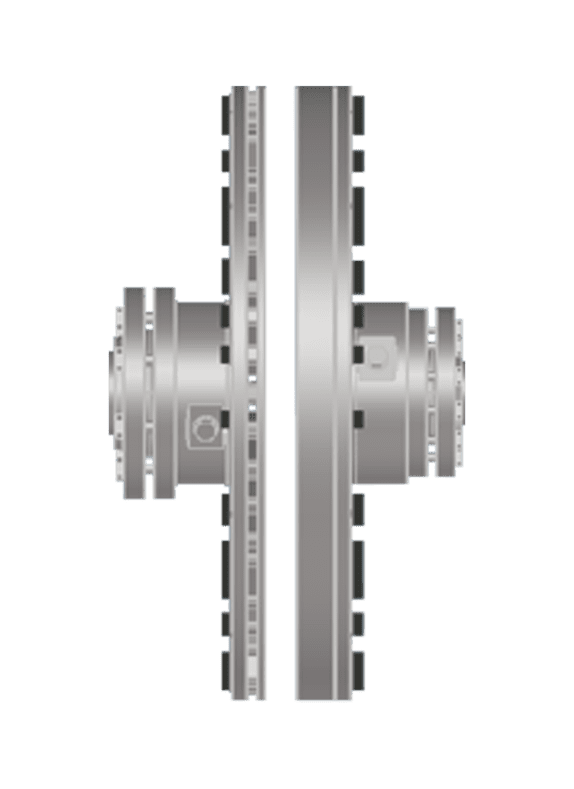
The structural solution to this problem is to eliminate mechanical contact entirely. Non-contact magnetic drives transmit torque across an air gap using eddy current magnetic coupling, with no physical interface between the motor shaft and the driven shaft. Because there is no contact, there is no mechanical pathway for misalignment forces to reach the bearings. The misalignment is not accommodated or dampened. It is simply not transmitted.
This has measurable consequences for bearing life. When misalignment-induced peak loads, torsional oscillations, and vibration are removed from the drivetrain, every downstream component operates under more stable load conditions. Bearings, seals, gearboxes, and shafts all benefit. The PF curve, the timeline from detectable degradation to functional failure, extends significantly because the primary accelerators of bearing wear are no longer present in the system.
When evaluating a transition to non-contact drive technology for bearing failure prevention, consider the following practical points:
- Non-contact couplings can be retrofitted to existing installations, reusing the existing motor, motor cabling, and shaft arrangement without laser alignment during installation.
- Coupling selection is based directly on motor power and speed, without service factor calculations, because torque peaks and shock loads cannot generate mechanical stress within the coupling.
- There are no wear components, no lubrication requirements, and no periodic element replacement. The coupling maintenance interval is effectively eliminated.
- Radial stiffness is zero, meaning no radial force is transmitted to the bearing regardless of the misalignment present during operation.
Removing mechanical contact does not just reduce bearing wear. It also eliminates a significant category of maintenance-induced failure risk. Every time a conventional coupling element is replaced or a shaft is realigned, there is a probability of error during reassembly. Eliminating the need for those interventions structurally reduces the number of human-error exposure events over the asset's lifetime.
Reduce vibration at the source with magnetic drives
Even after addressing misalignment, residual vibration in the drivetrain can continue to accelerate bearing wear if the transmission path between the motor and the load still allows torsional oscillations and shock loads to propagate. This is particularly relevant in applications with variable loads, high-inertia starts, or process-driven torque fluctuations such as pumps, fans, compressors, and conveyors.
Magnetic drive technology addresses this at the source rather than at the symptom. Because torque is transmitted across an air gap with no mechanical contact, torsional vibration and shock loads generated on either side of the coupling cannot cross to the other side. The motor side and the driven side are mechanically decoupled in terms of shock and oscillation, even while torque is transmitted continuously.
In practice, this means that a torque spike caused by a sudden load change on the pump or fan does not propagate back into the motor bearings. Equally, torsional oscillations from the motor do not reach the driven equipment's bearings and seals. Industry experience with non-contact drive installations has demonstrated vibration reductions of up to 80% compared to conventional coupling arrangements, which directly extends bearing service life.
To verify that vibration reduction is being achieved after installation, take post-installation vibration measurements at the same bearing housing locations and in the same directions as your pre-installation audit baseline. Compare the frequency spectra, not just the overall vibration level. You should see a reduction in misalignment-related frequencies (typically 1x and 2x running speed in the axial direction) and a reduction or elimination of coupling-related frequencies. If elevated vibration persists at specific frequencies, this points to a remaining issue such as rotor imbalance or a structural resonance that needs separate attention.
Validate results and track bearing health over time
Stopping bearing failure is not a one-time intervention. It requires an ongoing measurement framework that confirms the corrective actions are working and gives you early warning of any new degradation before it reaches failure. With the mechanical changes in place, set up a structured monitoring routine.
- Establish a vibration monitoring schedule: Take regular vibration readings at all bearing locations on the affected equipment. Monthly readings are appropriate for most industrial applications; critical equipment may warrant continuous online monitoring. Trend the data over time rather than comparing single readings to a fixed alarm threshold.
- Monitor bearing temperature trends: Track bearing housing temperatures at each measurement point. A rising temperature trend over several measurement periods is a more reliable early warning indicator than a single high reading.
- Inspect the air gap on non-contact drives: If you have installed a non-contact magnetic drive, the air gap between the rotor components serves as a system-level indicator. Changes in the air gap over time can signal bearing degradation in the motor or driven equipment, pipe strain, or foundation movement. This makes the air gap a useful passive diagnostic tool for the wider drivetrain.
- Review lubrication intervals and records: Confirm that re-greasing intervals and quantities are being followed correctly, and that the lubricant specification has not changed without a corresponding review of the interval.
- Track mean time between bearing replacements: Record every bearing replacement with the date, operating hours, failure mode, and the bearing location. Calculate the mean time between replacements for each position and track whether it is improving after the corrective measures were applied.
A consistent monitoring programme also gives you the data needed to make the business case for further investment in reliability improvements. When you can demonstrate that bearing replacement frequency has dropped and unplanned downtime has reduced, the return on investment in better drive technology and maintenance practices becomes straightforward to quantify.
How Zytec helps stop bearing failure
Zytec's non-contact magnetic drives are engineered specifically to eliminate the mechanical conditions that cause bearing failure in industrial rotating equipment. Rather than managing the symptoms of misalignment, vibration, and shock loading, Zytec's technology removes the transmission path for these forces entirely. The result is a structurally different operating environment for your bearings, seals, and connected components.
Here is what Zytec's non-contact drive technology delivers in practice:
- Zero radial stiffness: No misalignment forces reach the bearings, regardless of static or dynamic misalignment in the installation.
- No torsional shock transmission: Torque peaks and torsional oscillations are decoupled across the air gap, reducing drivetrain vibration by up to 80%.
- No wear components: The coupling contains no elastomers, no lubrication systems, no gear teeth, and no friction elements. Coupling maintenance is eliminated, reducing human-error exposure during interventions.
- 20+ year maintenance-free operational span: The coupling's torque transmission characteristics do not degrade with age, temperature, or accumulated operating hours.
- Retrofit-compatible: Zytec drives install on existing equipment without laser alignment, without motor replacement, and without changes to existing power cabling in most configurations.
- ATEX-certified variants available: The F-TORQ.EX series is certified for Zone 1 and Zone 2 hazardous areas, covering gas groups IIA, IIB, and IIC, with ignition sources eliminated by design.
If bearing failure is a recurring cost in your operation, contact Zytec to discuss your specific application and find out how non-contact drive technology can extend bearing life, reduce maintenance spend, and deliver a measurable improvement in equipment reliability.
Frequently Asked Questions
How do I know whether my bearing failures are caused by misalignment or by a lubrication problem?
The failure pattern on the bearing itself is your most reliable diagnostic clue. Misalignment typically produces uneven wear across the raceway, spalling concentrated on one side of the bearing, or damage to thrust faces, and it is often accompanied by elevated axial vibration at 1x and 2x running speed. Lubrication failures, by contrast, tend to produce surface distress across the full raceway, smearing, or corrosion pitting, and they are usually accompanied by rising bearing temperatures without a corresponding increase in vibration. In practice, both conditions can be present simultaneously, so always complete a full audit rather than stopping at the first cause you identify.
Can a non-contact magnetic drive be used on any type of rotating equipment, or are there applications where it is not suitable?
Non-contact magnetic drives are well suited to the majority of industrial rotating equipment applications, including pumps, fans, compressors, blowers, and conveyors, across a wide range of power ratings and operating speeds. The technology is not appropriate for applications requiring a rigid mechanical speed ratio between shafts, such as gearboxes, or where the inherent slip characteristic of eddy current coupling is operationally unacceptable. For most continuous-duty industrial applications, however, the slip is minimal and predictable, and the bearing life benefits far outweigh this consideration. If you are unsure whether your specific application is compatible, the coupling selection process should include a review of your torque profile, speed range, and duty cycle.
What is the most common mistake maintenance teams make after replacing a failed bearing?
The most common mistake is replacing the bearing without investigating and correcting the root cause, which means the new bearing is installed into exactly the same adverse conditions that destroyed the previous one. A close second is introducing new misalignment during reassembly by not re-checking shaft alignment after the bearing housing is refitted and the coupling is reconnected. Both errors guarantee a repeat failure, often within a fraction of the original bearing's service life. Always treat a bearing replacement as a diagnostic and corrective event, not just a parts swap.
How quickly should I expect to see an improvement in bearing life after correcting misalignment or installing a non-contact drive?
The improvement in operating conditions, specifically the reduction in bearing loads and vibration levels, is immediate and measurable from the first post-installation vibration survey. However, the improvement in bearing service life only becomes visible over time as you accumulate operating hours and track mean time between replacements at each bearing position. In applications where previous bearing life was very short, say weeks or a few months, the change can be apparent within a single maintenance cycle. In applications with longer original bearing life, you may need 12 to 24 months of tracking data before the statistical improvement is clearly demonstrated.
Is it worth investing in continuous online vibration monitoring, or are periodic manual readings sufficient?
For most standard industrial applications, monthly manual vibration readings taken with a portable analyser provide adequate early warning, provided the data is trended consistently and reviewed against baselines rather than just compared to a single alarm threshold. Continuous online monitoring becomes cost-justified when the equipment is critical to production continuity, when the consequence of an undetected failure is high, or when access for manual readings is difficult or hazardous. A practical approach is to start with periodic manual monitoring to establish baselines and failure patterns, then upgrade to continuous monitoring on the specific assets where the data shows the highest risk or the highest cost of unplanned failure.
What should I do if vibration levels remain elevated after installing a non-contact magnetic drive?
Persistent elevated vibration after installation indicates that one or more failure drivers outside the coupling interface are still active. The most common remaining causes are rotor imbalance on the motor or driven equipment, a structural resonance in the baseplate or pipework, soft foot that was not corrected during installation, or pipe strain acting on the pump casing. Return to your post-installation vibration spectrum and identify which frequencies are still elevated: 1x running speed typically points to imbalance, sub-synchronous frequencies suggest looseness or resonance, and high-frequency broadband elevation can indicate a remaining bearing defect. Address each finding systematically before concluding that the vibration is irreducible.
How do I build a business case for upgrading to non-contact drive technology when my maintenance budget is under pressure?
Start with the data you already have: pull your maintenance records and calculate the total cost of bearing failures over the past two to three years, including parts, labour, emergency callout premiums, and the production value of unplanned downtime. This gives you a defensible baseline cost of the current situation. Then model the projected saving based on extended bearing replacement intervals and the elimination of coupling element replacements and periodic alignment interventions. For most installations with a history of recurring bearing failures, the payback period for a non-contact drive is well within two years, and the ongoing maintenance cost reduction continues for the operational life of the equipment, which in Zytec's case is rated at over 20 years without coupling maintenance.