How do the 4 pillars of lean manufacturing work together?
The four lean manufacturing pillars work together as an integrated system rather than as independent tools. Value sets the direction by defining what the customer actually pays for. The value stream identifies every step in the production process and separates the steps that create value from those that do not. Flow eliminates interruptions so that work moves continuously through the process. Pull ensures that production only happens when a downstream signal triggers it, preventing overproduction and excess inventory.
Each pillar depends on the others. Without a clear definition of value, the value stream has no benchmark for identifying waste. Without flow, a pull system encounters bottlenecks that stall production. Without pull, even a smooth flow produces output that sits in inventory rather than reaching customers. The pillars reinforce each other, and organizations that implement only one or two typically see limited gains. The full benefit of lean manufacturing principles emerges when all four operate simultaneously and continuously improve through regular review cycles.
Underlying all four pillars is the concept of continuous improvement, known in lean terminology as kaizen. No implementation is ever final. Teams revisit value definitions as customer expectations shift, re-map value streams as processes change, and refine flow and pull mechanisms as new constraints appear. This commitment to ongoing refinement is what separates a functioning lean production system from a one-time efficiency project.
What is the first pillar of lean manufacturing: value?
Value, the first pillar of lean manufacturing, is defined entirely from the customer's perspective. It refers to any feature, capability, or outcome that a customer is willing to pay for. In a lean production system, anything that does not contribute to this definition is classified as waste, regardless of how long the step has been part of the process or how technically complex it is.
Defining value correctly is harder than it sounds. Internal assumptions about what customers want frequently diverge from what customers actually require. A manufacturer may invest heavily in a finishing step that adds cost and time, only to find that customers place no value on it whatsoever. Lean thinking requires organizations to challenge these assumptions through direct engagement with customers, analysis of purchasing behavior, and honest examination of product specifications.
Once value is clearly defined, it becomes the reference point for every decision that follows. The value stream cannot be mapped without knowing which outputs are valuable. Flow cannot be optimized without knowing which steps genuinely contribute to the final product. Value is therefore not just the first pillar chronologically; it is the foundation on which the entire lean manufacturing framework rests. Getting it wrong undermines every subsequent effort.
What is the value stream pillar and why does it matter?
The value stream pillar involves mapping every action, process, and handoff required to deliver a product or service from raw material to the customer. It matters because this mapping makes waste visible. Without a complete picture of the entire production flow, inefficiencies remain hidden inside departmental boundaries, shift handovers, and supplier interfaces where no single team has full visibility.
A value stream map captures both material flow and information flow. It shows how orders are communicated, how materials move between workstations, where inventory accumulates, and where delays occur. This complete view reveals the eight categories of waste that lean manufacturing targets: overproduction, waiting, unnecessary transport, over-processing, excess inventory, unnecessary motion, defects, and unused talent.
The practical output of value stream mapping is a clear distinction between value-adding steps and non-value-adding steps. Industry experience consistently shows that in most manufacturing processes, only a small fraction of total lead time actually adds value in the customer's eyes. The remainder is waiting, moving, or reworking. Identifying this gap is what makes waste reduction in manufacturing achievable in a structured, measurable way rather than through guesswork.
Value stream mapping also creates organizational alignment. When teams from different departments look at the same map together, they see how their individual processes affect the broader system. This shared understanding is essential for driving cross-functional improvement rather than local optimization that simply shifts the bottleneck elsewhere.
How does flow work as a lean manufacturing pillar?
Flow, as a lean manufacturing pillar, means organizing production so that work moves through each step continuously without interruption, waiting, or batching. The goal is to eliminate the stops and starts that inflate lead times and create inventory buildup between process steps. When flow is achieved, a product moves from one value-adding step directly to the next without sitting idle.
Most traditional manufacturing environments organize work by function, grouping all similar machines or activities together in departments. This layout creates batches that travel between departments, generating queues at each handoff. Lean manufacturing challenges this structure by reorganizing work around the product's flow rather than around functional specialization.
Practical mechanisms for creating flow
Creating flow typically requires changes to both physical layout and process design. Cellular manufacturing arranges equipment in the sequence that work actually travels, reducing transport distance and eliminating inter-departmental queues. Standardized work defines the precise sequence and timing of each task so that every operator performs steps consistently, preventing variation that causes downstream disruption.
How flow connects to cycle time and lead time
Flow directly reduces lead time by eliminating non-value-adding time between steps. When batches wait in queues, a product that takes minutes to process can spend days or weeks in a facility. Improving flow compresses lead time dramatically, which in turn improves responsiveness to customers, reduces work-in-progress inventory, and frees up capital. Organizations that establish genuine flow often discover that their actual processing time is a fraction of their total lead time, revealing the scale of the improvement opportunity.
What does the pull pillar mean in lean manufacturing?
The pull pillar means that production at each step is triggered only by actual demand from the next step downstream, rather than by a forecast or a schedule. In a pull system, nothing is produced until a signal confirms that it is needed. This prevents overproduction, which lean manufacturing identifies as the most damaging form of waste because it generates excess inventory, consumes resources prematurely, and hides other problems.
Pull systems contrast with push systems, where production follows a master schedule based on demand forecasts. Push systems frequently produce more than customers actually order, leading to inventory accumulation, storage costs, and the risk of obsolescence. Pull systems respond to real consumption signals, keeping inventory lean and production aligned with genuine demand.
The most common tool for implementing pull is the kanban system. A kanban is a signal, which can be a card, a container, a bin, or a digital trigger, that authorizes the upstream process to produce or replenish a specific quantity of a specific item. When a downstream workstation consumes a component, it sends the kanban signal back upstream, which then produces only what was consumed. This creates a self-regulating rhythm that connects every step in the value stream to actual customer demand.
Pull thinking also applies beyond the shop floor. Procurement teams operating on pull principles order materials based on actual consumption rather than forecast-driven purchase orders. This reduces supplier lead time pressure and lowers raw material inventory. The pull pillar, when applied across the full value stream, connects the customer's order all the way back to the first step of production in a single, demand-driven chain.
What are the most common obstacles to implementing lean pillars?
The most common obstacles to implementing lean manufacturing pillars are cultural resistance, insufficient leadership commitment, isolated implementation, and failure to sustain gains after initial improvements. These challenges are consistent across industries and organization sizes, and they are responsible for the majority of lean programs that deliver short-term results but fail to create lasting change.
Cultural resistance is typically the most significant barrier. Lean manufacturing requires employees at every level to identify and report problems openly, challenge existing processes, and accept that change is permanent rather than episodic. In organizations where problems are historically managed upward or where job security feels threatened by efficiency improvements, this openness does not emerge naturally. Building the psychological safety needed for a genuine lean culture takes sustained effort from leadership.
Leadership commitment is equally critical. When senior managers treat lean as a cost-cutting initiative delegated to a single department rather than as an operational philosophy that changes how decisions are made, implementation stalls. Lean principles require leaders to spend time on the shop floor, understand the value stream directly, and make resource allocation decisions that prioritize long-term operational health over short-term output pressure.
Isolated implementation is another frequent failure mode. Organizations that improve flow in one department without addressing the upstream or downstream steps simply move the constraint rather than eliminating it. The four lean manufacturing pillars are interdependent; implementing them in isolation produces fragmented results. A pull system installed without stable flow will expose bottlenecks that frustrate rather than improve performance. A value stream map that is never acted upon becomes a document rather than a driver of change.
Finally, sustaining gains requires ongoing measurement and regular kaizen activity. Processes drift back toward old habits without deliberate reinforcement. Organizations that embed continuous improvement into daily management routines, rather than treating it as a project with a completion date, are the ones that sustain lean performance over time.
How Zytec Supports Lean Manufacturing in Rotating Equipment
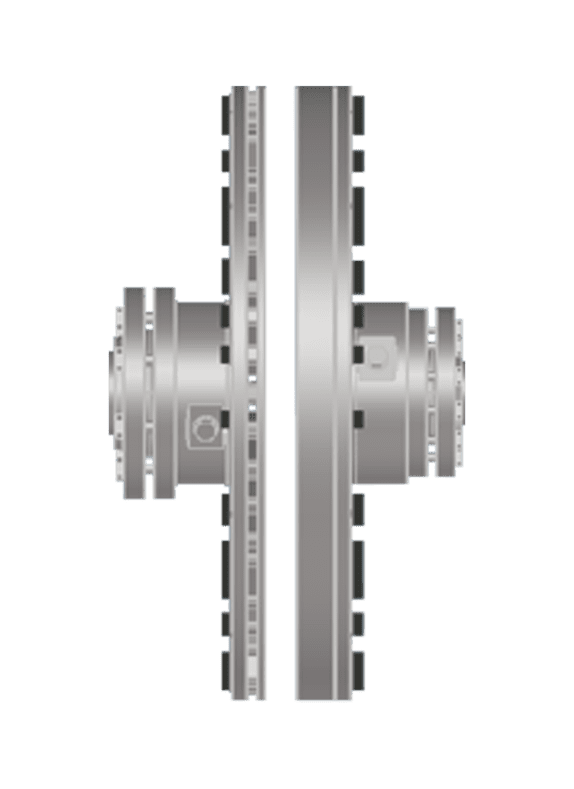
Lean manufacturing's core objective is eliminating waste and maximizing value, and in asset-intensive industries, rotating equipment is one of the largest sources of both. Unplanned downtime, maintenance interventions, alignment procedures, and energy overconsumption all represent forms of waste that directly undermine lean production principles. Zytec's non-contact magnetic drives address these sources of waste at their root.
- Waste reduction: Non-contact drives eliminate wear components, lubrication requirements, and laser alignment procedures, removing entire categories of maintenance activity that add cost without adding value.
- Flow and uptime: With a maintenance-free operational span exceeding 20 years and vibration reduction of up to 80%, Zytec drives support the stable, uninterrupted production flow that lean manufacturing depends on.
- Energy efficiency: Energy savings of up to 50% reduce the resource input required per unit of output, directly lowering total cost of ownership and supporting sustainability mandates.
- Pull-compatible reliability: In demand-driven production environments, equipment reliability is non-negotiable. Non-contact drives structurally reduce the risk of unplanned stoppages that break the pull chain.
- Lower TCO: By eliminating coupling-related failure costs, alignment downtime, and spare parts logistics, Zytec drives deliver a payback period often under two years.
For industrial organizations applying lean manufacturing principles to their operations, Zytec provides a concrete, measurable way to extend those principles into the mechanical reliability of rotating equipment. Contact Zytec to find out how non-contact drives can support your lean production goals.
Frequently Asked Questions
How long does it typically take to implement all four lean manufacturing pillars across an organization?
There is no fixed timeline, and organizations should be cautious of any implementation plan that promises a defined end date. A realistic initial deployment across a single value stream can take 12 to 24 months, but lean manufacturing is a continuous practice rather than a project. Companies like Toyota have been refining their lean systems for decades. A more useful framing is to think in terms of maturity stages: early implementation focuses on mapping and quick wins, while later stages embed pull systems, flow redesign, and daily kaizen into standard operations.
What is the best pillar to start with if our organization is new to lean manufacturing?
Start with value. Without a clear, customer-validated definition of what creates value in your specific process, every subsequent step risks optimizing the wrong things. In practice, this means engaging directly with customers, reviewing return and complaint data, and auditing your current process steps against a simple question: would the customer pay for this? Once value is defined, value stream mapping becomes a structured exercise rather than an abstract one, giving your team a concrete foundation before tackling flow and pull.
How do we prevent lean improvements from reverting back to old habits after the initial implementation?
Sustaining lean gains requires embedding improvement into daily management routines rather than treating it as a one-time initiative. Practical mechanisms include daily stand-up reviews at the workstation level, visual management boards that make performance deviations immediately visible, and scheduled kaizen events that revisit value streams on a regular cadence. Leadership behavior is equally critical: when managers visibly use lean thinking to make operational decisions, it signals to the wider team that the change is permanent, not cosmetic.
Can lean manufacturing pillars be applied to non-manufacturing environments like logistics, maintenance, or office processes?
Yes, and this is increasingly common. The four pillars translate directly to any process where inputs are transformed into outputs for a customer, internal or external. In maintenance operations, for example, value is defined as equipment uptime, the value stream includes every step from fault detection to resolution, flow means minimizing delays between diagnosis and repair, and pull means triggering parts replenishment only when actual consumption occurs. The terminology may shift slightly, but the logic is identical. Service organizations, healthcare providers, and logistics teams have all applied lean principles with measurable results.
What is the difference between a push system and a pull system in practice, and how do we know which one we currently have?
The clearest indicator of a push system is inventory accumulation between process steps. If work-in-progress sits in queues waiting for the next step, or if finished goods build up ahead of actual orders, your system is pushing production based on schedules or forecasts rather than real demand. A pull system, by contrast, produces only when a downstream signal authorizes it, so inventory levels remain consistently low and tied to actual consumption. Auditing your current inventory positions and tracing whether production is triggered by a customer signal or a forecast is the fastest way to diagnose which system you are operating.
How does equipment reliability connect to lean manufacturing performance, and what happens when machines fail unexpectedly in a lean environment?
Equipment reliability is a prerequisite for lean manufacturing, not a separate concern. Lean systems, particularly pull-based ones, operate with minimal buffer inventory by design, which means an unplanned equipment failure has an immediate and direct impact on downstream production. There is no inventory cushion to absorb the disruption. This is why total productive maintenance (TPM) is a core lean practice: it shifts maintenance from reactive repair to proactive prevention, protecting the flow and pull mechanisms that lean production depends on. Organizations that invest in mechanically reliable equipment, including technologies that eliminate common failure points, reduce the frequency and severity of these disruptions at their source.
What metrics should we track to know whether our lean implementation is actually working?
The most meaningful lean metrics connect directly to the four pillars: lead time reduction measures flow improvement, inventory turns reflect pull system effectiveness, the ratio of value-adding time to total lead time reveals waste elimination progress, and first-pass yield or defect rates indicate process stability. Avoid tracking activity metrics like the number of kaizen events completed or the volume of value stream maps produced, as these measure effort rather than outcomes. The goal is measurable improvement in how efficiently value reaches the customer, and your metrics should reflect that directly.