What does a high MTBF value actually mean?
A high MTBF value means that a piece of equipment runs for a long average duration between unplanned failures. It is a statistical measure of reliability expressed in hours: if a pump has an MTBF of 10,000 hours, it is expected to operate for roughly 10,000 hours before the next failure occurs under similar conditions.
MTBF is calculated by dividing the total operational time of a piece of equipment by the number of failures recorded during that period. It does not predict when any single failure will occur, but it describes the central tendency of a population of failures over time. The higher the MTBF, the less frequently failures disrupt operations on average.
For industrial decision-makers, a high MTBF value translates directly into business outcomes: fewer unplanned shutdowns, lower emergency maintenance costs, more predictable production schedules, and reduced risk exposure. In asset-intensive industries where rotating equipment is central to daily output, MTBF is one of the most watched reliability indicators because it captures the cumulative effect of engineering decisions, maintenance practices, and operating conditions in a single number.
It is worth noting that MTBF applies specifically to repairable assets. For non-repairable components, the equivalent metric is MTTF (mean time to failure). When engineers refer to MTBF for bearings, seals, or couplings, they are typically describing the expected service life before replacement is required, which is functionally similar but technically distinct.
Is a higher MTBF always better for industrial equipment?
A higher MTBF is almost always better for industrial equipment, but the metric alone does not tell the full reliability story. An asset with an extremely high MTBF but a very long repair time can still cause significant downtime. MTBF must be read alongside repair time and failure consequences to make sound maintenance decisions.
There are also situations where a very high MTBF can create a false sense of security. If the MTBF figure is based on limited data, a short observation window, or favorable operating conditions that do not reflect real plant environments, it overstates actual reliability. Equipment that has only been in service for a short period may appear to have an excellent MTBF simply because insufficient time has passed to record representative failures.
Additionally, chasing a higher MTBF through over-maintenance can be counterproductive. Preventive maintenance that is scheduled too frequently introduces its own failure risk: every time technicians open equipment, there is a chance of reassembly errors, contamination, or damage to components that were functioning correctly. This is sometimes called infant mortality, where failures cluster shortly after maintenance interventions. Reducing unnecessary interventions can actually raise real-world MTBF even when it appears counterintuitive.
The right question is not just whether MTBF is high, but whether it is high under realistic operating conditions and whether the cost of achieving it is proportionate to the reliability gain. A well-engineered asset that sustains a high MTBF without frequent intervention delivers far more value than one that achieves the same number only through intensive scheduled maintenance.
What is the difference between MTBF and MTTR?
MTBF (mean time between failures) measures how long equipment runs before it fails. MTTR (mean time to repair) measures how long it takes to restore the equipment to service after a failure. Together, they determine overall equipment availability: high MTBF and low MTTR produce maximum uptime, while a poor figure for either one degrades it.
The relationship between the two metrics is expressed in the availability formula:
- Availability = MTBF / (MTBF + MTTR)
- An asset with an MTBF of 1,000 hours and an MTTR of 10 hours achieves approximately 99% availability
- The same MTBF with an MTTR of 100 hours drops availability to around 91%
- Cutting MTBF in half while also halving MTTR leaves availability unchanged
This distinction matters strategically. Some organizations focus almost exclusively on preventing failures (improving MTBF) while neglecting the speed of recovery (MTTR). In practice, both levers deserve attention. For critical rotating equipment where even brief outages carry large production costs, reducing MTTR through better spare parts availability, faster diagnostics, and simpler maintenance procedures can deliver as much value as extending the interval between failures.
MTTR is also more directly actionable in the short term. Improving MTBF often requires engineering changes, equipment upgrades, or sustained operational discipline over months or years. Reducing MTTR can be achieved more quickly through logistics improvements, technician training, and maintenance procedure optimization.
What causes low MTBF in pumps, fans, and rotating equipment?
Low MTBF in rotating equipment is most commonly caused by misalignment, vibration, inadequate lubrication, and operating conditions that exceed equipment design limits. These root causes are interrelated: misalignment generates vibration, vibration accelerates bearing and seal wear, and worn components create the conditions for unplanned failure.
Mechanical root causes
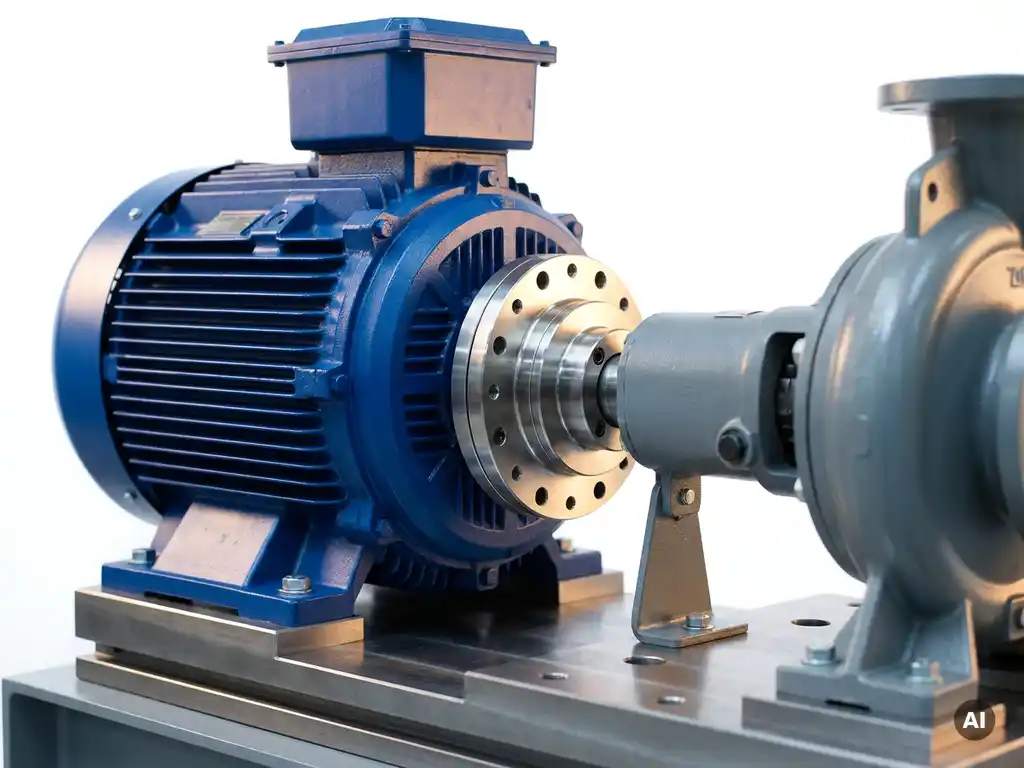
Shaft misalignment is widely cited as responsible for a significant share of rotating machinery failures. Even small angular or parallel misalignment between a motor and a driven machine creates cyclic loading on bearings and seals with every revolution. Over time, this accelerates fatigue and dramatically shortens component life. Misalignment is particularly difficult to eliminate permanently because thermal expansion during operation shifts shaft positions away from cold-alignment settings.
Vibration compounds the problem. Imbalance, resonance, and torsional shock loads all transmit stress through the drivetrain. Couplings that transmit these forces directly into bearings and seals reduce MTBF across the entire rotating assembly, not just the coupling itself.
Operational and environmental root causes
Running equipment outside its design envelope is another major contributor to low MTBF. Pumps operated far from their best efficiency point experience recirculation, cavitation, and radial thrust loads that degrade impellers and seals rapidly. Fans running at fixed speed in variable-demand systems cycle through vibration-prone operating points. Compressors and conveyors subjected to frequent overload events accumulate fatigue damage that shortens service life well below nameplate expectations.
Environmental factors including dust, humidity, chemical exposure, and temperature extremes accelerate wear on seals, bearings, and lubricated surfaces. In sectors such as mining, chemical processing, and wastewater treatment, these conditions are unavoidable, which is why equipment selection and protection design matter as much as maintenance practice.
How can you improve MTBF without increasing maintenance frequency?
The most effective way to improve MTBF without increasing maintenance frequency is to address the root causes of failure at the design and engineering level rather than compensating for them through more frequent inspections. Eliminating friction, misalignment, and vibration transmission from the drivetrain reduces the rate at which components degrade, extending the interval between failures naturally.
Key strategies include:
- Eliminate misalignment at the source: Technologies that accommodate dynamic misalignment without transmitting it as bearing load prevent the most common failure driver in rotating equipment
- Reduce vibration transmission: Drivetrain components with high torsional damping absorb shock loads before they reach bearings and seals, directly extending their service life
- Match speed to demand: Running pumps and fans at reduced speed when full capacity is not required dramatically lowers mechanical stress and thermal load on all rotating components
- Remove lubrication-dependent components: Lubrication failures are a significant cause of bearing and coupling degradation; components that require no lubrication eliminate this failure mode entirely
- Reduce the number of interventions near rotating equipment: Each maintenance event introduces the risk of reassembly errors and infant mortality failures; fewer interventions mean fewer opportunities for human-error-driven failures
Condition monitoring complements these engineering measures. Vibration analysis, thermography, and oil analysis detect developing faults before they cause failure, allowing planned intervention at a time of the plant's choosing rather than at the worst possible moment. The combination of reduced degradation rates and earlier fault detection produces the largest sustainable improvement in MTBF.
What is a good MTBF target for industrial rotating equipment?
A good MTBF target for industrial rotating equipment depends on the application, criticality, and industry, but well-maintained pumps and fans in general industry typically achieve MTBF values in the range of 15,000 to 30,000 operating hours. For critical assets in continuous process industries, leading operators target MTBF values above 40,000 hours between significant failures.
These figures are benchmarks rather than universal standards. The appropriate target for any specific asset depends on several factors:
- Asset criticality: Equipment with no installed standby and high production impact justifies a higher MTBF target and more investment to achieve it
- Operating environment: Harsh environments (high temperature, corrosive media, dust, vibration) make very high MTBF harder to sustain without engineering countermeasures
- Operating hours per year: Continuous process plants running 8,000 hours per year accumulate wear far faster than intermittently operated assets, so the same MTBF in hours represents a very different maintenance burden
- Failure consequence: Where a failure triggers safety events, environmental incidents, or large production losses, even a very high MTBF may warrant redundancy rather than relying on MTBF alone
The most useful approach is to benchmark current MTBF against historical plant data and peer facilities, identify the gap, trace it to specific failure modes, and set targets that are achievable through identified engineering or operational changes. A target that cannot be connected to a specific improvement action is a wish, not a plan.
How Zytec non-contact drives improve MTBF in rotating equipment
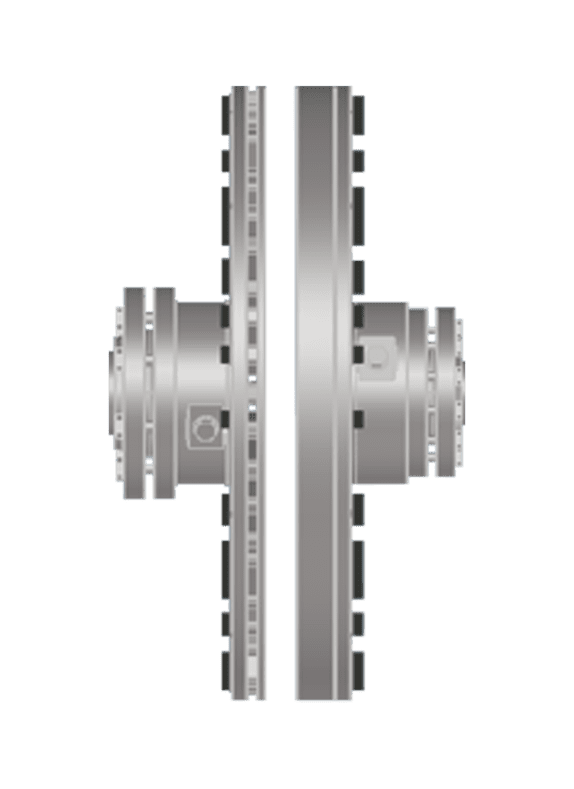
Zytec's non-contact drives address the root causes of low MTBF directly, rather than treating the symptoms through more frequent maintenance. By eliminating mechanical contact between the motor and driven equipment, these drives remove the primary failure drivers that shorten service life across pumps, fans, compressors, and conveyors.
The core reliability benefits include:
- No misalignment transmission: With radial stiffness of 0 N/mm and torsional stiffness of 0 Nm/rad, Zytec drives accommodate dynamic misalignment without transferring it as load into bearings and seals, eliminating the leading cause of rotating equipment failure
- Vibration reduction up to 80%: The air gap between rotor and stator absorbs torsional shock and dampens vibration before it reaches driven equipment, directly extending bearing and seal life
- No wear components, no lubrication: With a rated service life exceeding 20 years and no coupling maintenance required, Zytec drives eliminate lubrication failures and reduce the number of interventions near rotating equipment
- Soft-start capability: Controlled torque ramp-up reduces mechanical stress at startup, one of the highest-stress events in a rotating machine's operating cycle
- Variable speed without electronics in the hazardous zone: For applications requiring speed control, the V-TORQ drive delivers variable output without VFD-related aging, capacitor degradation, or ignition risk in Ex environments
The result is a structurally higher MTBF achieved through engineering rather than maintenance intensity, with energy savings up to 50% and a total cost of ownership payback period often under two years. If you want to understand what Zytec's non-contact drive technology could deliver for your specific rotating equipment application, contact the Zytec team for a technical assessment.
Frequently Asked Questions
How do I start tracking MTBF if my plant doesn't have reliable failure history data?
Begin by defining what counts as a failure for each asset class and recording the date, duration, and cause of every unplanned stoppage from this point forward. Even three to six months of clean data gives you a working baseline to compare against manufacturer specifications and industry benchmarks. In parallel, review any existing work order records, maintenance logs, or CMMS entries to reconstruct historical failure events, even if the data is incomplete. Imperfect historical data is still more useful than no data when identifying your highest-frequency failure modes.
What's the difference between MTBF and OEE, and which one should I focus on?
MTBF measures the reliability of individual assets — specifically how long they run between unplanned failures — while Overall Equipment Effectiveness (OEE) measures the productive output of an entire line or process, accounting for availability, performance, and quality losses together. MTBF is the right metric when you are diagnosing why specific equipment fails and how to extend its service life. OEE is more useful when you are evaluating the business impact of those failures on production output. For rotating equipment reliability programs, MTBF is the more actionable starting point, but it should ultimately be connected to its effect on availability and OEE to justify investment decisions.
Can MTBF figures from equipment datasheets be trusted for real-world planning?
Manufacturer MTBF figures should be treated as reference points rather than guaranteed outcomes, because they are typically derived from controlled test conditions, idealized installation settings, or statistical models that may not reflect your specific operating environment. Factors like ambient temperature, process fluid characteristics, duty cycle, and installation quality can cause real-world MTBF to differ significantly from published values. The most reliable approach is to validate manufacturer figures against your own plant data over time and adjust maintenance intervals accordingly. If your observed MTBF consistently falls well below the datasheet figure, that gap itself is a diagnostic signal worth investigating.
How do I know whether to invest in improving MTBF or reducing MTTR for a specific asset?
Start by calculating the current availability of the asset using the formula MTBF ÷ (MTBF + MTTR), then model what a realistic improvement in each metric would do to that figure. If MTTR is already low and failures are frequent, the bigger availability gain usually comes from improving MTBF through engineering changes. If failures are infrequent but repairs take a long time due to parts availability or access constraints, reducing MTTR often delivers faster results at lower cost. Also factor in failure consequence: for assets where any stoppage triggers a safety event or cascading production loss, both metrics deserve simultaneous attention rather than a sequential approach.
What are the most common mistakes reliability engineers make when using MTBF?
The most common mistake is treating MTBF as a predictive tool rather than a statistical average — assuming that an asset with an MTBF of 10,000 hours is safe to run until hour 9,999. MTBF describes population behavior over many failure events, not the remaining life of any individual machine. A second frequent error is calculating MTBF from too few failure events, which produces a figure that is statistically unreliable and can dramatically overstate true reliability. Third, many teams calculate fleet-wide or site-wide MTBF averages that mask the poor performance of specific assets or failure modes, delaying targeted intervention where it would have the most impact.
Does running equipment at lower speed always improve MTBF?
Running rotating equipment at reduced speed generally improves MTBF because it lowers mechanical stress, reduces bearing load, decreases heat generation, and cuts wear rates on seals and lubricated surfaces — all of which extend component life. However, speed reduction must be matched to the process requirements of the specific machine. Pumps operated too far below their best efficiency point can experience recirculation, cavitation, and increased radial loads that actually worsen reliability despite the lower speed. The goal is to match speed to actual demand, not simply to minimize it, which is why variable speed capability combined with proper system curve analysis delivers the most reliable outcome.
How does soft-start capability affect MTBF in practice?
Startup events subject rotating equipment to some of the highest mechanical stresses in its operating cycle: inrush current causes high torque spikes, cold lubricant has not yet reached operating viscosity, and thermal gradients across components create differential expansion. Repeated hard starts accumulate fatigue damage in shafts, couplings, bearings, and seals faster than steady-state operation, shortening service life between failures. Soft-start capability — whether delivered through electronic controls or through the inherent torque characteristics of the drive technology — reduces peak startup loads, spreads the acceleration over a controlled ramp, and measurably extends the life of downstream components. In applications with frequent start-stop cycles, this effect on MTBF can be substantial.