Audit your rotating equipment for maintenance hotspots
Start by mapping every piece of rotating equipment in your plant and pulling its maintenance history for the past two to three years. This includes pumps, fans, compressors, and any conveyors or mixers in your process chain. The goal is to move from a general sense that maintenance is expensive to a specific list of which assets are driving the most cost.
- List every rotating asset by location, motor size, and operating hours per year.
- Record each maintenance intervention for each asset: the type of work, parts used, labor hours, and whether the plant had to stop or reduce output as a result.
- Add up the total cost per asset, including spare parts, contractor time, and any lost production value during unplanned downtime.
- Rank assets from highest to lowest total maintenance cost over the period.
After completing this audit, you will likely find that a small number of assets account for a disproportionate share of your total spend. Industry experience consistently shows that misalignment alone is responsible for a significant portion of rotating machinery failures, because it places a constant abnormal load on bearings and seals. Flag any asset with recurring bearing or seal replacements as a priority candidate for the next steps. These are your maintenance hotspots, and they are where targeted changes will deliver the greatest return.
Eliminate mechanical wear at the source
Once you know which assets are costing the most, investigate the root cause rather than continuing to replace worn components on a cycle. Most high-maintenance rotating equipment in water treatment plants shares a common problem: the coupling between the motor and the driven machine generates wear, transmits vibration, and demands regular alignment. Fixing the symptom by replacing bearings and seals does not solve this.
Evaluate whether the coupling technology on your worst-performing assets is contributing to the problem. Traditional mechanical couplings, including jaw, pin-and-bush, and gear couplings, all contain wear elements that degrade over time. They also require precise laser alignment during installation and re-alignment after any maintenance intervention. Every time a technician works on the drivetrain, there is a risk of introducing small misalignments that accelerate bearing and seal wear downstream.
- Review the coupling type on each of your top five maintenance cost assets.
- Check the maintenance log for alignment work, coupling element replacements, and bearing or seal failures on those same assets.
- Assess whether the coupling is contributing to downstream wear by looking for patterns: recurring bearing failures on the driven side, elevated vibration readings, or frequent seal leaks.
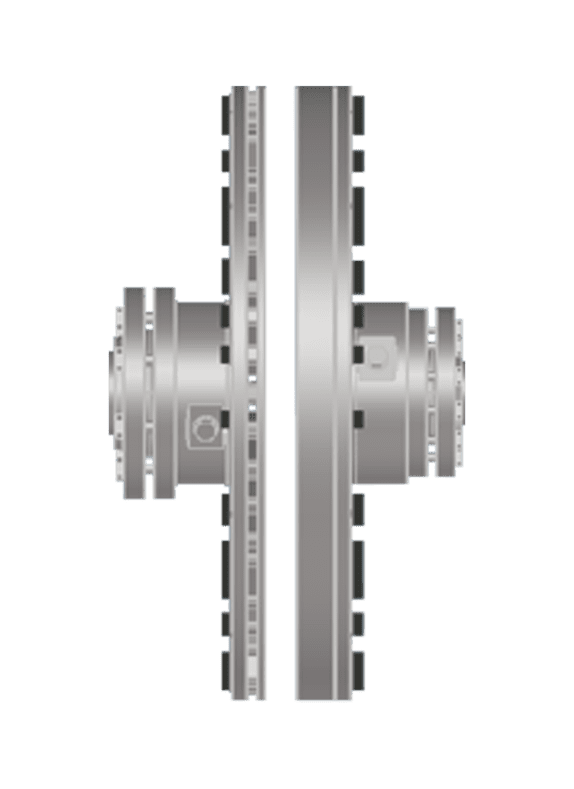
- Consider whether a contact-free coupling technology could eliminate these wear mechanisms entirely. Non-contact magnetic drives transmit torque across an air gap using permanent magnets, meaning there are no wear components, no lubrication requirements, and no laser alignment needed at installation or after maintenance.
The verification checkpoint here is straightforward: if your maintenance log shows that the same bearings or seals are failing repeatedly on a given pump or fan, and alignment work features regularly in the service history, you have confirmed that wear propagation from the coupling is the root cause. Addressing this at the source, rather than continuing to replace downstream components, is where significant cost reduction begins in water treatment plant maintenance.
Match drive technology to your specific application
Not every pump or fan in a water treatment plant has the same operating profile, and the drive technology you choose should reflect that. Some applications run at fixed speed continuously. Others need variable flow control, either to match demand or to avoid running at overcapacity. Selecting the wrong drive technology for an application is a common source of both unnecessary energy consumption and avoidable maintenance cost.
Fixed-speed applications
For equipment that runs at a consistent load without requiring speed variation, the priority is reliability and minimal intervention. Evaluate whether the current coupling is introducing unnecessary complexity. If alignment is required after every maintenance visit, or if the coupling contains rubber or elastomeric elements that degrade, a non-contact fixed-speed drive can remove all of these recurring tasks. The coupling acts as a drop-in retrofit on the existing motor and cabling, with no laser alignment required during installation.
Variable-speed applications
For pumps and fans where flow control is needed, the traditional answer has been a variable frequency drive. However, VFDs introduce their own maintenance considerations: electronic aging, capacitor degradation, harmonic filter requirements, and additional cabling. In environments where reliability and long service intervals are the priority, a mechanical variable-speed non-contact drive can offer comparable flow control with significantly fewer components subject to failure. Evaluate the total installed cost and the long-term maintenance profile, not just the purchase price, before making a selection.
- Classify each priority asset as fixed-speed or variable-speed based on its actual operating requirement.
- For variable-speed assets, calculate the full lifecycle cost of the current solution, including any VFD-related maintenance, filter replacements, and cabling costs.
- Compare this against the lifecycle cost of a mechanical alternative, factoring in the absence of electronic components, no periodic element replacement, and no alignment-induced bearing overload.
- Select the technology that best matches the application's reliability requirements and operating environment.
After this step, you should have a clear technology recommendation for each priority asset. The key verification is that your selection addresses the specific failure modes you identified in the audit, not just the most familiar or most recently marketed option.
Reduce energy-related operating costs alongside maintenance
Maintenance costs and energy costs in a water treatment plant are more connected than they appear. Equipment running under mechanical stress consumes more energy. Pumps and fans operating at fixed full speed when the process only requires partial flow waste significant electricity. Addressing both simultaneously, rather than treating them as separate projects, accelerates the return on any investment you make.
Begin with your highest-energy-consuming rotating assets, which will often overlap with your maintenance hotspots. Pumps and fans governed by the affinity laws offer the greatest energy savings when speed is reduced, because shaft power drops with the cube of speed reduction. A pump running at 80% of its rated speed uses roughly half the shaft power of the same pump at full speed. This is where eliminating overcapacity pays off most directly in terms of water treatment energy savings.
- Identify which pumps and fans are running at full speed with flow controlled by a throttle valve or bypass. These are prime candidates for variable-speed control.
- Estimate the energy savings potential by calculating the difference between current power draw and the power required at the actual process demand speed.
- Factor in the energy losses of the control technology itself. Electronic variable frequency drives carry system-level parasitic losses that are often higher than their headline efficiency figures suggest, particularly at partial load.
- Implement variable-speed control on the highest-impact assets first and measure actual energy consumption before and after.
Once speed control is in place, verify the result by comparing monthly energy meter readings for the affected circuits against the same period in the previous year. Pump maintenance costs should also begin to decline as the equipment operates under lower mechanical stress. Both improvements reinforce each other.
Build a maintenance cost baseline and track savings over time
Changes to drive technology and operating practice only deliver provable value if you have a baseline to compare against. Many plants make improvements but cannot demonstrate the financial impact because the original cost data was never captured systematically. This step ensures that the work done in the previous steps produces a clear, defensible business case.
- Use the maintenance audit data from step one to establish your baseline: total annual maintenance spend per asset, broken down by labor, parts, contractor costs, and downtime value.
- Record the date of any technology change or intervention on each asset.
- Set a review interval, typically six months and twelve months after each change, to recalculate the same cost categories.
- Track energy consumption per asset or asset group using sub-metering where available, or motor current data as a proxy.
- Document any reduction in intervention frequency, alignment events, or unplanned stoppages as qualitative evidence alongside the financial data.
After twelve months of tracking, you will have a clear picture of which changes delivered the greatest reduction in rotating equipment maintenance costs and which assets still require attention. This data also supports future investment decisions and helps justify further upgrades to plant management and procurement teams. A well-maintained baseline is the foundation for continuous improvement rather than one-off fixes.
How Zytec helps reduce maintenance costs in water treatment plants
Zytec's non-contact magnetic drives are engineered specifically for the kind of rotating equipment challenges that drive up costs in water treatment plants. By transmitting torque across an air gap using permanent magnets, Zytec drives eliminate the mechanical wear, alignment requirements, and recurring interventions that conventional couplings demand. The practical results are measurable and direct:
- No wear components means no scheduled coupling element replacements and no lubrication maintenance over the full asset lifetime.
- No laser alignment required at installation or after any maintenance visit, removing a significant source of human error and downstream bearing and seal overload.
- Vibration reduction up to 80% extends the service life of bearings, seals, and all downstream drivetrain components.
- Energy savings up to 50% on pump and fan applications where variable-speed control eliminates overcapacity.
- Payback periods often under two years, with a total cost of ownership significantly lower than conventional coupling and VFD alternatives.
- The F-TORQ and A-TORQ product lines are designed as direct retrofit solutions for existing pump and fan installations, reusing existing motors and cabling with no major plant modifications required.
If you are ready to move from identifying your maintenance hotspots to implementing a proven solution, contact Zytec to discuss your specific application and get a tailored assessment of the savings available in your plant.
Frequently Asked Questions
How long does it typically take to see measurable maintenance cost reductions after switching to non-contact magnetic drives?
Most water treatment plants begin to see measurable reductions within the first six months, primarily through eliminated alignment events and reduced bearing and seal replacement frequency. Full financial impact is typically clearest at the twelve-month mark, which is why the guide recommends setting formal review intervals at both six and twelve months after each technology change. Plants with high-frequency bearing failures on priority assets often see the fastest payback, sometimes within the first intervention cycle that does not happen.
What if my plant doesn't have detailed maintenance records — can I still complete the audit in Step 1?
Yes, but you will need to reconstruct the data from available sources such as purchase orders for spare parts, contractor invoices, and any work orders in your CMMS or maintenance log. Even a partial picture covering the last twelve months is enough to identify your highest-cost assets and begin prioritizing. Going forward, use this process as the trigger to implement proper cost-per-asset tracking so that future audits are faster and more accurate.
Are non-contact magnetic drives suitable for all pump and fan types found in a water treatment plant, or only specific applications?
Non-contact magnetic drives are compatible with the vast majority of centrifugal pumps, axial fans, and mixed-flow machines commonly found in water treatment plants, and they are designed as direct retrofit solutions that reuse existing motors and cabling. The key application check is confirming the torque range and shaft configuration match the drive product line — for example, Zytec's F-TORQ and A-TORQ are specifically engineered for these retrofit scenarios. For highly specialized or very low-speed positive displacement equipment, a tailored assessment is recommended before committing to a technology change.
We already have variable frequency drives installed on several pumps. Is it worth replacing them with a mechanical variable-speed alternative?
It depends on the age and condition of your existing VFDs and the operating environment. If your VFDs are approaching end-of-life, require frequent capacitor replacements, or are installed in humid or chemically aggressive environments where electronic components degrade faster, the lifecycle cost comparison often favors a mechanical alternative. The key calculation is total cost of ownership over ten or more years, including VFD maintenance, harmonic filter servicing, and any downtime caused by electronic failures, compared against a mechanical drive with no electronic components and significantly fewer failure modes.
What is the most common mistake plant operators make when trying to reduce rotating equipment maintenance costs?
The most common mistake is treating symptoms rather than root causes — replacing bearings and seals on a recurring cycle without investigating why they are failing prematurely. This keeps maintenance costs high because the underlying mechanical stress, usually driven by misalignment or coupling-induced vibration, continues to degrade new components at the same rate. The audit process in Step 1 is specifically designed to surface this pattern, and Step 2 guides you toward eliminating the wear mechanism at its source rather than managing its consequences indefinitely.
How do I make the business case for upgrading drive technology to plant management or procurement teams?
The strongest business cases combine three elements: a documented baseline of current maintenance spend per asset (from your Step 1 audit), a projected cost reduction based on eliminated intervention types (alignment, coupling element replacement, bearing and seal cycles), and a payback period calculation that includes energy savings where applicable. Procurement teams respond well to total cost of ownership comparisons rather than purchase price alone, so present the full lifecycle cost of the existing solution alongside the projected cost of the alternative over a five- to ten-year horizon. Real data from your own plant's maintenance history is always more persuasive than industry averages.
Can vibration reduction from a non-contact drive also extend the life of other plant infrastructure beyond the immediate drivetrain?
Yes, and this is often an underestimated benefit. Chronic vibration from misaligned or worn couplings transmits through pump and fan bases into pipework, pipe supports, structural fixings, and adjacent instrumentation. Reducing drivetrain vibration by up to 80% lowers the fatigue loading on all of these connected elements, which can reduce the frequency of pipe joint leaks, loose fasteners, and instrumentation recalibration events over time. While these secondary savings are harder to quantify upfront, they should be noted as qualitative evidence in your twelve-month tracking review.