What has changed in manufacturing since lean was developed?
Manufacturing has undergone fundamental structural shifts since lean methodology was codified in the 1980s and 1990s. The factory floor Toyota designed lean around was relatively stable, high-volume, and built on predictable demand. Today's industrial environments are faster, more fragmented, and far more data-rich, which changes both the opportunities and the limitations lean practitioners face.
Several forces have reshaped the context in which lean operates:
- Demand volatility: Customers expect shorter lead times, greater product variety, and faster customization. The steady, high-volume production runs that lean was originally optimized for are less common in many sectors.
- Global supply chain complexity: Lean's just-in-time model assumes reliable supplier delivery. Disruptions over recent years have exposed how fragile lean inventory buffers can be when global logistics chains break down.
- Digital instrumentation: Sensors, real-time monitoring systems, and connected equipment now generate continuous operational data that simply did not exist when lean tools like value stream mapping were first developed.
- Sustainability mandates: Energy efficiency and carbon reduction are now board-level priorities, adding a dimension to waste elimination that goes well beyond the seven original lean waste categories.
- Workforce dynamics: Skilled labor shortages and the rise of automation have changed what "standard work" looks like and who or what performs it.
None of these changes make lean irrelevant. They do, however, mean that applying lean methodology without adapting it to this new context produces diminishing returns. The principles remain sound; the toolkit needs expanding.
What are the core principles of lean manufacturing?
Lean manufacturing is built on five core principles: define value from the customer's perspective, map the value stream to identify waste, create flow so work moves without interruption, establish pull so production responds to actual demand, and pursue perfection through continuous improvement. These five principles form the philosophical backbone of lean methodology.
Each principle has a practical application:
- Define value: Every activity in a production process should be evaluated against whether the customer would pay for it. If not, it is a candidate for elimination.
- Map the value stream: Value stream mapping visualizes every step in a process, making waste visible. This includes overproduction, waiting, unnecessary transport, excess inventory, unnecessary motion, defects, and overprocessing.
- Create flow: Once waste is removed, the remaining steps should flow continuously without bottlenecks, batch delays, or interruptions.
- Establish pull: Production is triggered by downstream demand rather than pushed through the system based on forecasts. Kanban systems are a common implementation tool.
- Pursue perfection: Lean is never finished. Continuous improvement, known in Japanese as kaizen, is built into the operating culture rather than treated as a project with an end date.
These principles apply across industries well beyond automotive manufacturing, including process industries, asset-intensive sectors, and service operations. The lean framework is adaptable precisely because it focuses on principles rather than prescribing a fixed set of tools.
Where does lean manufacturing struggle in modern industrial environments?
Lean manufacturing struggles most when applied rigidly to environments with high demand variability, complex equipment interdependencies, or where waste occurs at the asset level rather than the process level. In asset-intensive industries, a significant share of operational losses come from equipment failures, energy inefficiency, and unplanned downtime, which traditional lean tools are not specifically designed to address.
Just-in-time vulnerability
The just-in-time inventory model, one of lean's most celebrated contributions, assumes that supply chains are stable and reliable. When they are not, minimal inventory buffers become a liability rather than an asset. Many manufacturers learned this during recent global disruptions, leading some to deliberately build strategic stock buffers that technically contradict lean doctrine but reflect operational reality.
Equipment reliability as a lean blind spot
Lean's original waste categories focus on process flow. But in rotating equipment-intensive operations, such as those found in water treatment, chemical processing, or HVAC systems, unplanned downtime caused by mechanical failures can wipe out weeks of process improvement gains in a single event. Lean does not have a native answer to bearing failures, misalignment-induced wear, or energy losses at the drivetrain level. This is where reliability engineering and predictive maintenance frameworks need to work alongside lean rather than being treated as separate disciplines.
Lean also tends to struggle in environments where the pace of change is high. Standard work, one of lean's foundational tools, assumes that the best method can be documented and repeated. In highly customized or rapidly evolving production environments, the time required to update standard work documentation can lag behind the rate of operational change.
How does lean manufacturing work alongside Industry 4.0 technologies?
Lean manufacturing and Industry 4.0 technologies are complementary rather than competing. Lean provides the operational philosophy and waste-elimination framework; Industry 4.0 tools provide the data, connectivity, and automation capabilities that make lean principles faster and more precise to implement. Together, they are often described as "Lean 4.0" or digital lean.
The practical integration points are significant:
- Real-time value stream mapping: Traditional value stream mapping is a periodic, manual exercise. With connected sensors and manufacturing execution systems, waste and flow bottlenecks can be identified continuously rather than during a workshop.
- Predictive maintenance and kaizen: Condition monitoring data from rotating equipment feeds directly into continuous improvement cycles. Rather than waiting for a failure or a scheduled audit, improvement opportunities surface automatically.
- Digital kanban: Pull systems that once relied on physical cards or visual signals can now operate digitally, responding to real-time inventory and demand data across complex multi-site supply chains.
- Automated standard work: Collaborative robots and automated guided vehicles can execute standard work with greater consistency than manual processes, reducing the defect and variation waste that lean targets.
The critical point is that Industry 4.0 technology amplifies lean, but it does not replace the need for a lean-thinking culture. Organizations that invest in digital tools without first establishing lean discipline often find that they have simply digitized their waste rather than eliminated it.
What's the difference between lean manufacturing and agile manufacturing?
Lean manufacturing focuses on eliminating waste and maximizing efficiency in stable, predictable production environments. Agile manufacturing focuses on flexibility and rapid response to unpredictable demand changes. The key distinction is that lean optimizes for efficiency, while agile optimizes for adaptability. In practice, most modern manufacturers need elements of both.
Lean excels when demand is relatively stable and the priority is driving cost and waste out of a known process. Its tools, including standard work, takt time, and pull systems, are most effective when the production environment is consistent enough to measure and improve systematically.
Agile manufacturing, by contrast, is designed for environments where customer requirements shift frequently, product lifecycles are short, or production volumes vary significantly. Agile prioritizes reconfigurable production systems, modular processes, and workforce flexibility over the standardization that lean depends on.
The practical answer for most industrial manufacturers is a hybrid approach. Lean principles govern the stable, repeatable core of operations, while agile thinking governs how the organization responds to disruption and variability at the edges. This combination is sometimes called "leagile" manufacturing, and it reflects the reality that neither philosophy alone is sufficient for the complexity of modern industrial production.
Should industrial manufacturers still invest in lean today?
Yes, industrial manufacturers should still invest in lean in 2026, but with a clear-eyed understanding of what lean can and cannot deliver on its own. Lean remains one of the highest-return operational improvement frameworks available, particularly for organizations that have not yet systematically addressed process waste. The investment case is strong when lean is treated as a foundation rather than a complete solution.
The strongest argument for lean investment is that its core logic, eliminating non-value-adding activity, is permanently valid regardless of the technology era. No amount of digital sophistication makes waste desirable. Lean thinking provides the cultural and analytical discipline that prevents technology investments from simply automating inefficiency.
The realistic caveat is that lean alone does not address all of the cost and reliability challenges facing asset-intensive manufacturers. Energy losses in rotating equipment, maintenance-driven downtime, and alignment-induced mechanical failures require solutions at the asset level that lean process tools do not directly provide. Manufacturers who treat lean as their only improvement lever will find a ceiling on the results they can achieve.
The practical recommendation is to invest in lean as a cultural and operational foundation, integrate it with digital monitoring and data capabilities, and complement it with asset-level reliability improvements where rotating equipment is central to production. This combination addresses waste at both the process and asset level, which is where the largest remaining efficiency gains typically reside in mature industrial operations.
How Zytec supports lean manufacturing in asset-intensive operations
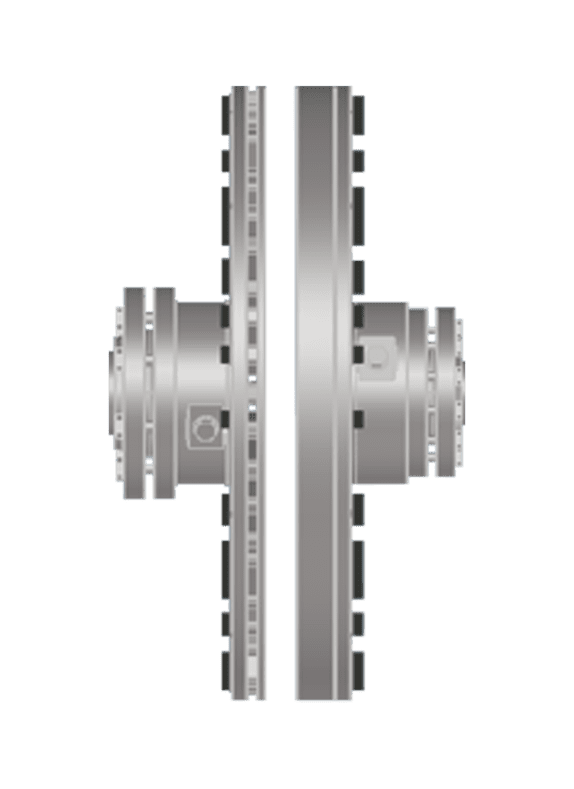
Lean manufacturing targets waste at every level of a production process, and one of the most persistent sources of hidden waste in asset-intensive operations is rotating equipment that consumes excess energy, generates unplanned downtime, and demands frequent maintenance interventions. Zytec's non-contact magnetic drives directly address this category of waste, making them a natural fit for manufacturers who want their lean ambitions to extend all the way to the drivetrain.
Specifically, Zytec's technology contributes to lean goals in the following ways:
- Eliminating maintenance waste: Non-contact drives contain no wear components, require no lubrication, and need no laser alignment. This removes entire categories of scheduled and unscheduled maintenance activity that lean practitioners would classify as non-value-adding work.
- Reducing energy waste: With energy savings of up to 50% achievable on pump and fan applications, non-contact drives cut one of the largest sources of operational waste in process-intensive environments.
- Maximizing uptime: By eliminating misalignment-induced bearing and seal failures, Zytec drives extend equipment service life and reduce the unplanned downtime events that interrupt production flow and undermine lean scheduling.
- Lowering total cost of ownership: Fewer interventions, lower energy consumption, and extended component life combine to produce a total cost of ownership reduction that directly supports the lean goal of cost efficiency across the asset lifecycle.
- Short payback period: With payback periods often under two years, the investment case aligns with the lean principle of delivering measurable, tangible value rather than long-horizon theoretical gains.
If your lean program has addressed process-level waste but rotating equipment reliability and energy consumption remain significant cost drivers, Zytec's non-contact drives offer a concrete next step. Contact Zytec to discuss how non-contact magnetic drive technology can close the gap between your lean ambitions and your operational results.
Frequently Asked Questions
How do we know if our lean program has reached its ceiling and needs to be complemented with other approaches?
A lean program is likely hitting its ceiling when process-level improvements are delivering diminishing returns despite continued effort, yet significant costs remain in areas like unplanned downtime, energy consumption, or maintenance frequency. If your value stream maps look clean but your overall equipment effectiveness (OEE) scores are still dragging due to equipment-related losses, the remaining waste is almost certainly sitting at the asset level rather than the process level. Tracking the split between process waste and asset waste — using metrics like maintenance cost as a percentage of asset replacement value, mean time between failures, and energy cost per unit of output — will reveal where your next improvement lever actually is.
What is the best way to get started with lean manufacturing if our facility has never implemented it before?
The most effective starting point is a value stream mapping exercise focused on one high-priority product family or production line rather than attempting a facility-wide transformation from day one. This gives your team a concrete, visible picture of where waste exists and creates an early win that builds organizational buy-in. From there, prioritize the waste categories generating the highest cost or the most customer-facing impact, and build your first kaizen events around those specific areas. Engaging a lean practitioner or consultant for the initial mapping exercise is worthwhile if internal expertise is limited, as a poorly scoped first project can undermine confidence in the methodology before it has a chance to prove its value.
Can lean manufacturing principles apply to maintenance and reliability teams, not just production?
Absolutely — lean thinking applies directly to maintenance operations, and applying it there is often where asset-intensive manufacturers find their largest untapped gains. Maintenance processes carry the same categories of waste as production processes: waiting (for parts, approvals, or technicians), unnecessary motion, overprocessing, and defects in the form of repeat failures caused by poor root cause analysis. Lean maintenance programs use tools like planned maintenance schedules, visual management of spare parts inventories, and standardized work instructions for common repair tasks to drive the same efficiency gains in the maintenance function that lean delivers on the shop floor.
What are the most common mistakes manufacturers make when implementing lean for the first time?
The most common mistake is treating lean as a toolkit of individual tools — 5S, kanban, standard work — rather than as an integrated management philosophy rooted in continuous improvement culture. Organizations that deploy tools without building the underlying culture typically see short-term gains followed by backsliding once management attention moves on. A second frequent mistake is starting with large, complex transformation projects rather than focused, measurable pilot improvements that demonstrate value quickly and develop internal lean capability organically. Finally, failing to involve frontline workers in identifying and solving waste problems is a critical error; lean depends on the people closest to the work being active participants, not passive recipients of changes designed by engineers or consultants.
How should manufacturers handle the tension between lean's just-in-time inventory model and the need for supply chain resilience?
The most pragmatic approach is to apply lean's pull and flow principles to your internal production processes while taking a more risk-stratified approach to inventory buffers for externally sourced components. Rather than treating all inventory as waste equally, segment your supply base by lead time variability, supplier reliability, and the operational impact of a stockout. For high-risk, long-lead-time, or single-source components — particularly those critical to rotating equipment uptime — holding strategic safety stock is a deliberate, data-informed decision rather than a failure of lean discipline. This nuanced position is increasingly accepted within lean practice and reflects a maturation of the methodology in response to real-world supply chain complexity.
How do you build a lean culture in a workforce that is skeptical or resistant to change?
Resistance to lean is almost always rooted in past experiences where improvement initiatives were imposed top-down, delivered no visible benefit to the people doing the work, or were used as a pretext for headcount reductions. The most effective counter to this is to make lean visibly about making people's jobs easier and less frustrating, not just about cutting costs for the business. Early projects should target waste that frontline workers themselves find irritating — unnecessary searching for tools, waiting for approvals, reworking defects caused by upstream problems — so that the first lean wins are experienced as genuine improvements by the people involved. Consistent, transparent communication from leadership about the purpose of lean, combined with genuine recognition of employee-driven improvements, is what separates organizations that build lasting lean cultures from those that cycle through improvement initiatives without lasting change.
Is lean manufacturing relevant for smaller industrial manufacturers, or is it primarily suited to large-scale operations?
Lean is highly relevant for smaller manufacturers and in many cases delivers proportionally greater impact than in large operations, because smaller facilities typically have less organizational complexity to navigate and can implement changes faster. The five core lean principles — defining value, mapping the value stream, creating flow, establishing pull, and pursuing perfection — scale down to single-cell production environments just as effectively as they apply to multi-plant enterprises. Smaller manufacturers do not need to invest in enterprise-wide lean programs or large consulting engagements; starting with a focused value stream mapping exercise on their most constrained or costly process, and building from there, is entirely sufficient to generate meaningful and measurable results.