What is the relationship between FMEA and a control plan?
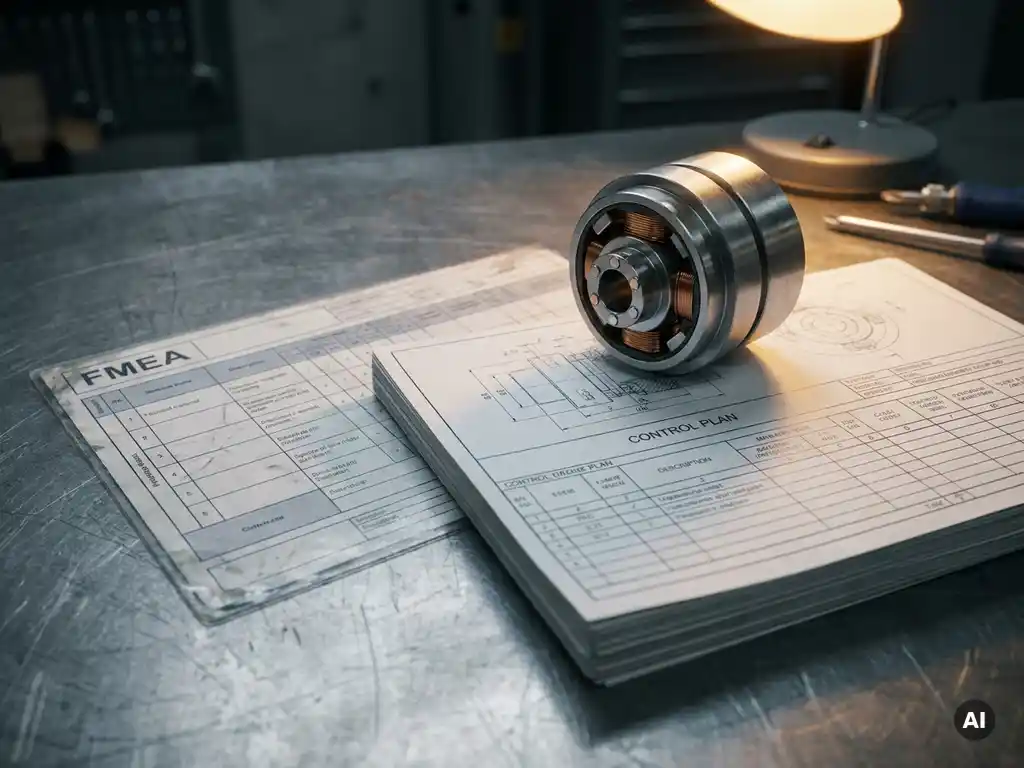
FMEA and a control plan are sequential, complementary tools in a quality management system. The FMEA is the risk analysis document that identifies potential failure modes, their effects, and their causes. The control plan is the operational response document that defines the controls, inspections, and reactions a team will apply to prevent those failures from reaching the customer. Together, they form a cause-and-response pair.
Think of the FMEA as the diagnostic layer and the control plan as the action layer. The FMEA asks: what could go wrong, how likely is it, and how severe would the consequences be? The control plan answers: given what we know could go wrong, here is exactly what we will measure, how often we will measure it, who is responsible, and what happens when a reading falls outside acceptable limits.
In the IATF 16949 and APQP frameworks commonly used in automotive and industrial manufacturing, the two documents are formally linked. A control plan that cannot be traced back to an FMEA is considered incomplete because it lacks a risk-based foundation. Conversely, an FMEA that never informs a control plan has limited operational value since the risk analysis stays on paper rather than driving real process behavior.
Does FMEA always come before the control plan?
In standard quality management practice, yes, FMEA precedes the control plan. This sequence exists because the control plan depends on FMEA outputs to know which characteristics to control and at what priority level. Without the FMEA, the team has no systematic basis for deciding which process steps deserve the most rigorous monitoring.
That said, in real industrial environments, the sequence is not always perfectly linear. There are common situations where the two documents are developed in parallel, particularly in fast-moving product launches or when a team is working from an existing family FMEA or reference FMEA for a similar process. In these cases, a draft control plan may be started while the FMEA is still being refined, with the understanding that the control plan will be updated as FMEA outputs are finalized.
What should never happen is finalizing a control plan before the FMEA is complete. A control plan locked in before the risk analysis is finished will almost certainly miss critical control points or misallocate inspection effort toward low-risk characteristics while leaving high-risk ones under-controlled. The FMEA-first sequence is a quality safeguard, not just a procedural formality.
What information from FMEA feeds into the control plan?
The control plan draws directly from several specific FMEA outputs. The most important are the identified failure modes, their associated causes, the severity and occurrence ratings, and the recommended actions or controls already captured in the FMEA. High Risk Priority Numbers (RPNs) or high action priority ratings in the FMEA translate directly into characteristics that require tighter control or more frequent inspection in the control plan.
More specifically, the following FMEA elements map into control plan columns:
- Failure mode and effect: Informs what the control plan is trying to prevent and why it matters to the end user or downstream process.
- Cause of failure: Identifies the process variable that needs to be monitored or controlled at the source.
- Current process controls (detection and prevention): These become the starting point for the control method column in the control plan.
- Special characteristics: Any characteristic flagged as safety-critical or functionally significant in the FMEA must appear in the control plan with an appropriate control method and reaction plan.
- Recommended actions: FMEA action items that reduce occurrence or improve detection often result in new or revised control plan entries.
The control plan then adds the operational detail the FMEA does not contain: sample size, frequency, measurement system, specification limits, and the specific reaction plan when a characteristic goes out of control. The FMEA tells the team what to worry about; the control plan tells the team what to do about it every shift.
Can you create a control plan without completing FMEA first?
Technically yes, but the result will be a weaker control plan with significant gaps. A control plan created without FMEA relies on team experience and historical data rather than a structured risk analysis. This approach can work for very simple, well-understood processes where the team has deep historical knowledge, but it carries a real risk of missing failure modes that have not occurred before or that are difficult to detect without deliberate monitoring.
There are legitimate scenarios where a control plan is created before a formal FMEA exists. Early-stage process development, legacy processes that predate FMEA requirements, and low-complexity manufacturing lines are all situations where a control plan may exist independently. In these cases, quality professionals generally recommend conducting a retrospective FMEA to validate that the existing control plan is actually covering the right risks and is not just reflecting what the team has always done.
From a compliance standpoint, IATF 16949 and many customer-specific requirements in automotive and industrial sectors explicitly require that control plans be supported by FMEA. Submitting a control plan without an accompanying FMEA during a PPAP or supplier audit will typically result in a rejection or a corrective action request. The message from the standards is consistent: the control plan is only as credible as the risk analysis behind it.
How do you update a control plan when FMEA changes?
When an FMEA is revised, the control plan must be reviewed and updated to reflect any changes that affect what is controlled, how it is controlled, or what the reaction plan requires. The two documents should always be aligned. A gap between a revised FMEA and an unchanged control plan is a quality system nonconformance and a practical risk because the team may be monitoring the wrong characteristics or responding incorrectly to out-of-control conditions.
The update process typically follows these steps:
- Identify what changed in the FMEA: New failure modes, revised severity or occurrence ratings, new causes, or changes to recommended controls all have potential control plan implications.
- Assess the impact on special characteristics: Any change that affects a safety or functionally significant characteristic requires immediate control plan review.
- Revise the affected control plan rows: Update the control method, sample size, frequency, or reaction plan as needed to reflect the updated risk picture.
- Obtain the required approvals: Control plan changes in regulated industries typically require cross-functional sign-off and, in some cases, customer approval before implementation.
- Communicate changes to the floor: Updated control plans must reach the operators and quality technicians who execute the controls - a revised document that stays in a filing system provides no protection.
Good practice is to treat FMEA and control plan reviews as a linked event. Any trigger that prompts an FMEA review, such as a customer complaint, a production escape, a design change, or a new supplier, should automatically trigger a control plan review. Building this linkage into the change management process prevents the two documents from drifting apart over time.
How Zytec's non-contact drives support process reliability and quality control
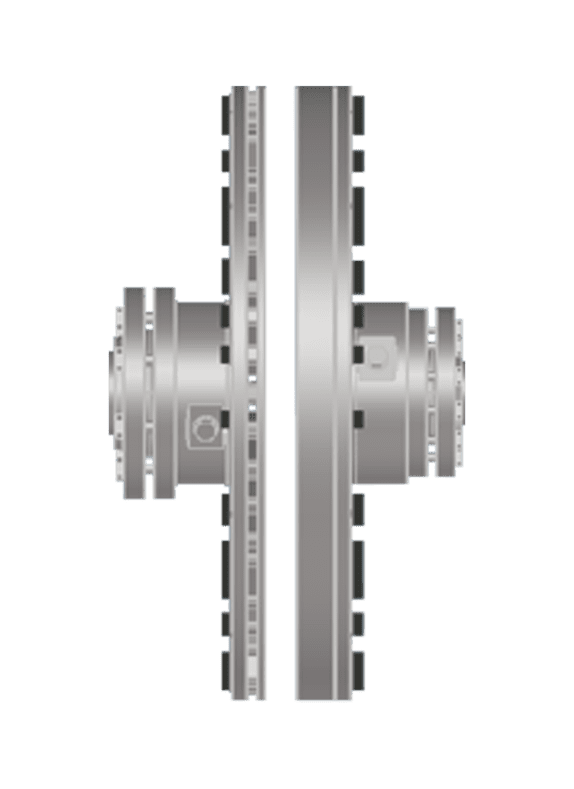
For industrial operations where rotating equipment is central to production, FMEA and control plans are only as effective as the equipment reliability they are built around. Frequent failure modes in drivetrain components, such as coupling wear, misalignment-induced bearing failures, and vibration-related seal degradation, generate recurring FMEA entries and demand dense control plan coverage. Reducing the underlying failure risk simplifies both documents and reduces the operational burden of executing them.
Zytec's non-contact drives address this at the source. Key reliability benefits relevant to quality and maintenance teams include:
- No wear components in the coupling: Eliminates a recurring FMEA failure mode category entirely, reducing the number of characteristics that require active monitoring.
- No laser alignment requirement: Removes misalignment as a root cause in the FMEA, one of the most common contributors to rotating machinery failures and downstream quality variation.
- Vibration reduction up to 80%: Lower drivetrain vibration means fewer cascade failure paths to document and control.
- 20+ year maintenance-free coupling life: Reduces the frequency of maintenance interventions that introduce human error events, each of which represents a potential FMEA entry.
- Energy savings up to 50%: More stable, efficient operation reduces process variation that quality control plans must compensate for.
If your facility is looking to reduce the complexity of your FMEA and control plan documentation by addressing failure risk at the equipment level, contact Zytec to discuss how non-contact drive technology can be applied to your rotating equipment applications.
Frequently Asked Questions
What is the difference between an FMEA action priority rating and an RPN, and which should drive control plan decisions?
The RPN (Risk Priority Number) is the traditional metric from older FMEA methodologies, calculated by multiplying severity, occurrence, and detection scores. The action priority (AP) rating is the newer approach introduced in the AIAG-VDA FMEA handbook, which prioritizes severity first rather than treating all three factors equally. For control plan decisions, action priority ratings are generally considered more reliable because they prevent high-severity failure modes from being underweighted when occurrence or detection scores are low — a known weakness of pure RPN-based ranking.
How do special characteristics identified in the FMEA get communicated to operators on the production floor?
Special characteristics flow from the FMEA into the control plan, and from the control plan into work instructions, control charts, and inspection records at the point of use. In IATF 16949-aligned systems, special characteristics are typically marked with standardized symbols (such as a diamond for safety characteristics or a shield for significant characteristics) that appear consistently across the FMEA, control plan, drawing, and work instruction so operators can immediately recognize which parameters require the highest attention. The key risk is symbol inconsistency across documents, which can cause operators to miss critical controls.
How often should FMEA and control plan documents be reviewed even when no changes have occurred?
Most quality management frameworks recommend a periodic review at least annually, even in the absence of triggered events like escapes or design changes. In practice, many automotive and industrial manufacturers tie reviews to production milestones, annual management reviews, or supplier audit cycles. The rationale is that process drift, personnel changes, and equipment aging can quietly shift the actual risk profile away from what the FMEA originally documented, making a scheduled review a safeguard against gradual misalignment rather than just a compliance checkbox.
What are the most common mistakes teams make when transferring FMEA outputs into a control plan?
The most frequent mistake is copying detection controls from the FMEA into the control plan without adding the operational specifics that make them executable — sample size, measurement frequency, the gauge or method to be used, and a defined reaction plan. Another common error is failing to escalate special characteristics from the FMEA into the control plan with their correct symbols and approval requirements. A third pitfall is treating the control plan as a one-time deliverable rather than a living document, which causes it to fall out of sync with the FMEA as the process evolves.
Can one FMEA support multiple control plans, and how should that be managed?
Yes, particularly in family FMEA or platform FMEA approaches where a single risk analysis covers a group of similar products or processes. In these cases, each product or process variant will typically have its own control plan that references the shared FMEA but includes the specific characteristics, tolerances, and reaction plans relevant to that variant. The management challenge is ensuring that updates to the family FMEA trigger a review of all associated control plans, not just the most recently active one — a traceability matrix linking each FMEA entry to its corresponding control plan rows is a practical tool for keeping this relationship visible.
How should a team handle a situation where production experience reveals a failure mode that was not captured in the original FMEA?
A production escape or newly observed failure mode should trigger an immediate FMEA revision to add the new failure mode, assess its severity, occurrence, and detection, and assign an action priority. The control plan should then be updated in parallel to add or strengthen the control for that characteristic before production resumes or continues at risk. This event should also prompt a broader FMEA review to check whether similar failure modes on adjacent process steps were also missed — a single gap often signals a systematic blind spot in the original analysis rather than an isolated oversight.
Is there a recommended software or format for maintaining FMEA and control plan alignment?
There is no single mandated format, but integrated quality management software platforms such as Plato SCIO, Intellect, or ETQ Reliance allow FMEA and control plan data to be linked in a shared database, so that changes in one document automatically flag required reviews in the other. For teams using spreadsheet-based systems, a shared workbook with cross-referenced tabs and a change log is a minimum baseline for maintaining traceability. Regardless of the tool, the critical requirement is that the linkage between specific FMEA entries and their corresponding control plan rows is explicit and auditable, not just implied.