
The 10 rule in maintenance, more precisely known as the 1:10 maintenance rule, states that every dollar not spent on preventive maintenance will cost approximately ten dollars to address reactively after a failure occurs. In other words, the cost of fixing a problem after it happens is roughly ten times higher than the cost of preventing it in the first place. This principle applies broadly across industrial environments and is especially relevant for asset-intensive operations that rely on rotating equipment. The sections below unpack where this rule comes from, how to apply it, and whether it still holds in modern industrial maintenance.
Where does the 1:10 maintenance rule come from?
The 1:10 maintenance rule originated in quality management and reliability engineering, gaining traction through Total Quality Management (TQM) frameworks and later through reliability-centered maintenance (RCM) methodologies. It builds on the broader principle that defects and failures become exponentially more expensive the later they are detected and addressed in an asset's lifecycle.
The rule is closely related to the well-known "rule of tens" from manufacturing quality control, which describes how the cost of correcting a defect multiplies by a factor of ten at each successive stage of production or operation. Applied to maintenance, the same logic holds: a small investment in inspection, lubrication, or component replacement prevents a much larger expenditure in emergency repairs, lost production, and asset replacement.
While the exact ratio varies by industry and asset type, the 1:10 figure has become a widely accepted benchmark in industrial maintenance planning. It reflects decades of operational experience across sectors including oil and gas, chemical processing, water and wastewater, and general manufacturing, where the downstream consequences of equipment failure are well documented.
How does the 1:10 rule calculate maintenance costs?
The 1:10 maintenance rule calculates cost by comparing the investment required to maintain an asset proactively against the total cost incurred when that maintenance is deferred and a failure occurs. If preventive maintenance on a pump costs 500 euros, the rule predicts that reactive repair after failure will cost approximately 5,000 euros.
The reactive cost figure is not simply the repair bill. It includes several compounding cost categories:
- Emergency labor costs: Unplanned repairs often require overtime, contractor mobilization, and expedited specialist attendance.
- Spare parts at premium prices: Emergency procurement bypasses normal supply chain processes, significantly increasing parts costs.
- Lost production: Unplanned downtime during peak production periods carries a cost far exceeding the repair itself.
- Secondary damage: A failed coupling, bearing, or seal rarely fails in isolation. Secondary damage to connected components multiplies the repair scope.
- Safety and compliance costs: Unplanned failures in regulated environments trigger incident investigations, permit reviews, and potential regulatory penalties.
When all of these factors are aggregated, the 1:10 ratio often understates the true cost differential in asset-intensive industries. In rotating equipment applications, industry experience shows that misalignment alone accounts for a significant share of rotating machinery failures, and the downstream costs of a single bearing or seal failure can cascade through the drivetrain in ways that multiply the initial repair cost several times over.
What types of equipment does the 10 rule apply to?
The 1:10 maintenance rule applies most directly to mechanical and electromechanical equipment where wear, misalignment, or degradation develops gradually before causing failure. This includes pumps, fans, compressors, generators, conveyors, gearboxes, and the couplings and drive systems connecting them.
Rotating equipment is particularly well suited to this rule because the failure modes are largely predictable. Bearings degrade along a measurable PF curve, the timeline from detectable degradation onset to functional failure. Seals wear progressively. Couplings accumulate fatigue from torsional oscillation and misalignment. All of these failure modes respond well to preventive intervention: catch them early and the cost is a replacement component and a planned shutdown window. Miss them and the cost is an emergency repair, secondary damage to connected assets, and unplanned production loss.
The rule also applies, though with different cost structures, to electrical systems, control infrastructure, and structural components. However, the 1:10 ratio is most consistently validated in mechanical rotating equipment, where the relationship between maintenance deferral and failure cost is most direct and most measurable.
What's the difference between preventive and reactive maintenance under the 10 rule?
Under the 1:10 maintenance rule, preventive maintenance represents the one-unit cost side of the equation, while reactive maintenance represents the ten-unit cost side. The fundamental difference is control: preventive maintenance happens on a planned schedule at a time chosen for operational convenience, while reactive maintenance happens at the worst possible moment, determined by the failure itself.
Preventive maintenance characteristics
Preventive maintenance is scheduled, budgeted, and executed under controlled conditions. Work is planned in advance, spare parts are sourced through normal procurement channels, and shutdowns are coordinated to minimize production impact. Labor is performed during standard hours by prepared technicians following established procedures. The cost is predictable and bounded.
Reactive maintenance characteristics
Reactive maintenance is unplanned, unbudgeted, and executed under pressure. Emergency labor rates apply. Parts are sourced urgently at premium cost or production halts while waiting for delivery. Secondary damage discovered during disassembly expands the scope of work. Lockout/tagout administration, permit-to-work processes, and precision realignment after reassembly all add time and cost. The risk of maintenance-induced error is higher when work is rushed, and a second failure shortly after reactive repair is a well-recognized pattern in reliability engineering.
The 1:10 rule quantifies the gap between these two modes. It is not simply a cost ratio. It is also a risk ratio, a quality ratio, and a safety ratio. Every reactive maintenance event carries a higher probability of human error, secondary damage, and repeat failure than a planned preventive intervention covering the same scope.
How can maintenance teams use the 10 rule to prioritize spending?
Maintenance teams can use the 1:10 rule as a prioritization framework by identifying which assets carry the highest reactive failure cost and ensuring those assets receive adequate preventive maintenance investment. The rule transforms maintenance budgeting from a cost-minimization exercise into a risk-adjusted investment decision.
A practical approach involves three steps:
- Identify critical assets: Map all rotating equipment and rank by the consequence of unplanned failure. Assets whose failure stops production, triggers safety incidents, or causes secondary damage to expensive connected equipment are highest priority.
- Estimate the reactive cost: For each critical asset, estimate the realistic total cost of an unplanned failure: emergency labor, parts at premium, production loss, secondary damage, and compliance costs. This is the "ten" in the 1:10 equation.
- Set the preventive maintenance budget: The justified preventive maintenance spend is approximately one-tenth of the estimated reactive cost. If the reactive failure cost for a critical pump is 50,000 euros, a preventive maintenance budget of 5,000 euros per maintenance cycle is fully justified on cost grounds alone.
This framework also supports decisions about technology investment. If a component or system can be upgraded to eliminate a recurring failure mode entirely, the total lifecycle savings can be evaluated against the upgrade cost using the same 1:10 logic. Eliminating ten reactive events each costing 5,000 euros justifies an upgrade investment of up to 50,000 euros before the first maintenance cycle is complete.
Does the 10 rule still hold in modern industrial maintenance?
The 1:10 maintenance rule remains valid in modern industrial maintenance, and in many asset-intensive environments the actual cost ratio has increased beyond 1:10 as production complexity, regulatory requirements, and labor costs have risen. The underlying logic of the rule has not changed; what has changed is the toolkit available to implement it more effectively.
Condition monitoring, predictive maintenance technologies, and advanced drive systems have extended the practical reach of preventive maintenance. Rather than relying solely on fixed-interval servicing, modern maintenance teams can monitor asset health continuously and intervene precisely when the PF curve indicates degradation is approaching a threshold. This makes preventive maintenance more targeted and reduces the risk of both over-maintenance and under-maintenance.
At the same time, the rule's core insight remains as relevant as ever: deferring maintenance does not reduce cost. It transfers cost from a predictable, controlled category into an unpredictable, expensive, and operationally disruptive one. In industries where a single hour of unplanned downtime can cost tens of thousands of euros in lost production, the 1:10 ratio is frequently conservative.
Where the rule is sometimes challenged is in its application to assets that have been redesigned to eliminate the wear mechanisms that make maintenance necessary in the first place. If a component has no wear parts, no lubrication requirement, and no alignment-induced load on connected bearings and seals, the preventive maintenance interval extends dramatically, and the reactive failure risk drops accordingly. In these cases, the 1:10 rule still applies, but the baseline maintenance cost is so low that the total lifecycle cost picture changes fundamentally.
How Zytec Non-Contact Drives Reduce Maintenance Costs
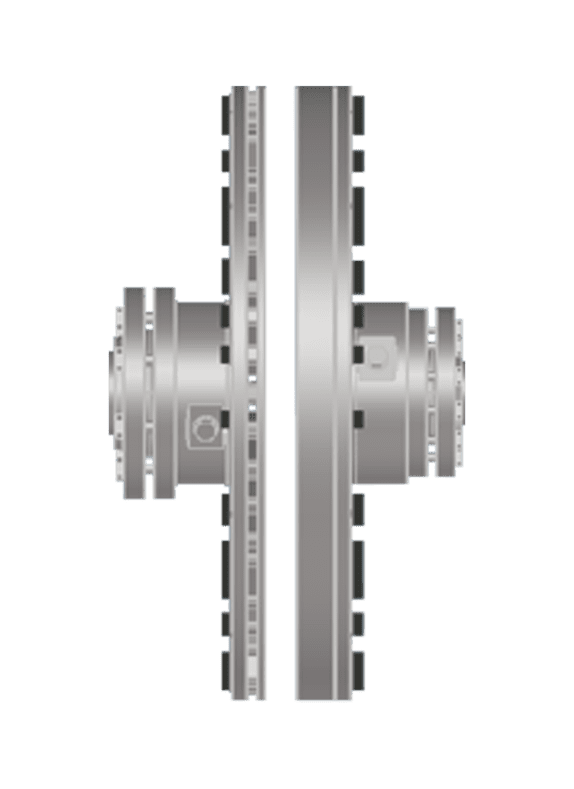
Zytec's non-contact magnetic drives address the 1:10 maintenance rule at its root by eliminating the wear mechanisms that make reactive maintenance events likely in the first place. Rather than managing the cost ratio between preventive and reactive maintenance, Zytec technology reduces the frequency and severity of both.
Key ways Zytec non-contact drives change the maintenance cost equation:
- No wear components: Zytec drives contain no elastomers, no lubrication systems, no friction elements, and no gear teeth. There are no consumable parts to replace on a scheduled basis, removing the most common trigger for planned maintenance interventions.
- No laser alignment required: Conventional couplings require precision laser alignment at installation and re-alignment after thermal growth or maintenance. Zytec's non-contact technology tolerates up to 12 mm of radial dynamic misalignment without transmitting forces into bearings or seals, eliminating alignment-induced bearing and seal overload and the associated secondary failures.
- Extended PF curve: By removing coupling-induced peak loads, torsional oscillations, and vibration from the drivetrain, Zytec drives extend the detectable degradation timeline for connected components by approximately a factor of four compared to conventional contact couplings. This gives maintenance teams more time to plan and execute interventions before failure occurs.
- Energy savings up to 50%: Reduced energy consumption lowers operating costs alongside maintenance costs, compressing total cost of ownership from two directions simultaneously.
- Maintenance-free service life of 20+ years: The coupling itself is rated for the full lifetime of the installation, with no scheduled inspection requirement beyond monitoring air gap changes as an indicator of system-level issues.
For industrial operations where rotating equipment maintenance spend is significant, Zytec non-contact drives represent a structural shift in how the 1:10 rule applies. Contact Zytec to find out how non-contact drive technology can reduce your maintenance cost exposure across pumps, fans, compressors, and other critical rotating assets.
Frequently Asked Questions
How do I get started with applying the 1:10 rule if I don't have detailed failure cost data for my assets?
Start with your most critical assets and use conservative estimates based on publicly available industry benchmarks for your sector. Even rough figures — combining an estimated hourly production loss rate, a multiplier for emergency labor, and a parts premium of 30–50% — will give you a defensible cost ratio to work with. The goal at this stage is not precision; it is to identify which assets have the highest reactive cost exposure so you can prioritize preventive maintenance investment accordingly. Refine your estimates over time as you accumulate actual maintenance cost records.
Is the 1:10 ratio the same across all industries, or does it vary significantly?
The 1:10 ratio is a widely accepted benchmark, but the actual cost multiplier varies considerably by industry and asset type. In oil and gas, chemical processing, or continuous manufacturing environments where a single unplanned shutdown can halt an entire production line, the real ratio is frequently 1:20 or higher when lost production is fully accounted for. In less production-critical environments, the ratio may be closer to 1:5. The 1:10 figure is best understood as a conservative baseline — useful for building the business case for preventive maintenance investment, with the understanding that your specific environment may make reactive failures even more costly.
What are the most common mistakes maintenance teams make when trying to implement a preventive maintenance program based on this rule?
The most frequent mistake is applying preventive maintenance uniformly across all assets regardless of criticality, which spreads the budget too thin and fails to protect the equipment where reactive failures are most expensive. A second common error is calculating the preventive maintenance budget based only on direct repair costs while ignoring production loss, secondary damage, and compliance costs — consistently underestimating the 'ten' side of the equation and therefore under-investing in prevention. Finally, many teams set fixed-interval maintenance schedules without revisiting them as operating conditions change, leading to both over-maintenance of low-risk assets and under-maintenance of assets whose duty cycles have intensified.
How does condition monitoring or predictive maintenance technology change how the 1:10 rule is applied in practice?
Condition monitoring and predictive maintenance technologies do not replace the 1:10 rule — they make it easier to act on. By tracking parameters such as vibration, temperature, and oil analysis in real time, maintenance teams can identify exactly where an asset sits on its PF curve and intervene at the optimal point before failure, rather than relying on fixed time intervals that may be too early or too late. This shifts the cost equation further in favor of preventive action by reducing unnecessary planned maintenance on healthy assets while ensuring degrading assets are caught before they enter the expensive reactive failure zone. The rule's cost ratio remains valid; condition monitoring simply improves the precision with which you apply it.
Can the 1:10 rule be used to justify capital investment in new equipment or technology, not just maintenance spending?
Yes, and this is one of the most powerful applications of the rule. If a technology upgrade eliminates a recurring failure mode entirely — for example, replacing a wear-prone coupling with a maintenance-free non-contact drive — you can calculate the total reactive maintenance cost avoided over the asset's lifecycle and compare it directly against the capital cost of the upgrade. A component that eliminates ten reactive events each costing 8,000 euros justifies a capital investment of up to 80,000 euros on maintenance savings alone, before energy savings or extended asset life are factored in. This reframes capital expenditure decisions from 'can we afford this?' to 'can we afford not to invest in this?'
What role does misalignment specifically play in rotating equipment failures, and how does it affect the 1:10 cost ratio?
Misalignment is one of the leading root causes of premature bearing, seal, and coupling failures in rotating equipment, and it has a compounding effect on the 1:10 cost ratio because it causes secondary damage across multiple components simultaneously. When a misaligned coupling transmits radial and axial forces into connected bearings and seals, it accelerates wear on all of them — meaning a single alignment failure can trigger a cascade of component replacements that multiplies the repair scope well beyond the original failure point. Correcting misalignment as part of a preventive maintenance program, or eliminating alignment sensitivity through non-contact drive technology, directly reduces both the frequency and the severity of reactive maintenance events.
How should maintenance managers present the 1:10 rule to leadership to secure budget approval for preventive maintenance programs?
The most effective approach is to translate the rule into the financial language leadership already uses: return on investment, risk exposure, and production availability. Rather than requesting a maintenance budget increase in isolation, present a specific asset-level analysis showing the estimated reactive failure cost for two or three critical assets, the proposed preventive maintenance investment, and the net cost avoidance the program delivers. Framing preventive maintenance as a risk-adjusted investment — where every euro spent on prevention removes ten euros of reactive cost exposure from the balance sheet — resonates with finance and operations leadership far more effectively than a purely technical argument.