Why do the same equipment failures keep happening?
The same equipment failures keep recurring because most industrial maintenance teams respond to the symptoms rather than the underlying cause. A bearing fails, it gets replaced, and production resumes. But if the bearing failed because of chronic misalignment, vibration, or overloading, the replacement bearing will fail under the same conditions. Without a structured root cause analysis process, organizations are locked in a costly cycle of reactive maintenance.
This pattern is especially common in asset-intensive industries such as chemical processing, water treatment, manufacturing, and HVAC. Rotating equipment like pumps, fans, compressors, and conveyors operates under continuous stress, and small degradation mechanisms compound over time. A misaligned coupling introduces torsional vibration that accelerates bearing wear. That bearing wear increases shaft runout, which overloads seals. The seal fails, the pump leaks, and the team replaces the seal without ever questioning why the bearing wore prematurely in the first place.
Industry experience shows that a significant share of rotating machinery failures trace back to a small number of repeated root causes: misalignment, inadequate lubrication, installation errors, and undetected process imbalances. Without a formal method for identifying and addressing these causes, even well-resourced maintenance teams spend the majority of their time firefighting rather than preventing.
What are the 5 steps of root cause analysis?
The five steps of root cause analysis are: define the problem, collect data, identify possible causes, determine the root cause, and implement corrective actions. Each step builds on the previous one, creating a structured path from incident to lasting resolution. Skipping or rushing any step significantly increases the risk of misdiagnosis and recurring failure.
Step 1: Define the problem
A precise problem statement is the foundation of effective RCA. This means documenting exactly what failed, when it failed, under what operating conditions, and what the measurable impact was. Vague problem statements like "the pump keeps breaking" lead to vague solutions. A well-defined problem statement specifies the equipment, the failure mode, the frequency, and the operational consequence.
Step 2: Collect data
Data collection involves gathering all available evidence before memories fade and physical evidence is disturbed. This includes maintenance records, sensor readings, operator logs, inspection reports, and physical examination of failed components. The goal is to build a factual timeline of events leading up to the failure, not to assign blame. In industrial environments, this step often reveals that the failure had visible precursors that went unaddressed.
Step 3: Identify possible causes
With data in hand, the team brainstorms all plausible contributing factors. This step deliberately casts a wide net before narrowing down. Common structured methods used here include fishbone diagrams (also called Ishikawa diagrams), which organize potential causes into categories such as equipment, process, people, environment, and materials. The aim is to ensure no plausible cause is dismissed prematurely.
Step 4: Determine the root cause
This is the analytical core of the RCA process. The team tests each candidate cause against the evidence, asking whether eliminating it would have prevented the failure. The 5 Whys technique is particularly useful here: by asking "why" repeatedly, teams trace surface symptoms back to the systemic failure at the origin. A root cause is confirmed when it is both necessary and sufficient to explain the failure.
Step 5: Implement corrective actions
Identifying the root cause without acting on it delivers no value. Corrective actions must directly address the confirmed root cause, be assigned to a specific owner, and have a defined completion date. Effective corrective actions also include a verification step: confirming that the implemented change actually prevents recurrence. This step closes the loop and transforms the RCA from a documentation exercise into a genuine reliability improvement.
What tools and techniques are used in each RCA step?
Root cause analysis draws on a set of structured tools matched to different stages of the investigation. The most widely used RCA techniques in industrial settings are the 5 Whys, fishbone diagrams, fault tree analysis, failure mode and effects analysis (FMEA), and Pareto analysis. Selecting the right tool depends on the complexity of the failure and the depth of investigation required.
The 5 Whys is the simplest and most accessible technique. It works by repeatedly asking why a condition exists until the team reaches a cause that is actionable and systemic. It is best suited to straightforward failures with a single causal chain. For more complex failures involving multiple interacting factors, the fishbone diagram provides a visual structure that prevents tunnel vision by mapping all potential cause categories simultaneously.
Fault tree analysis (FTA) is a top-down, logic-based method that maps all possible pathways leading to a defined failure event. It is commonly used in high-consequence industries such as oil and gas, chemical processing, and power generation, where understanding the full failure space is critical for risk management. FMEA works in the opposite direction: starting from individual components and systematically evaluating how each could fail and what effect that failure would have on the system.
Pareto analysis is particularly valuable when an organization is dealing with multiple recurring failures and needs to prioritize where to focus RCA resources. By ranking failures by frequency or cost impact, maintenance and reliability teams can direct their investigative effort toward the problems delivering the greatest operational and financial return when resolved.
How long does a root cause analysis typically take?
A root cause analysis can take anywhere from a few hours to several weeks, depending on the complexity of the failure, the quality of available data, and the experience of the team conducting the investigation. Simple, well-documented failures often resolve within one to two days. Complex systemic failures in critical equipment may require two to four weeks of structured investigation.
The most common reason RCA takes longer than necessary is poor data availability. When maintenance records are incomplete, sensor data was not captured, or the failed component was disturbed before inspection, the team must reconstruct events from incomplete evidence. This is why organizations that invest in structured data collection and condition monitoring practices tend to complete RCA investigations significantly faster.
Time pressure is a real challenge in industrial environments. Production demands often push teams to restore equipment quickly, which can result in abbreviated investigations that miss the root cause. A practical approach is to separate immediate corrective action from root cause investigation: restore production with a temporary fix, then conduct the full RCA without time pressure to identify and implement a permanent solution.
What's the difference between root cause analysis and failure mode analysis?
Root cause analysis and failure mode analysis are complementary but distinct methodologies. Root cause analysis is reactive: it investigates a failure that has already occurred to determine why it happened. Failure mode analysis, specifically FMEA, is proactive: it anticipates how equipment or processes could fail before those failures occur. Both are essential components of a mature reliability program.
RCA starts with a known failure event and works backward through evidence to find its origin. The output is a confirmed root cause and a specific corrective action. FMEA starts with a system or component and works forward through hypothetical failure scenarios, assigning risk priority based on the likelihood and severity of each potential failure. The output is a prioritized list of design or process improvements to prevent future failures.
In practice, the two methods strengthen each other. RCA findings feed back into FMEA updates, ensuring that the organization's failure mode library reflects real-world experience rather than theoretical assumptions. Over time, organizations that use both methods develop a progressively more accurate picture of where their equipment is most vulnerable and where preventive investment delivers the highest return.
How do you prevent the same root cause from recurring?
Preventing recurrence requires three things: a verified corrective action that directly addresses the confirmed root cause, a monitoring mechanism to detect early signs of the same failure pathway, and an organizational process that shares RCA findings across similar equipment and sites. Without all three elements, even a well-executed RCA is vulnerable to recurrence.
Verification is the step most often skipped under production pressure. After implementing a corrective action, teams should define a specific success metric and a timeframe for confirming that the failure has not returned. This might mean tracking bearing temperature trends, monitoring vibration signatures, or reviewing maintenance call frequency for the affected equipment over a defined period.
Knowledge sharing is equally important. Many industrial organizations operate multiple sites with similar equipment configurations. A root cause identified at one facility is often relevant to identical equipment elsewhere. Systematic distribution of RCA findings through maintenance management systems, reliability reviews, and team briefings multiplies the value of each investigation and prevents the same failure from consuming resources at multiple locations.
Finally, recurrence prevention depends on addressing the systemic conditions that allowed the root cause to develop. If the root cause of a bearing failure was chronic misalignment, the corrective action is not simply better alignment practice during the next installation. It requires examining why misalignment is a recurring condition: thermal growth, pipe strain, foundation movement, or the limitations of the coupling technology in use.
How Zytec helps eliminate recurring equipment failures at the source
Root cause analysis reveals what is failing and why. But for many rotating equipment failures in industrial environments, the root cause consistently points to the same underlying mechanisms: misalignment, vibration, wear, and maintenance-induced errors. Zytec's non-contact magnetic drives are engineered to remove these root causes by design rather than manage them through repeated intervention.
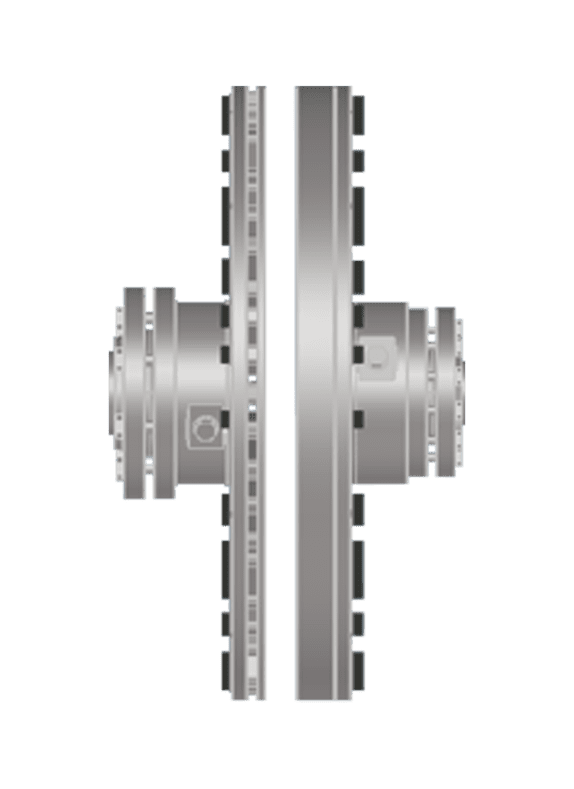
- Misalignment eliminated: Zytec's non-contact drives accommodate up to 12 mm of dynamic radial misalignment without transmitting force into bearings or seals, removing the most commonly cited root cause of rotating machinery failure.
- Vibration and shock absorption: With zero radial and torsional stiffness, the drives absorb torsional oscillations and shock loads that would otherwise accelerate downstream component wear.
- No wear components: Without elastomers, lubricants, or friction elements, there are no consumable parts to degrade, meaning the failure modes that most RCA investigations uncover simply do not exist in the drivetrain.
- Maintenance-induced failure risk reduced: With no scheduled coupling element replacement or laser alignment requirements, the number of human intervention events over the asset's life is structurally reduced, lowering the probability of installation errors that RCA frequently identifies as contributing causes.
- 20+ year maintenance-free service life: The coupling's performance does not degrade with age or operating hours, extending the PF curve and giving condition monitoring systems far more lead time to detect genuine system-level issues.
If your RCA investigations keep pointing to misalignment, vibration, or coupling-related failures as the root cause, the corrective action may not be a better maintenance procedure. It may be a fundamentally different drive technology. Contact Zytec to find out how non-contact magnetic drive technology can close the loop on your most persistent equipment reliability challenges.
Frequently Asked Questions
How do I know if my team is ready to conduct a root cause analysis internally, or if we need outside expertise?
Most maintenance teams can handle RCA for straightforward, single-causal-chain failures using basic tools like the 5 Whys and fishbone diagrams, provided they have access to reliable data and a facilitator who can keep the process objective. External expertise becomes valuable when failures involve complex, multi-system interactions, when internal investigations have repeatedly failed to prevent recurrence, or when organizational dynamics make it difficult for teams to challenge established practices. A practical starting point is to run a few low-stakes internal investigations to build team confidence before tackling your most critical recurring failures.
What's the most common mistake teams make when conducting a root cause analysis?
The most frequent mistake is stopping the investigation too early — identifying a proximate cause, such as a worn bearing or a failed seal, and treating it as the root cause without asking why that component failed in the first place. This leads to corrective actions that address symptoms rather than the systemic condition driving them. A reliable test is to apply the 5 Whys rigorously: if your corrective action only prevents the last failure event rather than the chain of conditions that made it inevitable, you have not yet reached the true root cause.
How should RCA findings be documented and stored so they actually get used?
RCA findings should be stored in a centralized, searchable system — ideally within your CMMS or asset management platform — linked directly to the specific equipment tag so future investigators can retrieve historical findings instantly. Each record should include the problem statement, confirmed root cause, corrective action taken, owner, completion date, and verification outcome. The format matters less than accessibility and consistency: a well-structured record in a shared system delivers far more value than a detailed report filed in a folder no one opens.
Can root cause analysis be applied proactively, before a failure actually occurs?
RCA is inherently reactive by design, but its logic can be applied proactively when combined with condition monitoring data. If a vibration trend, temperature rise, or oil analysis result indicates that a failure is developing, teams can initiate a pre-failure investigation — using the same structured steps — to identify and address the underlying cause before the breakdown occurs. This approach, sometimes called predictive RCA, is particularly effective in organizations that have invested in continuous condition monitoring, because it converts early warning signals into structured corrective actions rather than reactive responses.
How many people should be involved in a root cause analysis, and who should lead it?
Effective RCA teams are typically small and cross-functional: three to six people covering maintenance, operations, and engineering provides the right balance of perspectives without making the process unwieldy. The investigation should be led by someone with RCA facilitation experience who was not directly involved in the failure event, which reduces the risk of confirmation bias and protects the objectivity of the process. Operators who work directly with the affected equipment are often the most valuable contributors, as they hold detailed knowledge of abnormal conditions and early warning signs that rarely appear in formal maintenance records.
What's the difference between a corrective action and a preventive action in the context of RCA?
A corrective action directly addresses the confirmed root cause of the specific failure under investigation — for example, redesigning a piping support to eliminate chronic pipe strain that was causing pump misalignment. A preventive action extends that learning to similar equipment or processes that share the same vulnerability but have not yet failed — for example, auditing pipe strain across all comparable pump installations at the facility. Both are outputs of a thorough RCA process, and organizations that consistently implement preventive actions alongside corrective ones compound the reliability value of each investigation significantly.
At what point does it make more sense to redesign or replace equipment rather than continue investigating recurring failures?
When RCA investigations on the same equipment consistently confirm the same root cause — and corrective actions have been properly implemented but the failure continues to recur — the evidence is pointing to a fundamental design or technology limitation rather than a maintenance or operational gap. At that point, continued investigation delivers diminishing returns, and the more economical decision is to evaluate whether the equipment design, drivetrain technology, or installation configuration needs to change. The total cost of repeated failures, investigations, and downtime should be weighed against the capital cost of a more reliable solution, and in most cases the business case for redesign becomes compelling faster than teams expect.