A good MTTR (mean time to repair) is generally considered to be under four hours for critical industrial equipment, though the acceptable threshold varies significantly by industry, equipment type, and production context. For non-critical assets, an MTTR of up to 24 hours may be perfectly acceptable, while safety-critical systems in continuous process industries often target under one hour. The sections below unpack the benchmarks, drivers, and strategies that separate a strong MTTR from a problematic one.
What factors determine whether an MTTR is good or bad?
Whether an MTTR is good or bad depends on the criticality of the asset, the cost of downtime, the complexity of the repair, and the availability of spare parts and skilled technicians. An MTTR that is acceptable for a secondary conveyor in a warehouse would be unacceptable for a primary pump in a continuous chemical process. Context always defines the standard.
The most important factor is asset criticality. Rotating equipment that sits on the critical path of production — pumps, compressors, fans, and generators — demands a much lower MTTR than standby or redundant assets. When a single piece of equipment can halt an entire production line, every minute of repair time carries a direct financial consequence.
Beyond criticality, the following factors shape what counts as a good MTTR:
- Downtime cost per hour: High-value continuous processes such as oil refining or chemical manufacturing make even a two-hour MTTR extremely costly, while lower-throughput operations have more tolerance.
- Spare parts availability: If a repair requires sourcing components from overseas, a longer MTTR is structurally unavoidable regardless of technician skill.
- Repair complexity: Equipment requiring precision laser alignment, confined space entry, or specialist contractor involvement will inherently take longer to restore.
- Safety and permit requirements: Lockout/tagout procedures, permit-to-work administration, and ATEX zone compliance add non-negotiable time to every intervention.
- Diagnostic speed: Plants without condition monitoring often spend a significant portion of total repair time just identifying the root cause before any physical repair begins.
A useful internal benchmark is to compare your current MTTR against your own historical baseline before comparing it to industry averages. Consistent improvement over time, rather than hitting an arbitrary external number, is often the more meaningful signal of maintenance program health.
What is a good MTTR benchmark by industry?
MTTR benchmarks vary widely by sector. In continuous process industries such as oil and gas, chemical manufacturing, and pulp and paper, a good MTTR for critical rotating equipment is typically under two to four hours. In water and wastewater, HVAC, and general manufacturing, four to eight hours is commonly considered acceptable for primary assets. For non-critical assets across most industries, 24 hours is a reasonable ceiling.
These ranges reflect the operational reality of each sector rather than aspirational targets. Here is a practical breakdown by industry:
- Oil and gas / chemical processing: Critical pump and compressor MTTR targets of one to four hours are common, driven by the extreme cost of unplanned shutdowns and safety obligations.
- Water and wastewater: Pump repair targets of four to eight hours are typical, with redundancy built into station design to provide operational buffer.
- HVAC and building services: Fan and pump repairs of four to twelve hours are generally acceptable, depending on seasonal demand and redundancy.
- Mining: Given the remote locations and logistical challenges, MTTR targets of eight to 24 hours for primary conveyors and crushers are realistic, though operations actively work to reduce this.
- Maritime: Critical propulsion and auxiliary systems target an MTTR under four hours, while non-critical shipboard equipment may tolerate 24 to 48 hours before the next port call.
- Pulp and paper: Continuous process lines target an MTTR under four hours for primary drives, as paper machine downtime is exceptionally costly.
It is worth noting that published industry benchmarks are averages, not performance ceilings. Leading maintenance organizations in every sector consistently outperform these figures by investing in predictive maintenance, standardized repair procedures, and equipment designs that reduce intervention complexity.
What is the difference between MTTR, MTBF, and MTTF?
MTTR (mean time to repair) measures how long it takes to restore a failed asset to operation. MTBF (mean time between failures) measures the average operating time between one failure and the next on a repairable asset. MTTF (mean time to failure) measures the expected operating life of a non-repairable component before it fails for the first time. Together, these three KPIs describe the full reliability and maintainability picture of an asset.
Understanding how they interact is essential for making sound maintenance decisions:
- MTTR is a maintainability metric. It reflects how efficiently your organization responds to and resolves failures. A low MTTR means fast recovery.
- MTBF is a reliability metric. It reflects how often failures occur. A high MTBF means failures are infrequent.
- MTTF is used for components that are replaced rather than repaired — bearings, seals, belts, and similar wear items. It informs replacement scheduling rather than repair planning.
The relationship between MTTR and MTBF defines overall equipment availability. Availability is calculated as MTBF divided by (MTBF plus MTTR). This means that improving availability requires either increasing the time between failures, reducing the time to repair, or both. Plants that focus exclusively on MTBF while neglecting MTTR often find their availability gains limited by slow recovery when failures do occur.
A practical way to think about it: MTBF tells you how often you are called to the field, and MTTR tells you how long you stay there. Both matter for maximizing uptime.
What causes a high MTTR in industrial environments?
High MTTR in industrial environments is most commonly caused by slow fault diagnosis, poor spare parts availability, complex disassembly requirements, and time-consuming safety procedures. Equipment that requires precision realignment after every repair, or that demands specialist contractors, adds structural delays that inflate repair times regardless of technician effort.
The most frequently cited contributors to extended repair times include:
- Diagnostic delays: Without condition monitoring or clear fault isolation, maintenance teams spend significant time identifying the root cause before any physical work begins. In complex rotating machinery, this diagnostic phase can represent 30 to 50 percent of total MTTR.
- Precision alignment requirements: Conventional mechanical couplings require laser alignment after every repair involving the motor or driven equipment. Setup, soft-foot correction, shimming, and post-thermal-growth verification add hours to what would otherwise be a straightforward replacement.
- Spare parts logistics: Long lead times for critical components, poor inventory management, or the absence of standardized spare parts kits extend the waiting phase of repair significantly.
- Permit and safety administration: Lockout/tagout, confined space entry, hot work permits, and ATEX zone compliance procedures are non-negotiable but can add one to three hours to every intervention depending on plant protocols.
- Contractor dependency: When specialist skills are not available in-house, scheduling external contractors introduces lead times that can stretch repair duration from hours to days.
- Maintenance-induced damage: Incorrect reassembly, improper torque, or misalignment introduced during the repair itself can cause secondary failures that restart the repair clock entirely.
Industry experience shows that misalignment is responsible for a substantial share of rotating machinery failures, and the realignment requirement after each repair is one of the most consistent contributors to extended MTTR in pump and fan-driven systems. Equipment designs that eliminate the alignment requirement structurally reduce this component of repair time.
How can plants reduce MTTR without increasing headcount?
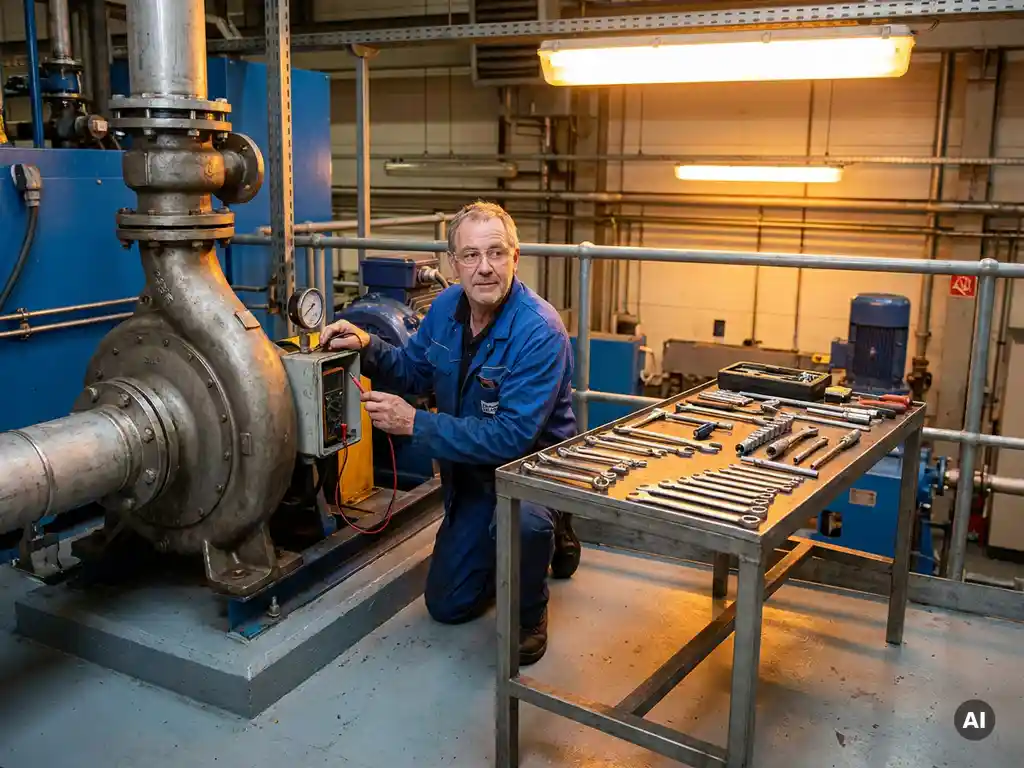
Plants can reduce MTTR without adding staff by investing in condition monitoring to accelerate diagnosis, standardizing repair procedures, improving spare parts staging, and selecting equipment that requires less complex intervention. The goal is to compress the non-wrench time — the hours spent diagnosing, waiting, permitting, and realigning — rather than simply working faster during the physical repair itself.
The most effective strategies for reducing MTTR without headcount increases include:
- Condition monitoring and predictive maintenance: Vibration analysis, thermography, and oil sampling allow teams to identify developing faults before failure, turning reactive repairs into planned interventions with pre-staged parts and pre-approved permits. Planned repairs consistently achieve lower MTTR than emergency breakdowns.
- Standardized repair kits and staging: Pre-assembled spare parts kits for high-failure-rate assets eliminate the parts-hunting phase of repair. Staging kits near critical equipment reduces the time between fault detection and first wrench turn.
- Simplified equipment selection: Choosing rotating equipment components that require less precision during reinstallation directly reduces repair time. For example, couplings that do not require laser alignment after reassembly eliminate one of the most time-consuming steps in pump and fan maintenance.
- Digital work instructions: Step-by-step digital procedures with embedded checklists reduce diagnostic uncertainty and prevent the reassembly errors that cause secondary failures and restart the repair cycle.
- Cross-training: Broadening the skill base of existing technicians reduces contractor dependency and ensures that critical repairs are not delayed while waiting for a single specialist.
- Root cause elimination: Addressing the underlying drivers of failure — misalignment, vibration, thermal stress — reduces failure frequency and, when failures do occur, often results in simpler, faster repairs because the failure mode is predictable and well-understood.
The highest-leverage interventions target diagnostic speed and alignment complexity simultaneously, because these two factors account for the majority of non-productive repair time in most rotating equipment environments.
When should MTTR be prioritized over MTBF?
MTTR should be prioritized over MTBF when assets have redundancy built in, when failures are inherently unpredictable, or when the cost of extending mean time between failures is disproportionately high relative to the cost of improving recovery speed. In high-redundancy systems, a fast MTTR ensures the standby asset is restored before the primary fails again — making recovery speed more valuable than failure prevention.
There are several operational scenarios where focusing on MTTR delivers more availability improvement per investment than chasing a higher MTBF:
- Redundant asset configurations: In N+1 pump or fan arrangements, the primary concern is restoring the failed unit before the duty unit also fails. Improving MTBF on an already-reliable redundant asset yields minimal availability gain; improving MTTR ensures the redundancy is always restored promptly.
- Wear-dominated failure modes: When failures are driven by component wear with a relatively predictable life, the asset will fail at roughly the same interval regardless of maintenance effort. Investing in faster repair capability rather than extended component life often delivers better overall availability.
- High diagnostic uncertainty: In environments where failure causes are difficult to predict or prevent, building organizational capability around fast, accurate diagnosis and repair is more pragmatic than pursuing an elusive MTBF target.
- Aging fleets with fixed replacement schedules: When capital replacement is planned within a defined horizon, the business case for major reliability upgrades is weak. Optimizing MTTR through procedure improvement and parts staging delivers availability gains at lower cost.
The right balance between MTTR and MTBF investment depends on the specific asset, its role in the production system, and the failure modes it faces. Leading maintenance programs track both metrics and make deliberate, data-driven decisions about where each investment dollar delivers the greatest availability return.
How Zytec Non-Contact Drives Help Reduce MTTR
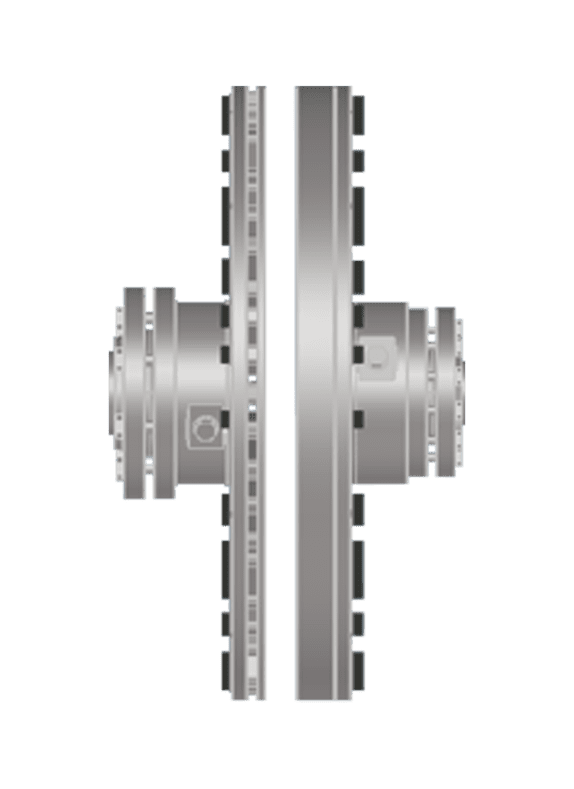
One of the most direct ways to reduce mean time to repair in rotating equipment is to eliminate the repair complexity that inflates it. Zytec's non-contact magnetic drives address several of the root causes of high MTTR simultaneously, making them a structural solution rather than a procedural workaround. Key ways Zytec technology shortens repair time and maintenance burden include:
- No laser alignment required: Because Zytec drives transmit torque across an air gap without mechanical contact, reinstallation after any motor or equipment intervention requires no precision alignment procedure. This eliminates one of the most time-consuming steps in conventional pump and fan maintenance.
- No wear components to replace: Zytec drives contain no elastomers, no lubrication systems, no gear teeth, and no friction elements. There are no scheduled element replacements, which means fewer planned interventions and fewer opportunities for maintenance-induced failures that restart the repair cycle.
- Reduced bearing and seal wear: By eliminating misalignment forces and torsional vibration from the drivetrain, Zytec drives extend the service life of downstream components including bearings and seals. Fewer component failures mean fewer repair events overall.
- Simplified fault isolation: Air gap monitoring serves as a direct indicator of system-level issues such as bearing degradation or foundation movement, giving maintenance teams an early, clear signal rather than a complex diagnostic puzzle.
- Up to 80% vibration reduction: Lower vibration across the drivetrain reduces the failure rate of connected equipment, directly improving MTBF and reducing the frequency with which MTTR is tested.
For industrial plants where rotating equipment downtime drives significant operational cost, Zytec's non-contact drives offer a proven path to lower MTTR, fewer interventions, and a total cost of ownership that reflects the full lifecycle benefit of maintenance-free operation. Contact Zytec to discuss how non-contact drive technology can be applied to your most maintenance-intensive rotating equipment.
Frequently Asked Questions
How do I start tracking MTTR if my plant doesn't currently measure it?
Begin by logging failure timestamps and return-to-service timestamps in your CMMS (computerized maintenance management system) for every work order — even retroactively if records allow. If you don't have a CMMS, a simple spreadsheet capturing asset ID, failure time, repair start time, and restoration time is enough to establish a baseline. Focus first on your highest-criticality assets, since that's where MTTR visibility delivers the most immediate operational value. Once you have 90 days of data, you'll have a reliable baseline to benchmark against and a clear picture of which assets and failure modes are driving your longest repair times.
What's the difference between MTTR and repair time — aren't they the same thing?
They're related but not identical. Repair time typically refers to the hands-on wrench time spent physically fixing the equipment, while MTTR captures the full clock time from failure detection to restoration of normal operation — including diagnostic time, parts retrieval, permit administration, and post-repair verification. This distinction matters enormously in practice: a physical repair might take 45 minutes, but if diagnosis took two hours and lockout/tagout procedures added another hour, your actual MTTR is closer to four hours. Tracking total elapsed time rather than just active repair time gives you a more honest and actionable picture of where delays are really occurring.
Can improving MTTR actually make up for having older, less reliable equipment?
To a significant degree, yes — especially when capital replacement isn't immediately feasible. If aging equipment fails more frequently but your team can diagnose and restore it in 90 minutes instead of six hours, the net availability impact is dramatically reduced. This is why MTTR improvement through better spare parts staging, standardized procedures, and simplified equipment design is often the highest-ROI maintenance investment for plants operating aging fleets. That said, MTTR optimization is most effective as a complement to a reliability improvement program, not a permanent substitute for it — chronic high-frequency failures will eventually erode any recovery speed advantage.
How does planned maintenance affect MTTR compared to reactive breakdowns?
Planned maintenance interventions consistently achieve lower MTTR than emergency reactive repairs — often by a factor of two to four times. When a repair is planned, parts are pre-staged, permits are pre-approved, the right technicians are scheduled, and the work scope is defined before anyone touches the equipment. In contrast, a reactive breakdown forces your team to diagnose, source parts, arrange permits, and mobilize resources in real time, all while production pressure mounts. This is one of the strongest practical arguments for investing in condition monitoring and predictive maintenance: it converts unpredictable emergency repairs into scheduled interventions with a fraction of the elapsed repair time.
What's a realistic MTTR improvement target for a plant just starting to optimize its maintenance program?
A realistic first-year target for most industrial plants is a 20–30% reduction in average MTTR for critical assets, achievable primarily through procedural improvements rather than capital investment. Quick wins typically include standardizing repair kits for high-failure-rate equipment, implementing pre-approved permit templates for routine interventions, and documenting step-by-step repair procedures that reduce diagnostic uncertainty. More significant reductions — in the 40–60% range — generally require a combination of condition monitoring deployment, equipment design changes, and cross-training programs, and are typically realized over a two-to-three-year improvement cycle. Setting interim milestones and tracking MTTR monthly keeps the program accountable and visible to leadership.
Is a very low MTTR always a good sign, or can it indicate a problem?
A consistently very low MTTR can occasionally signal a problem rather than strong performance — specifically, it may indicate that repairs are being completed too quickly by skipping root cause analysis, post-repair verification, or proper reassembly checks. If the same asset repeatedly fails shortly after a fast repair, the low MTTR is masking an underlying reliability issue and potentially creating a cycle of maintenance-induced failures. Best practice is to pair MTTR tracking with repeat failure rate monitoring: if an asset returns to service quickly but fails again within a short interval, the repair quality or root cause investigation needs attention, not just the speed.
How should MTTR targets be communicated and used within a maintenance team without creating perverse incentives?
MTTR targets work best when framed as team-level continuous improvement goals rather than individual performance metrics tied to accountability or discipline. When technicians feel pressured to minimize repair time at all costs, the result is often skipped steps, incomplete root cause analysis, and reassembly errors — all of which increase long-term MTTR by generating repeat failures. Instead, communicate MTTR trends in team briefings alongside quality indicators like repeat failure rates and first-time fix rates, so speed is always evaluated in the context of repair quality. Recognizing improvements in the process — better parts staging, clearer procedures, faster diagnostics — rather than rewarding individual speed reinforces the right behaviors.