Manufacturing downtime falls into two main categories: planned downtime and unplanned downtime. Planned downtime is scheduled in advance and includes activities like preventive maintenance, equipment upgrades, and shift changes. Unplanned downtime occurs without warning due to equipment failures, process faults, or external disruptions. Understanding both types is essential for any industrial operation trying to protect productivity and control costs. The sections below address the most important questions manufacturers ask about downtime, from its causes to the metrics used to track it.
What is the difference between planned and unplanned downtime?
Planned downtime is any production stoppage that is scheduled and anticipated in advance, while unplanned downtime is an unexpected halt caused by equipment failure, process faults, or other sudden events. The critical distinction is control: planned downtime is managed, budgeted, and timed to minimize operational impact, whereas unplanned downtime disrupts production without warning and carries far greater costs.
Planned downtime
Planned downtime includes scheduled maintenance windows, equipment inspections, shift changeovers, tooling changes, software updates, and deliberate production pauses. Because these stoppages are anticipated, production teams can prepare by adjusting output schedules, pre-staging spare parts, and coordinating maintenance crews. The goal of good planned downtime management is to keep these windows as short and infrequent as possible while still protecting long-term equipment health.
Unplanned downtime
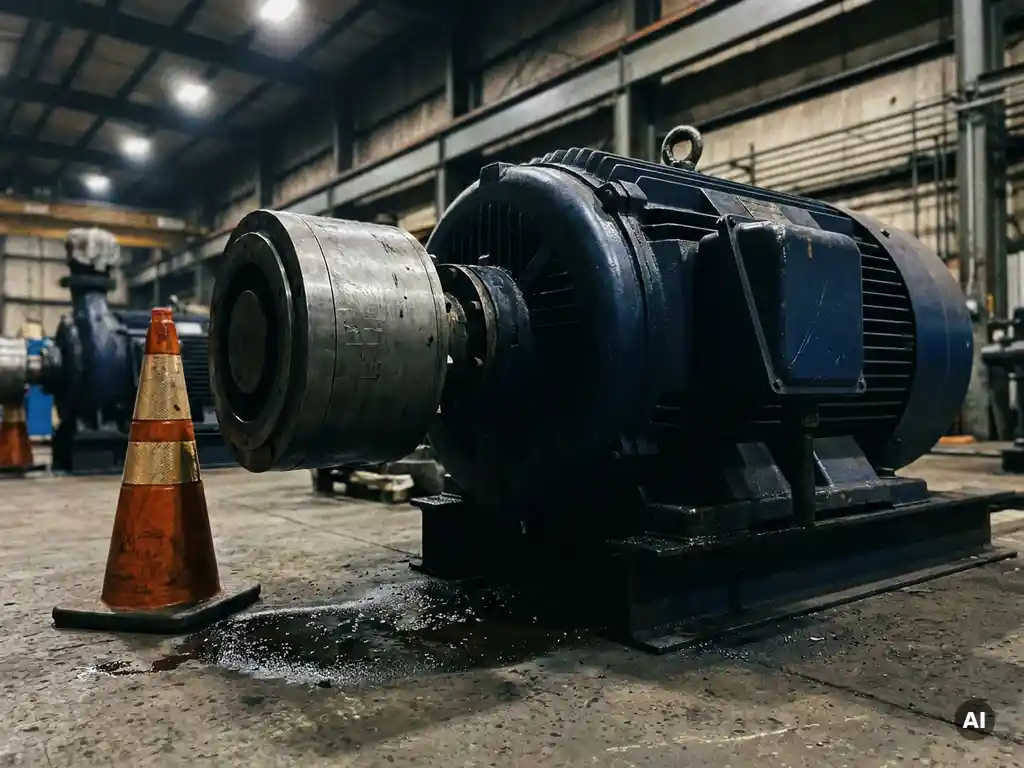
Unplanned downtime, also called equipment downtime or production downtime, occurs when a machine, system, or process fails without warning. Common triggers include mechanical breakdowns, electrical faults, process upsets, and operator errors. Because there is no preparation time, the response is reactive: technicians must diagnose the fault, source parts, and restore the system under pressure. This is why unplanned downtime consistently costs more per hour than planned maintenance ever does.
What are the most common causes of unplanned downtime in manufacturing?
The most common causes of unplanned downtime in manufacturing are mechanical equipment failures, misalignment of rotating machinery, electrical faults, inadequate maintenance practices, and human error during maintenance interventions. In asset-intensive industries, rotating equipment such as pumps, fans, compressors, and conveyors is responsible for a disproportionate share of unexpected stoppages.
Industry sources consistently identify misalignment as a leading driver of rotating machinery failures, responsible for a significant portion of breakdowns involving bearings, seals, and couplings. When a shaft is even slightly out of alignment during operation, the resulting vibration and load imbalance accelerate wear on every connected component. What begins as a small offset can grow into a bearing failure, a seal leak, or a coupling fracture, each capable of triggering an unplanned shutdown.
Other frequent causes of production downtime include:
- Wear-related component failure: Couplings, belts, and seals degrade over time and fail if replacement intervals are missed or if operating conditions exceed design parameters.
- Vibration and torsional shock: Excessive vibration propagates through the drivetrain, shortening the service life of bearings, gearboxes, and structural mounts.
- Maintenance-induced failures: Errors introduced during routine maintenance, such as incorrect bolt torque, imperfect realignment, or missing fasteners, are a well-documented source of post-maintenance failures.
- Electrical and control system faults: Power quality issues, sensor failures, and control logic errors can trip equipment unexpectedly.
- Contamination and environmental factors: Dust, moisture, corrosive atmospheres, and temperature extremes degrade components faster than standard service intervals account for.
How does downtime affect manufacturing costs and productivity?
Manufacturing downtime affects costs and productivity in two distinct ways: direct losses from halted production and indirect costs from repair labor, spare parts, emergency procurement, and the knock-on effects of missed delivery commitments. Unplanned downtime is consistently more expensive than planned stoppages because it combines all of these cost categories simultaneously and without preparation.
The direct production loss is the most visible impact: every hour a line is down, output that cannot be recovered is lost. But the indirect costs often exceed this figure. Emergency maintenance requires technicians to work outside normal schedules, spare parts must be sourced urgently at premium prices, and contractors may need to be called in. In process industries where production is continuous, a single unplanned stoppage can affect upstream and downstream operations across the entire facility.
Beyond the immediate financial impact, frequent equipment downtime erodes workforce confidence, strains customer relationships, and undermines a plant's ability to meet delivery commitments. Over time, a poor downtime record increases insurance premiums, raises the cost of maintenance contracts, and makes it harder to justify capital investment in the facility. Reducing downtime is therefore not just an operational goal but a strategic one that directly affects total cost of ownership and long-term competitiveness.
What is the difference between reactive and preventive maintenance?
Reactive maintenance means fixing equipment after it has already failed, while preventive maintenance involves servicing equipment on a scheduled basis to prevent failures before they occur. Reactive maintenance is cheaper in the short term but consistently more expensive overall because it allows failures to cause unplanned downtime, collateral damage, and emergency repair costs.
Reactive maintenance, sometimes called run-to-failure maintenance, is appropriate only for non-critical assets where the cost of failure is low and replacement is straightforward. For rotating equipment central to production, reactive maintenance is a high-risk strategy. A bearing failure that could have been prevented by a scheduled inspection can cascade into a shaft failure, a seal breach, or contamination of the process fluid, multiplying the repair cost many times over.
Preventive maintenance schedules service intervals based on time, usage hours, or condition indicators. It reduces the frequency of unplanned failures and allows maintenance teams to plan labor, parts, and production adjustments in advance. The limitation of preventive maintenance is that it can result in over-servicing: replacing components that still have useful life remaining, which itself introduces maintenance-induced failure risk every time equipment is disassembled and reassembled. This is why many manufacturers now combine preventive maintenance with condition-based monitoring to service equipment only when indicators show it is genuinely needed.
How can manufacturers reduce unplanned downtime on rotating equipment?
Manufacturers can reduce unplanned downtime on rotating equipment by eliminating the root causes of mechanical failure rather than just managing their symptoms. The most effective strategies combine precision installation practices, vibration monitoring, condition-based maintenance, and the use of drivetrain components that structurally reduce wear and misalignment-induced stress.
Key actions that deliver measurable downtime reduction include:
- Eliminating misalignment at the source: Precision alignment during installation reduces bearing and seal stress from day one. Technologies that tolerate or absorb dynamic misalignment during operation extend this benefit across the full service life of the asset.
- Reducing vibration transmission: Drivetrain components that dampen torsional shock and vibration protect downstream equipment, extending the service life of bearings, gearboxes, and structural interfaces.
- Implementing condition monitoring: Vibration sensors, thermal imaging, and oil analysis provide early warning of developing faults, shifting maintenance from reactive to condition-based and extending the time between interventions.
- Reducing maintenance touchpoints: Every time a technician works on rotating equipment, there is a probability of introducing an error. Reducing the number of scheduled interventions reduces this exposure.
- Selecting components with longer service lives: Specifying drivetrain components rated for extended maintenance-free operation reduces the frequency of planned stoppages and the associated risk of maintenance-induced failures.
The principle underlying all of these strategies is the same: the fewer times equipment is disturbed, and the more stable its operating conditions, the longer it runs without fault.
What metrics are used to measure and track manufacturing downtime?
The primary metrics used to measure and track manufacturing downtime are Overall Equipment Effectiveness (OEE), Mean Time Between Failures (MTBF), Mean Time To Repair (MTTR), and availability rate. Together, these indicators give operations teams a clear picture of how often equipment fails, how long it takes to restore, and how much productive capacity is actually being realized.
- Overall Equipment Effectiveness (OEE): OEE combines availability, performance, and quality into a single percentage that represents how much of planned production time is truly productive. A low OEE score almost always points to excessive downtime as a primary driver.
- Mean Time Between Failures (MTBF): MTBF measures the average operating time between one failure and the next. A rising MTBF indicates improving reliability; a falling MTBF signals that equipment health is deteriorating.
- Mean Time To Repair (MTTR): MTTR measures how long it takes to restore equipment to service after a failure. Reducing MTTR requires better spare parts availability, faster diagnostics, and well-trained maintenance teams.
- Availability rate: Availability is the percentage of scheduled production time during which equipment is actually operational. It is one of the clearest direct measures of downtime impact.
- Planned vs. unplanned downtime ratio: Tracking the split between planned and unplanned stoppages shows whether the maintenance strategy is shifting in the right direction. A healthy plant sees the majority of its downtime as planned.
Tracking these metrics consistently over time is what transforms downtime management from reactive firefighting into a structured reliability improvement program. Without reliable data, it is impossible to identify which assets, failure modes, or maintenance practices are responsible for the greatest losses.
How Zytec Non-Contact Drives Help Reduce Manufacturing Downtime
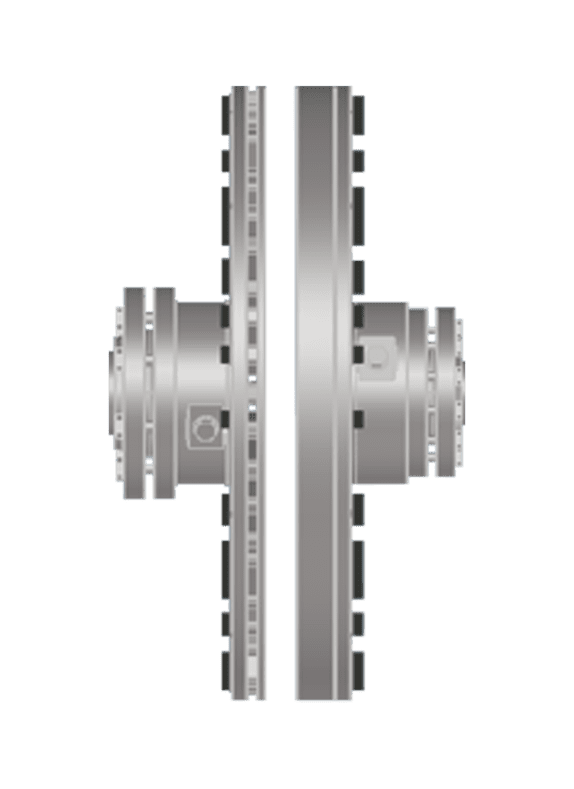
Zytec's non-contact magnetic drives directly address the root causes of unplanned downtime on rotating equipment. By transmitting torque across an air gap using powerful permanent magnets, these drives eliminate the wear mechanisms, misalignment sensitivity, and maintenance touchpoints that drive the majority of unexpected production stoppages in pump, fan, compressor, and conveyor applications.
The practical benefits for manufacturing operations include:
- No wear components: Zytec non-contact drives contain no elastomers, no lubrication systems, no gear teeth, and no friction elements, giving them a maintenance-free operational life of 20 or more years.
- Dynamic misalignment tolerance: The drives accommodate up to 12 mm of radial dynamic misalignment during operation, meaning thermal expansion, pipe strain, and foundation movement do not generate bearing or seal overload.
- Vibration reduction up to 80%: By absorbing torsional shock and decoupling the motor from the driven machine, Zytec drives protect every downstream component and extend bearing and seal service life significantly.
- Fewer maintenance interventions: With no scheduled coupling element replacement or realignment requirements, the number of human touchpoints on rotating equipment is structurally reduced, lowering the risk of maintenance-induced failures.
- Energy savings up to 50%: The A-TORQ variant eliminates overcapacity in pump and fan systems, reducing energy consumption and operating costs simultaneously with reliability improvements.
- Payback period often under two years: The combination of energy savings, maintenance cost reduction, and downtime elimination delivers a total cost of ownership reduction that is measurable and fast.
For industrial operations where rotating equipment is central to production and downtime carries real financial consequences, Zytec non-contact drives offer a proven, future-proof path to maximum uptime. Contact Zytec to discuss how non-contact drive technology can be applied to your specific installation.
Frequently Asked Questions
How do I know if my facility's downtime levels are above or below industry average?
A useful starting benchmark is your OEE score: world-class manufacturing operations typically achieve OEE of 85% or higher, while the industry average sits closer to 60–65%. If your availability rate alone is pulling your OEE below 80%, downtime is likely a significant cost driver worth investigating systematically. Comparing your MTBF and MTTR figures against equipment manufacturer benchmarks or industry databases for your sector can also reveal whether specific assets are underperforming relative to their expected service life.
What is the best way to get started with condition monitoring if we currently have no monitoring in place?
The most practical starting point is to identify your highest-criticality rotating assets — the machines whose failure would immediately halt production or cause the most costly repairs — and deploy basic vibration monitoring on those first. Portable vibration analyzers are a low-cost entry point that allows your maintenance team to establish baseline signatures before faults develop. Once you have baseline data on critical assets, you can build a case for permanent online sensors on the highest-risk equipment, creating a scalable condition monitoring program without requiring a large upfront investment.
Can maintenance-induced failures really be that significant, and how do we reduce them?
Yes — industry studies consistently show that a substantial proportion of equipment failures occur shortly after a maintenance intervention, caused by errors such as incorrect reassembly, improper torque, or imperfect realignment. The most effective ways to reduce maintenance-induced failures are to standardize procedures with detailed work instructions, use precision tools such as laser alignment systems rather than relying on technician judgment, and structurally reduce the number of interventions required by selecting longer-life or maintenance-free drivetrain components. Every unnecessary disassembly is a risk exposure that can be engineered out of your maintenance program.
Is it always worth investing in predictive or condition-based maintenance, or are there situations where run-to-failure makes more sense?
Run-to-failure is a legitimate strategy for non-critical, easily replaceable assets where the cost of failure is low and the failure does not cascade into broader production disruption — a small auxiliary pump with a readily available spare is a reasonable candidate. However, for any rotating asset that is central to a production line, drives a continuous process, or is difficult to access and replace quickly, condition-based maintenance almost always delivers a better return than run-to-failure. The key is to formally classify your assets by criticality so that your maintenance strategy is deliberately matched to the consequences of failure rather than applied uniformly.
How much of our downtime reduction effort should focus on faster repair (lower MTTR) versus preventing failures in the first place (higher MTBF)?
Both matter, but improving MTBF — preventing failures from occurring — delivers compounding returns because it eliminates not just the repair time but also the collateral damage, emergency procurement costs, and production disruption that accompany each failure event. Reducing MTTR is valuable and should not be neglected, as it requires investment in spare parts availability, technician training, and diagnostic tooling, but it still assumes failures will continue to happen at the same rate. The most effective reliability programs pursue both simultaneously: driving MTBF up through better maintenance practices and component selection while driving MTTR down through operational readiness.
What is the typical payback period for upgrading drivetrain components to reduce downtime, and how should we build the business case?
Payback periods vary by application, but for high-criticality rotating equipment the combination of energy savings, avoided emergency repair costs, and reduced planned maintenance labor frequently delivers payback within one to three years. To build a credible business case, start by calculating your current cost of downtime per hour — factoring in lost production, labor, emergency parts, and any contractual penalties — then multiply that by the number of unplanned stoppages attributable to the target equipment over the past 12–24 months. Adding measurable energy savings and the reduction in planned maintenance labor costs to this figure typically produces a total cost of ownership comparison that is straightforward to present to decision-makers.
Does reducing vibration in rotating equipment actually extend the life of components beyond the immediate drivetrain, or is the benefit limited to the drive itself?
The benefit extends well beyond the immediate drivetrain. Vibration propagates through mechanical structures, pipework, and connected systems, accelerating wear on bearings, seals, gearboxes, structural mounts, instrumentation, and even nearby equipment sharing the same baseplate or foundation. Reducing vibration at the source — for example, by decoupling the motor from the driven machine — protects every component in the transmission path and can meaningfully extend the service life of assets that would not otherwise be considered part of the drivetrain. This is why vibration reduction consistently shows up as one of the highest-return interventions in reliability improvement programs.