
What does a reliability engineer actually do day to day?
A reliability engineer works to prevent equipment failures before they happen, reduce unplanned downtime, and extend the useful life of industrial assets. On any given day, this means analyzing failure data, reviewing maintenance records, conducting root cause investigations, and advising on equipment selection or modification decisions.
The practical scope of the role varies by industry and organization size, but several activities appear consistently across sectors. Reliability engineers typically spend time reviewing condition monitoring data from vibration sensors, thermal cameras, and oil analysis reports. They assess whether trends indicate early-stage degradation and decide whether to escalate, monitor, or schedule intervention. They also participate in maintenance planning meetings, where they help prioritize work orders based on risk and consequence rather than calendar intervals alone.
Root cause analysis is a core responsibility. When equipment does fail, the reliability engineer leads structured investigations using methodologies such as fishbone diagrams, fault tree analysis, or the five-whys technique. The goal is not just to fix the immediate problem but to identify and eliminate the underlying cause so the failure does not repeat.
Reliability engineers also contribute to capital projects, providing input on equipment specifications, vendor selection, and installation standards. Their involvement at the design or procurement stage is often where the highest-value reliability improvements are locked in, long before equipment enters service.
What technical skills are essential for reliability engineers?
The essential technical skills for reliability engineers include a working understanding of mechanical systems, rotating equipment principles, failure modes and effects analysis (FMEA), condition monitoring techniques, and maintenance strategy development. These form the foundational competency set that the role is built around.
Rotating equipment knowledge is particularly important in asset-intensive industries. Reliability engineers need to understand how pumps, fans, compressors, gearboxes, and drive systems function, how they degrade, and what the leading indicators of failure look like. This includes understanding how misalignment, imbalance, bearing wear, and seal degradation manifest in vibration signatures and performance data.
Condition monitoring and predictive maintenance techniques are central to the role. Vibration analysis, thermography, ultrasonic testing, and motor current signature analysis each require both technical understanding and practical interpretation skill. A reliability engineer does not need to be a specialist in every technique, but must know when to apply each one and how to interpret the results in context.
Familiarity with reliability-centered maintenance (RCM) methodology is increasingly expected. RCM provides a structured framework for deciding what maintenance tasks to perform, at what frequency, and by what method, based on the consequences of failure rather than manufacturer recommendations alone. Engineers who can apply RCM principles systematically are able to build maintenance programs that are both more effective and more cost-efficient than traditional time-based approaches.
Knowledge of drivetrain components and coupling technology also matters. Understanding how torque is transmitted, how misalignment propagates forces into bearings and seals, and how coupling choice affects the PF curve (the time between detectable degradation and functional failure) gives reliability engineers the technical grounding to make better equipment and specification decisions.
What data and analytical skills do reliability engineers need?
Reliability engineers need strong data analysis skills, including the ability to work with failure history databases, interpret statistical reliability metrics such as MTBF and MTTR, apply Weibull analysis to failure distributions, and draw actionable conclusions from condition monitoring trends. Data literacy is now as important as mechanical knowledge in this role.
Most reliability engineers work with computerized maintenance management systems (CMMS) to access work order histories, failure records, and spare parts data. The ability to query this data, identify patterns, and build business cases from the findings is a practical requirement. Engineers who can extract meaningful insights from messy, incomplete maintenance records add significantly more value than those who rely only on clean, structured reports.
Statistical methods underpin many reliability decisions. Weibull analysis, for example, helps engineers determine whether a component is in its early-failure, random-failure, or wear-out phase, which directly informs whether a time-based or condition-based maintenance approach is more appropriate. Understanding how to apply these methods without over-engineering the analysis is a skill that develops with experience.
Trend analysis and anomaly detection are increasingly supported by digital tools, but the engineer still needs to interpret what the data means in the context of the specific machine, its operating environment, and its failure history. Automated alerts and dashboards are only as useful as the judgment applied to them. The ability to distinguish a genuine early warning from instrument noise or a benign process change is a skill that no software replaces entirely.
What soft skills separate good reliability engineers from great ones?
The soft skills that most distinguish exceptional reliability engineers are communication, cross-functional influence, structured problem-solving under pressure, and the ability to build trust with maintenance technicians and operations teams. Technical competence creates the foundation, but these interpersonal and cognitive skills determine whether that competence translates into real improvement.
Communication is critical because reliability engineers regularly need to explain technical findings to non-technical audiences. A root cause analysis report that only a fellow engineer can interpret has limited organizational value. The ability to translate complex failure mechanisms into clear, actionable recommendations for plant managers, procurement teams, or C-level executives is a skill that directly affects whether good reliability work gets implemented or shelved.
Influence without authority is another defining competency. Reliability engineers rarely control maintenance schedules, budgets, or operational decisions directly. They achieve results by persuading others, building credibility through consistent, well-reasoned analysis, and framing reliability improvements in terms that resonate with decision-makers, whether that means uptime, cost, safety, or sustainability outcomes.
Curiosity and intellectual persistence matter more than many job descriptions acknowledge. Root cause analysis often involves following evidence into unfamiliar territory, challenging established assumptions, and resisting the pressure to accept convenient explanations. Engineers who ask the next question when others would stop are the ones who find and fix the real causes of recurring failures.
How does knowledge of modern drive technology affect a reliability engineer's effectiveness?
A reliability engineer who understands modern drive technology, including how coupling design, variable speed solutions, and power transmission choices affect the entire drivetrain, is significantly more effective at identifying failure causes, specifying better equipment, and reducing total maintenance burden across an asset portfolio.
Coupling selection is a good example of where this knowledge creates tangible value. Conventional mechanical couplings require periodic element replacement, precision laser alignment, and scheduled inspections. Each intervention creates an opportunity for human error, and misalignment is widely cited as a leading contributor to rotating machinery failures. A reliability engineer who understands these dynamics can make specification decisions that structurally reduce the number of maintenance events an asset requires over its lifetime.
The concept of the PF curve is directly relevant here. Every component in a drivetrain, including bearings, seals, and shafts, has a degradation timeline that begins when a fault is introduced. Coupling-induced forces, such as torsional oscillations, shock loads, and misalignment-driven radial forces, accelerate that degradation. An engineer who understands how coupling behavior affects downstream component life can use this knowledge to extend inspection intervals, reduce bearing and seal replacement frequency, and improve overall asset availability.
Variable speed technology is another area where drive knowledge pays dividends. Understanding the difference between electronic variable frequency drives and mechanical variable speed solutions, including their respective energy loss profiles, maintenance requirements, and suitability for different operating environments, allows a reliability engineer to contribute meaningfully to technology selection decisions rather than deferring entirely to vendors or project engineers.
What qualifications and certifications do reliability engineers typically hold?
Reliability engineers typically hold a degree in mechanical, electrical, or chemical engineering, combined with one or more professional certifications in reliability, maintenance, or condition monitoring. The most recognized certifications in the field include the Certified Reliability Engineer (CRE) from ASQ, the Certified Maintenance and Reliability Professional (CMRP) from SMRP, and vibration analysis certifications from ISO Category I through IV.
A bachelor's degree in an engineering discipline provides the technical foundation most employers expect. In practice, experienced technicians who move into reliability roles sometimes hold equivalent qualifications or demonstrate competence through a strong track record rather than formal academic credentials, particularly in industries where hands-on equipment experience is highly valued.
The CMRP certification is widely recognized across industries and covers maintenance and reliability strategy, equipment reliability, manufacturing process reliability, personnel and leadership, and business management. It is often the starting point for engineers building a formal reliability credential. The ASQ CRE is more statistically focused and suits engineers who work heavily with quantitative reliability methods and product or system design.
Condition monitoring certifications, particularly vibration analysis qualifications aligned with ISO 18436-2, are increasingly expected in roles where predictive maintenance is a core activity. These certifications are structured by category, with higher categories requiring deeper analytical capability and broader application knowledge.
Beyond formal qualifications, familiarity with standards such as ISO 55000 for asset management and RCM methodologies is frequently cited in job requirements, particularly in capital-intensive sectors such as oil and gas, water and wastewater, and manufacturing. Practical experience with CMMS platforms and data analysis tools rounds out the qualification profile most employers are looking for in 2026.
How Zytec supports reliability engineers in the field
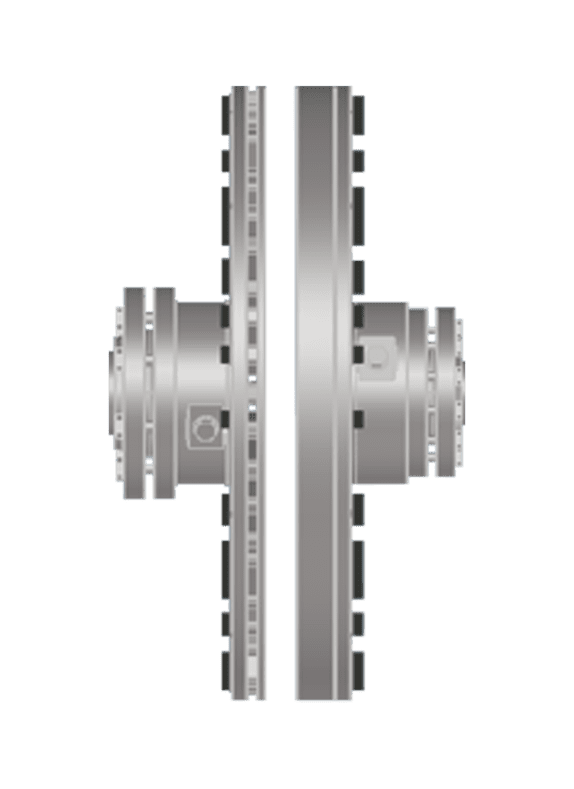
Reliability engineers face a recurring challenge: they can identify the root causes of failure, but the solutions available to them are often limited by what conventional technology makes possible. Zytec's non-contact magnetic drives directly address several of the most persistent failure drivers that reliability engineers deal with in rotating equipment applications.
- Misalignment elimination: Zytec's F-TORQ non-contact coupling accommodates up to 12 mm of radial dynamic misalignment without transmitting forces into bearings or seals, removing one of the most common contributors to premature component failure.
- Maintenance-free operation: With no wear components, no lubrication requirements, and no scheduled coupling inspection, the F-TORQ removes entire categories of maintenance events, reducing human error exposure and lowering total cost of ownership.
- Extended PF curve: By eliminating coupling-induced shock loads and torsional oscillations, Zytec drives extend the degradation timeline for downstream components, giving reliability engineers more time to detect and respond to developing faults.
- Energy and cost savings: Applications such as pumps and fans can achieve energy savings of up to 50%, with payback periods often under two years, supporting the business cases reliability engineers need to build for investment approval.
- Training through Zytec Academy: Zytec offers structured training for engineers at all levels, from mechanics to C-level executives, through its certified partner program, helping reliability professionals build the product and application knowledge they need to specify and implement solutions confidently.
If you are a reliability engineer looking to reduce maintenance burden, extend asset life, and build stronger business cases for operational improvement, contact Zytec to discuss how non-contact drive technology can be applied to your specific installation challenges.
Frequently Asked Questions
How long does it typically take to become a competent reliability engineer?
Most engineers reach a functional level of competency in reliability within 3–5 years of hands-on experience, assuming they are actively involved in root cause investigations, condition monitoring programs, and maintenance strategy development. Formal certifications like the CMRP can accelerate this by providing a structured knowledge framework, but there is no substitute for exposure to a wide variety of failure modes across different asset types. Engineers who seek out mentorship from experienced reliability professionals and deliberately reflect on each investigation tend to develop judgment significantly faster than those who learn passively on the job.
What are the most common mistakes reliability engineers make when implementing a condition monitoring program?
The most common mistake is collecting data without a clear decision-making framework attached to it — generating dashboards and alerts that no one acts on because there is no defined escalation process or response criteria. A second frequent error is applying condition monitoring techniques uniformly across all assets regardless of criticality, which wastes resources on low-consequence equipment while potentially under-resourcing high-risk assets. Effective programs start with a criticality ranking exercise, define clear alert thresholds and response actions for each asset class, and assign ownership for follow-through so that data reliably translates into maintenance decisions.
How should a reliability engineer prioritize which assets to focus on first?
Criticality analysis is the right starting point — assets should be ranked based on the consequence of failure across dimensions such as safety, production impact, environmental risk, and repair cost or lead time. A simple risk matrix scoring likelihood of failure against consequence of failure gives teams a defensible, data-driven basis for prioritization. Reliability engineers should focus initial improvement efforts on assets that sit in the high-consequence, high-likelihood quadrant, as these deliver the greatest return on engineering time and typically represent the largest share of unplanned downtime costs.
What is the best way for a reliability engineer to build credibility and influence within an organization that is resistant to change?
The most effective approach is to start with a small, visible win — identify one recurring failure that is causing genuine operational pain, conduct a rigorous root cause analysis, implement a targeted fix, and then document and communicate the outcome in business terms such as downtime avoided, cost saved, or production hours recovered. Credibility in reliability engineering is built through demonstrated results, not through presentations about methodology. Once stakeholders see that structured reliability work produces measurable improvements, resistance typically decreases and the engineer gains the influence needed to drive broader program changes.
How does Weibull analysis actually help in practice, and when is it not worth applying?
Weibull analysis is most valuable when you have sufficient failure history for a specific component or population — typically at least 10–15 failure data points — and need to determine whether failures are age-related, random, or concentrated in early life. This directly informs whether a time-based replacement interval, a condition-based approach, or a design improvement is the most appropriate response. However, applying Weibull analysis to sparse or poorly recorded failure data produces misleading results, so it is not worth pursuing when maintenance records are incomplete or when the failure population is too small; in those cases, engineering judgment combined with manufacturer data and industry benchmarks is a more honest and practical approach.
Can reliability engineering principles be applied effectively in smaller operations that don't have a dedicated reliability team?
Yes — the core principles of reliability engineering scale down effectively, even when the work is carried out by a single engineer or shared across a maintenance supervisor's responsibilities. The key is to focus on the highest-leverage activities: criticality ranking, structured root cause analysis for repeat failures, and moving at least the most critical assets onto condition-based rather than purely time-based maintenance. Free or low-cost tools such as spreadsheet-based FMEA templates, open-source Weibull analysis tools, and basic CMMS reporting can support meaningful reliability work without requiring enterprise-level infrastructure or a dedicated team.
What should a reliability engineer look for when evaluating new drive or coupling technology for a specific application?
The evaluation should go beyond nameplate specifications and focus on how the technology affects the entire drivetrain over its operating life — specifically, what forces it introduces or eliminates at the bearing and seal interfaces, what its maintenance requirements are, and how its performance characteristics change under variable load or speed conditions. Reliability engineers should request data on real-world installation case studies in comparable applications, ask vendors specifically about failure modes and their consequences, and assess total cost of ownership rather than purchase price alone. Evaluating technology through the lens of the PF curve — asking how each option affects the time available to detect and respond to developing faults — is a practical framework that keeps the focus on long-term asset availability rather than short-term acquisition cost.