To perform a root cause analysis, you identify the underlying cause of a failure or problem by systematically working backward from the observed event through contributing factors until you reach the origin. RCA is not a single method but a structured process that combines data gathering, causal analysis, and corrective action planning to prevent recurrence rather than just fix the symptom.
In industrial environments, where rotating equipment failures can mean hours of lost production and significant safety risk, a disciplined RCA process is one of the most valuable tools a maintenance or operations team can apply. The sections below walk through the key questions every practitioner should be able to answer before, during, and after an RCA.
What are the main steps in an RCA process?
The root cause analysis process follows five core steps: define the problem, collect data, identify causal factors, determine the root cause, and implement corrective actions. Each step builds on the previous one, and skipping any step typically produces an incomplete analysis that addresses symptoms rather than causes.
- Define the problem clearly. Write a precise problem statement that includes what failed, when, where, and under what conditions. Vague problem statements lead to vague conclusions.
- Collect data and evidence. Gather maintenance records, sensor data, operator logs, inspection reports, and physical evidence from the failure site before anything is disturbed or repaired.
- Map the causal chain. Use a structured method to trace events and conditions backward from the failure point, identifying every factor that contributed to the outcome.
- Identify the root cause. Determine which cause, if eliminated, would have prevented the failure entirely. This is distinct from contributing factors, which worsened the outcome but did not independently cause it.
- Develop and implement corrective actions. Create specific, verifiable actions targeted at the root cause, assign ownership, set deadlines, and track completion.
The process is iterative. If corrective actions do not eliminate recurrence, the analysis is revisited. A well-run RCA also produces documentation that becomes part of the facility's institutional knowledge base, informing future maintenance decisions.
What tools and methods are used in RCA?
The most widely used RCA tools include the 5 Whys, fishbone diagrams (Ishikawa), fault tree analysis, failure mode and effects analysis (FMEA), and barrier analysis. The right tool depends on the complexity of the failure, the available data, and the experience of the team conducting the analysis.
5 Whys
The 5 Whys is the simplest RCA method. You ask "why did this happen?" and then ask "why?" again for each answer, repeating the cycle until you reach a cause that no longer has a meaningful upstream answer. It works well for straightforward failures with a clear causal chain, but it can miss parallel causes in complex systems.
Fishbone diagram
Also called the Ishikawa or cause-and-effect diagram, the fishbone method maps potential causes across standard categories such as people, process, equipment, environment, materials, and measurement. It is particularly useful in team settings because it makes the brainstorming structured and visual, reducing the risk of overlooking a category of cause.
Fault tree analysis
Fault tree analysis works top-down, starting from the undesired event and branching into all possible combinations of conditions that could produce it. It is more rigorous than the 5 Whys and is well suited to safety-critical applications where multiple simultaneous failure modes need to be considered.
FMEA
Failure mode and effects analysis is a proactive tool often used before failures occur, but it is also applied retrospectively during RCA to evaluate the severity, probability, and detectability of each identified failure mode. It helps prioritize which root causes deserve the most urgent corrective action.
What information do you need to gather before starting an RCA?
Before beginning a root cause analysis, you need the failure event data, equipment history, operating conditions at the time of failure, physical evidence from the site, and input from the people who witnessed or responded to the event. Starting an RCA without this information forces the team to work from assumptions rather than facts.
Specifically, the pre-RCA data collection phase should include:
- A precise timeline of events leading up to and following the failure
- Maintenance records and inspection history for the affected equipment
- Operating parameters at the time of failure (load, speed, temperature, pressure, vibration readings)
- Any recent changes to the equipment, process, or operating conditions
- Physical evidence from the failure site, preserved before repair work begins
- Statements from operators, maintenance technicians, and anyone else present
- Relevant design specifications, standards, and manufacturer documentation
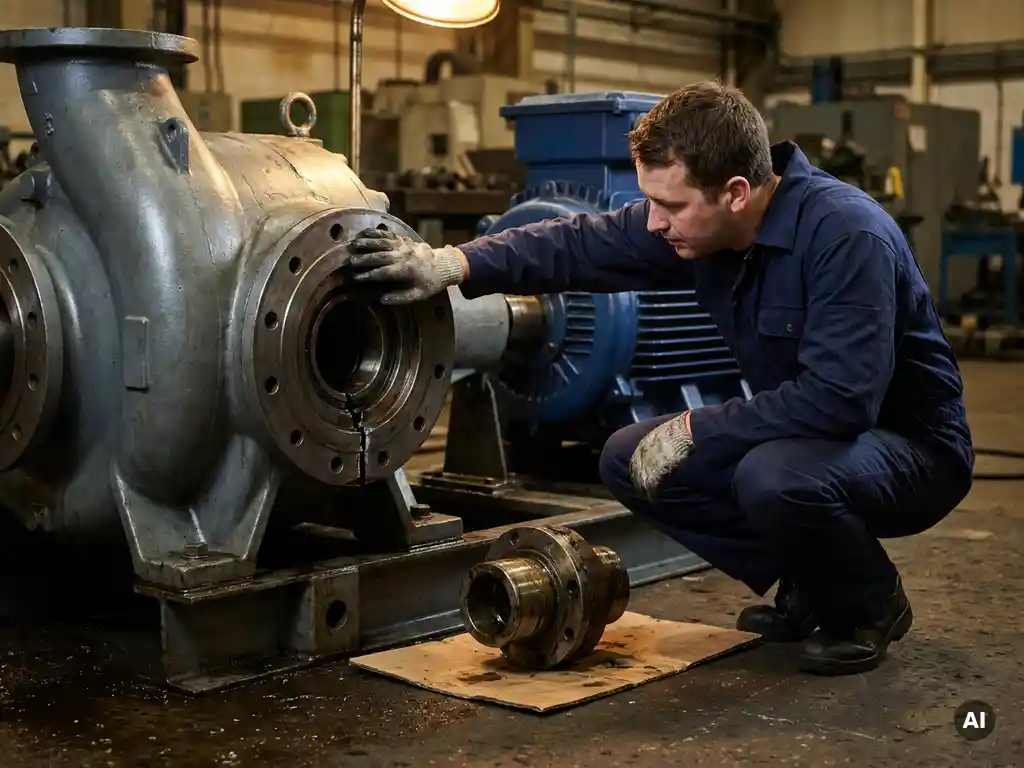
The most common reason RCA conclusions are challenged or prove ineffective is that the data collection phase was rushed. In practice, the pressure to restore production quickly leads teams to repair equipment before the evidence is properly documented. Establishing a clear protocol that separates evidence preservation from repair work prevents this problem.
What's the difference between a root cause and a contributing factor?
A root cause is the fundamental condition that, if corrected, would prevent the failure from recurring. A contributing factor is a condition that worsened the outcome or made the failure more likely but would not have caused the failure on its own. Distinguishing between them is critical because corrective actions aimed only at contributing factors rarely eliminate recurrence.
A practical way to test the distinction is to apply a counterfactual check: if this cause had been absent, would the failure still have occurred? If the answer is yes, it is a contributing factor. If the answer is no, it is a candidate for root cause status.
For example, consider a pump seal failure. Inadequate lubrication may have accelerated seal wear, making it a contributing factor. But if the underlying cause was persistent shaft misalignment generating abnormal radial loads that the seal was never designed to handle, misalignment is the root cause. Replacing the seal and improving lubrication without correcting the alignment will lead to another seal failure. Misalignment is widely cited in industry as responsible for a significant share of rotating machinery failures, which is why drivetrain alignment is a frequent finding in RCA investigations involving pumps, fans, and compressors.
How do you prevent the same failure from recurring after an RCA?
Preventing recurrence after an RCA requires implementing corrective actions that directly address the root cause, verifying that those actions were effective, and building the lessons learned into standard operating and maintenance procedures. An RCA that produces a report without verified follow-through does not prevent recurrence.
Effective recurrence prevention involves several disciplines working together:
- Corrective action ownership: Each action must have a named owner and a deadline. Actions without accountability are rarely completed.
- Verification: After implementation, confirm that the root cause condition no longer exists. This may involve inspection, measurement, or monitoring over a defined period.
- Procedure updates: If the root cause involved a gap in a maintenance procedure, inspection standard, or operating practice, update the relevant document and communicate the change to the affected team.
- Monitoring and trending: Set up condition monitoring or leading indicators that would give early warning if the root cause condition begins to return.
- Knowledge sharing: Share RCA findings across similar equipment or facilities within the organization. The same failure mode often exists in multiple locations.
Long-term recurrence prevention also means addressing systemic issues. If the RCA reveals that a particular equipment type consistently produces the same failure mode, the corrective action may involve an engineering change rather than a maintenance procedure update. Eliminating the mechanical condition that generates the failure is always more reliable than improving the response to it.
When should RCA be triggered in an industrial facility?
RCA should be triggered whenever a failure causes unplanned downtime, a safety incident, significant production loss, or repeated occurrence of the same problem. Most facilities also set threshold criteria based on cost, downtime duration, or safety classification to ensure RCA resources are applied where they deliver the most value.
Common trigger criteria include:
- Any failure resulting in a safety incident or near-miss
- Unplanned downtime exceeding a defined threshold (commonly two to four hours for critical equipment)
- Production loss exceeding a defined cost threshold
- Any failure on equipment classified as critical or safety-critical in the asset register
- Repeat failures on the same piece of equipment within a defined period (commonly three occurrences within twelve months)
- Failures that required emergency contractor callout or expedited parts procurement
Not every failure warrants a full formal RCA. Facilities that apply RCA to every minor event quickly exhaust the time and attention of their maintenance engineering teams. A tiered approach works better: a quick informal analysis for low-impact events, a structured team-based RCA for significant failures, and a formal cross-functional investigation for major incidents. The key is having clear criteria so that the decision to trigger an RCA is consistent and defensible rather than reactive or subjective.
How Zytec helps reduce the need for repeated RCA
Many RCA investigations in facilities with rotating equipment trace back to the same mechanical root causes: misalignment, vibration, excessive wear in couplings, and the collateral damage these conditions cause to bearings, seals, and shafts. Addressing these causes at the design and engineering level reduces the frequency of failures and the RCA workload that comes with them.
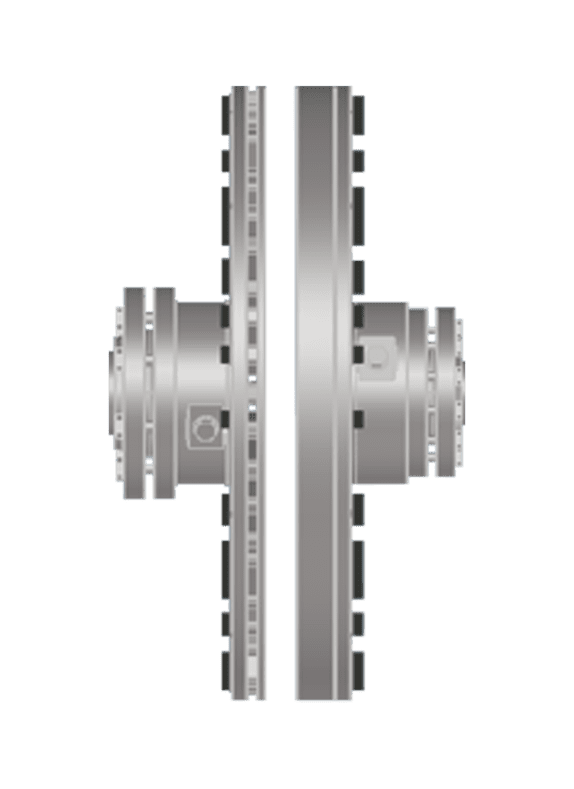
Zytec's non-contact drives are engineered to eliminate the conditions that most commonly appear as root causes in drivetrain RCA findings:
- No mechanical contact means no coupling wear, no lubrication failures, and no wear-related torque transmission degradation
- Up to 12 mm radial dynamic misalignment tolerance removes misalignment as a root cause of bearing and seal failures
- Vibration reduction up to 80% reduces fatigue loading across the entire drivetrain
- Inherent overload protection prevents shock loads from propagating into the motor or driven equipment during fault conditions
- No scheduled coupling maintenance eliminates the human-error risk that accompanies every maintenance intervention near rotating equipment
The result is fewer failures to investigate, shorter RCA cycles when investigations are needed, and corrective actions that last because the underlying mechanical conditions have been resolved at the source. If your facility is running repeated RCA cycles on the same equipment, it may be time to look at the drivetrain itself. Contact Zytec to discuss how non-contact drive technology can break the cycle of recurring failures in your installation.
Frequently Asked Questions
How long does a typical RCA take to complete in an industrial setting?
The duration of an RCA depends on the complexity of the failure and the availability of data, but a structured team-based RCA for a significant equipment failure typically takes between two and five days of active investigation, plus additional time for corrective action implementation and verification. Simple failures with a clear causal chain can be resolved in a few hours using a method like the 5 Whys, while complex, multi-factor failures or safety incidents may require weeks of investigation involving multiple disciplines. The data collection phase is often the biggest time driver — teams that have established evidence preservation protocols in place before a failure occurs complete RCAs significantly faster than those that have to reconstruct the timeline after the fact.
Who should be involved in an RCA team, and how many people is ideal?
An effective RCA team should include the maintenance technicians who responded to the failure, the operators who were running the equipment at the time, a maintenance engineer or reliability engineer to lead the analysis, and a supervisor or manager with authority to approve and resource corrective actions. For equipment-specific failures, including a subject matter expert — such as a rotating equipment specialist or OEM representative — adds significant diagnostic value. A team of four to six people is generally ideal: large enough to capture different perspectives and avoid blind spots, but small enough to reach decisions efficiently without the analysis becoming a committee exercise.
What are the most common mistakes teams make when conducting an RCA?
The most frequent mistake is stopping the analysis too early — identifying a contributing factor or a proximate cause and treating it as the root cause, which leads to corrective actions that do not prevent recurrence. A close second is rushing the data collection phase under production pressure, repairing equipment before physical evidence is documented and preserved. Other common pitfalls include assigning blame to individuals rather than investigating systemic or process failures, generating corrective action lists with no named owners or deadlines, and failing to close the loop by verifying that implemented actions actually eliminated the root cause condition.
How do you know when you've actually found the root cause and can stop asking 'why'?
You have reached the root cause when two conditions are met: the counterfactual test passes (if this cause had been absent, the failure would not have occurred), and the cause is something your organization can actually control and correct. A practical signal that you have gone deep enough is when the next 'why' leads outside the scope of the failure entirely — for example, into fundamental physics or supplier manufacturing processes beyond your influence. If the next 'why' still points to something your team can change, inspect, or engineer out, you are not yet at the root cause. Using a structured method like fault tree analysis alongside the 5 Whys helps prevent teams from stopping too early or drilling past the actionable level.
Can RCA be used proactively, or is it only applied after a failure has already occurred?
While RCA is primarily a reactive tool triggered by an actual failure event, the analytical methods used in RCA — particularly FMEA and fault tree analysis — are equally powerful when applied proactively to identify failure modes before they occur. Many reliability teams conduct proactive RCA-style reviews when commissioning new equipment, after major process changes, or when condition monitoring data shows early warning signs of developing problems. This approach is sometimes called a 'near-miss RCA' or predictive reliability review, and it allows teams to address root causes before a failure happens rather than after, significantly reducing both downtime and investigation costs.
How should RCA findings be documented and shared across a facility or organization?
RCA findings should be documented in a standardized report that includes the problem statement, timeline of events, causal chain map, identified root cause and contributing factors, corrective actions with owners and deadlines, and verification results once actions are implemented. Storing these reports in a searchable central system — whether a CMMS, a shared document platform, or a dedicated reliability database — allows future teams to quickly check whether a similar failure has been investigated before and what corrective actions proved effective. The most valuable facilities go a step further by conducting periodic reviews of RCA findings across similar equipment types or sister plants, turning individual investigations into organization-wide learning that prevents the same failure from appearing in multiple locations.
At what point does repeated RCA on the same equipment indicate a need for an engineering solution rather than a maintenance fix?
When the same failure mode recurs on the same equipment within twelve months despite verified corrective actions, it is a strong signal that the root cause is a fundamental mechanical or design condition that maintenance interventions alone cannot resolve. Recurring drivetrain failures — particularly those involving bearing fatigue, seal failures, or coupling wear — often trace back to persistent misalignment, vibration levels that exceed component design limits, or torque transmission methods that introduce cyclic stress into the drivetrain. In these cases, the correct corrective action is an engineering change: modifying the installation, upgrading to components with higher tolerance for the actual operating conditions, or replacing the drive technology altogether. Continuing to apply maintenance-level corrective actions to an engineering-level problem will produce the same failure on a predictable cycle.