Which skills matter most in root cause analysis?
The skills that matter most in root cause analysis are analytical thinking, technical domain knowledge, communication, and structured methodology. No single competency is sufficient on its own. Effective RCA practitioners combine logical reasoning with equipment or process expertise, and they translate findings into clear actions that drive organizational change rather than temporary fixes.
Root cause analysis is fundamentally a problem-solving discipline. It requires the ability to separate symptoms from causes, resist the pressure to assign blame prematurely, and follow evidence wherever it leads. In industrial settings, this often means working across disciplines, from maintenance engineers and process operators to plant managers and reliability specialists, each bringing different perspectives to the same failure event.
The most effective RCA practitioners share a common trait: intellectual honesty. They are willing to challenge assumptions, revisit conclusions when new evidence emerges, and acknowledge when a system or process contributed to a failure rather than attributing it solely to human error. This mindset, combined with the right technical and facilitation skills, is what separates thorough root cause analysis from superficial troubleshooting.
How does analytical thinking apply to RCA?
Analytical thinking is the foundation of effective root cause analysis. It is the ability to break a complex failure event into its component parts, identify relationships between contributing factors, and reason from evidence to cause rather than from assumption to conclusion. Without it, RCA becomes pattern-matching rather than a genuine investigation.
In practice, analytical thinking in RCA involves several distinct cognitive habits. Practitioners must distinguish between correlation and causation, recognizing that two events occurring together does not mean one caused the other. They must also think in systems rather than in isolated events, understanding that most industrial failures result from interactions between equipment, processes, human decisions, and organizational conditions.
Strong analytical thinkers approach RCA with structured skepticism. When a failure is attributed to operator error, for example, they ask what conditions made that error possible or likely. This line of questioning often reveals upstream causes in training, procedure design, or equipment ergonomics that would otherwise go unaddressed. The result is a corrective action that prevents recurrence rather than one that simply reassigns responsibility.
Quantitative reasoning also plays a role. Interpreting maintenance records, failure frequency data, operating parameters, and condition monitoring trends requires comfort with data. Practitioners who can read a vibration spectrum, interpret a pump performance curve, or assess bearing wear patterns bring analytical depth that purely process-oriented investigators may lack.
What technical knowledge is required for RCA in industrial settings?
Technical knowledge required for RCA in industrial settings includes an understanding of the equipment involved, the physical failure mechanisms that affect it, and the process conditions under which it operates. Investigators who lack this foundation often misidentify causes or overlook critical contributing factors that are only visible to someone who understands how the system is supposed to work.
For rotating equipment specifically, relevant technical knowledge includes:
- Mechanical failure modes such as misalignment, imbalance, bearing fatigue, seal degradation, and coupling wear
- Process-related causes including cavitation, hydraulic instability, thermal cycling, and flow-induced vibration
- Condition monitoring techniques such as vibration analysis, thermography, oil analysis, and ultrasonic inspection
- Maintenance history interpretation, including how past interventions may have introduced new failure modes
- Understanding of drivetrain dynamics and how forces propagate from driven equipment back through the coupling to the motor
Technical knowledge does not mean the RCA lead must be a specialist in every system involved. What matters is that the investigation team collectively covers the relevant domains, and that the lead facilitator understands enough to ask the right questions and evaluate the answers critically. In complex failure events, this often means convening a multidisciplinary team rather than relying on a single expert.
Knowledge of relevant standards and asset management frameworks also strengthens RCA quality. Familiarity with reliability-centred maintenance principles, for instance, helps investigators contextualize a failure within the broader maintenance strategy and assess whether the current approach to managing that asset is appropriate.
Why are communication and facilitation skills critical in RCA?
Communication and facilitation skills are critical in RCA because the process depends on surfacing accurate information from people who may be reluctant to share it. Operators, technicians, and supervisors closest to a failure often hold the most relevant knowledge, but organizational culture, fear of blame, or simple communication barriers can prevent that knowledge from reaching the investigation.
A skilled RCA facilitator creates conditions where people feel safe reporting what actually happened rather than what they think they were supposed to do. This requires active listening, neutral questioning techniques, and the ability to manage group dynamics when different stakeholders have conflicting accounts or competing interests. Without these skills, even a technically rigorous investigation can reach the wrong conclusions because it was built on incomplete or distorted information.
Written communication matters equally at the output stage. RCA findings must be translated into reports and corrective action plans that are clear, specific, and actionable for audiences ranging from maintenance technicians to senior leadership. A technically accurate root cause that is buried in jargon or presented without context will not drive meaningful change. The ability to frame findings in terms of operational risk, cost, and business impact is what connects the investigation to decision-making at the organizational level.
Facilitation skills also include managing the scope and pace of an investigation. RCA teams can lose focus by pursuing tangential details or by reaching premature consensus before all contributing factors have been examined. A strong facilitator keeps the process structured, ensures all relevant perspectives are heard, and maintains momentum toward actionable conclusions.
Which RCA methodologies should practitioners know?
RCA practitioners should know a core set of structured methodologies that provide repeatable frameworks for moving from failure event to verified root cause. The most widely used include the Five Whys, Fishbone (Ishikawa) diagrams, Fault Tree Analysis, and Failure Mode and Effects Analysis. Each suits different investigation contexts and failure complexity levels.
Foundational methodologies for most investigations
The Five Whys is the most accessible starting point. By repeatedly asking why a condition exists, investigators trace a chain of causes back to the systemic or organizational origin of a failure. It works well for straightforward failures with a relatively linear cause chain, and it is fast enough to be used in routine maintenance debriefs. Its limitation is that it can oversimplify complex failures with multiple interacting causes.
The Fishbone diagram, also called the Ishikawa or cause-and-effect diagram, is better suited to failures with multiple contributing factors. It organizes potential causes into categories such as equipment, methods, materials, environment, and people, helping teams map a broader range of influences before narrowing to the most significant ones. It is particularly useful in facilitated group sessions where diverse perspectives need to be captured systematically.
Advanced methodologies for complex or high-consequence failures
Fault Tree Analysis uses a top-down, deductive logic structure to map all possible paths that could lead to a defined failure event. It is well suited to complex systems with multiple redundancies and interacting failure modes, and it supports quantitative risk assessment when failure probability data is available. It is commonly used in process safety and high-consequence failure investigations.
Failure Mode and Effects Analysis takes a bottom-up approach, systematically evaluating what could fail in each component or process step and what the consequences would be. While FMEA is often used proactively in design and maintenance planning, it provides a valuable reference framework during RCA by helping investigators assess whether a failure mode was previously identified and whether the existing controls were adequate.
Practitioners who understand the strengths and limitations of each methodology can select the right tool for the complexity of the failure at hand, rather than applying the same approach to every investigation regardless of fit.
How can organizations build RCA capability across teams?
Organizations build RCA capability across teams by treating it as a structured competency development program rather than a one-time training event. This means defining the skills required at each organizational level, providing training that combines methodology with hands-on practice, and creating systems that reinforce RCA habits through regular use rather than reserving them only for major failures.
Effective capability building typically follows a tiered approach. Frontline technicians and operators benefit most from awareness-level training that helps them recognize failure patterns, document observations accurately, and contribute meaningfully to investigations led by others. Engineers and reliability specialists need deeper methodology training and practice facilitating investigations. Senior engineers and plant managers need the analytical and communication skills to translate RCA findings into strategic decisions about maintenance programs, asset management policy, and capital investment.
Organizations that develop RCA capability most effectively share several practices:
- They conduct RCA on a broad range of events, not just major failures, so that investigators accumulate experience and the process becomes routine
- They track corrective action implementation and measure whether recurrence rates decline, creating accountability for follow-through
- They build a shared library of past investigations so that lessons learned are accessible and searchable across sites and teams
- They pair less experienced investigators with mentors during live investigations rather than relying solely on classroom instruction
- They align RCA practice with their broader asset management framework, ensuring that findings feed into maintenance strategies and risk assessments rather than existing in isolation
Culture is the underlying enabler. In organizations where blame is the default response to failure, RCA investigations will consistently produce surface-level conclusions because people protect themselves by limiting what they disclose. Building genuine RCA capability requires leadership that models curiosity over blame and rewards honest reporting of failure conditions, including near-misses and latent risks that have not yet produced a visible failure event.
How Zytec supports root cause analysis in rotating equipment
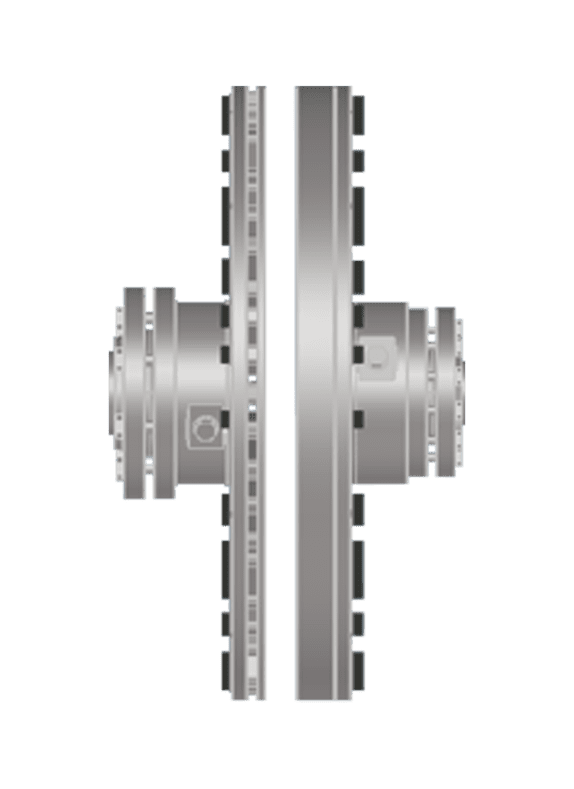
Many industrial failures that trigger RCA investigations originate in the drivetrain: misalignment, vibration, bearing overload, and coupling wear are among the most common contributing factors in rotating equipment breakdowns. Zytec's non-contact magnetic drives address these failure mechanisms at the source, reducing the frequency of failure events that require investigation in the first place.
Specifically, Zytec technology supports better RCA outcomes and fewer failure events by:
- Eliminating mechanical contact in the coupling, removing wear, misalignment-induced stress, and coupling-related failure modes from the drivetrain entirely
- Reducing vibration transmission by up to 80%, which extends bearing and seal life and reduces the range of symptoms that investigators must interpret during an RCA
- Providing inherent overload protection through magnetic slip, preventing fault conditions from propagating into the motor or driven equipment and limiting the scope of damage when a process upset occurs
- Requiring no coupling maintenance and no lubrication, eliminating maintenance interventions as a source of introduced failure modes and reducing human exposure to rotating equipment
- Delivering energy savings of up to 50% and a payback period often under two years, making the investment straightforward to justify within a total cost of ownership framework
For organizations that want to reduce both the frequency and complexity of rotating equipment RCA investigations, Zytec's non-contact drives represent a structural solution rather than a symptomatic fix. Contact Zytec to discuss how non-contact drive technology can be applied to your specific rotating equipment challenges.
Frequently Asked Questions
How do I know when a failure is complex enough to require a formal RCA rather than a quick fix?
A formal RCA is warranted when a failure has recurred more than once, carries significant safety or financial consequences, or involves multiple contributing factors that a simple corrective action would not address. A useful rule of thumb: if the same fix has been applied before and the failure returned, that is a strong signal that the root cause has not been identified. In asset-intensive environments, even moderate-severity failures often justify structured investigation because the cost of recurrence typically exceeds the cost of a thorough one-time analysis.
What are the most common mistakes teams make when conducting an RCA?
The most common mistake is stopping the investigation too early, typically at the first plausible cause rather than the systemic origin of the failure. Teams also frequently conflate the failure mode with the root cause, for example, identifying bearing failure as the root cause when bearing failure is itself a symptom of misalignment, lubrication breakdown, or overload. A third common error is conducting the investigation without involving the people closest to the failure, which leads to conclusions built on incomplete information and corrective actions that do not reflect operational reality.
How should corrective actions from an RCA be prioritized when resources are limited?
Corrective actions should be prioritized based on a combination of failure consequence severity, likelihood of recurrence, and implementation feasibility. Actions that address systemic or organizational causes typically deliver more durable results than those targeting only the immediate physical failure mode, and should be weighted accordingly. A simple risk matrix scoring each action on consequence and recurrence probability can help teams and managers make defensible prioritization decisions when budgets or labor capacity require trade-offs.
Can RCA methodologies like Five Whys or Fault Tree Analysis be applied to process failures as well as equipment failures?
Yes, all major RCA methodologies apply equally to process failures, quality deviations, safety incidents, and organizational failures, not only equipment breakdowns. The Five Whys and Fishbone diagram are particularly versatile because they are not domain-specific and can accommodate human, procedural, and environmental contributing factors alongside technical ones. Fault Tree Analysis is especially valuable for process safety events where multiple interacting failure paths must be mapped and quantified to assess overall risk.
How long should a root cause analysis investigation typically take?
Investigation duration depends on failure complexity, data availability, and the number of contributing factors involved. A straightforward equipment failure with clear physical evidence and a linear cause chain can often be investigated thoroughly in one to three days. Complex failures involving multiple systems, process interactions, or organizational factors may require one to four weeks, particularly when condition monitoring data must be retrieved and analyzed or when multiple witnesses need to be interviewed. The risk of rushing is reaching a premature conclusion; the risk of prolonging unnecessarily is that corrective actions are delayed and recurrence occurs in the interim.
What data and documentation should be gathered before starting an RCA investigation?
Before beginning a structured RCA, investigators should collect maintenance history for the affected asset, recent operating parameter logs, alarm and event records from the control system, any available condition monitoring data such as vibration trends or oil analysis reports, and accounts from operators and technicians who were present during or before the failure. Physical evidence from the failed component, including photographs and preserved parts where possible, is equally important and should be secured before any repair work begins. Starting an investigation without this foundation often means critical evidence has been lost or overwritten, forcing the team to rely on recollection rather than data.
How can organizations measure whether their RCA program is actually working?
The most direct measure of RCA program effectiveness is failure recurrence rate: if root causes are being correctly identified and corrective actions are being implemented, the same failure modes should appear less frequently over time. Supporting metrics include the percentage of corrective actions that are closed on schedule, the ratio of proactive to reactive maintenance work orders, and mean time between failures for assets that have been through formal RCA. Organizations should also track whether RCA findings are feeding back into maintenance strategies and risk assessments, since an investigation that produces a report but no lasting change in asset management practice has not delivered its full value.