
Where does FMEA fit in the Six Sigma DMAIC process?
FMEA fits primarily within the Analyze phase of the Six Sigma DMAIC process, where teams systematically identify root causes and potential failure modes before moving to solutions. However, FMEA is also used in the Improve phase to evaluate risks in proposed solutions, and revisited in the Control phase to validate that corrective actions have been sustained.
DMAIC stands for Define, Measure, Analyze, Improve, and Control. Each phase has a specific purpose, and FMEA serves a different function depending on where it is applied:
- Analyze phase: FMEA is used to map out all the ways a process can fail, assess the severity and likelihood of each failure, and identify which failure modes pose the greatest risk to quality or safety.
- Improve phase: After solutions are proposed, FMEA helps evaluate whether the proposed changes introduce new failure risks or adequately address the ones already identified.
- Control phase: The FMEA document becomes a living reference that supports control plans, monitoring strategies, and handover documentation to ensure gains are maintained.
In practice, Six Sigma teams often begin populating an FMEA during the Measure phase, when process data is being gathered and process maps are being built. This early start means the team enters the Analyze phase with a structured view of where failures are most likely to originate, making root cause analysis more targeted and efficient.
What are the key components of an FMEA in Six Sigma?
The key components of an FMEA in Six Sigma are the process function, failure mode, effect of failure, cause of failure, current controls, and the three risk ratings used to calculate the Risk Priority Number (RPN): Severity, Occurrence, and Detection. Together, these components create a structured risk register that guides corrective action.
Each row in an FMEA worksheet represents one failure mode within a specific process step or design element. Here is what each component captures:
- Process function: What the step or component is supposed to do under normal operating conditions.
- Failure mode: The specific way in which that function could fail to perform as intended.
- Effect of failure: The consequence of the failure mode on the customer, the downstream process, or the end product.
- Cause of failure: The root mechanism or condition that leads to the failure mode occurring.
- Current controls: Existing preventive or detection measures already in place before new corrective actions are applied.
- Severity (S): A rating from 1 to 10 reflecting how serious the effect of the failure would be.
- Occurrence (O): A rating from 1 to 10 reflecting how frequently the cause of failure is likely to occur.
- Detection (D): A rating from 1 to 10 reflecting how likely the current controls are to catch the failure before it reaches the customer. A low score means detection is highly reliable; a high score means the failure is likely to go undetected.
The power of FMEA in Six Sigma lies in the discipline of completing every column honestly. Teams that rush the cause-of-failure column or underestimate detection ratings tend to produce RPNs that do not reflect real process risk, which undermines the value of the entire analysis.
How is the Risk Priority Number calculated and used?
The Risk Priority Number (RPN) is calculated by multiplying the three risk ratings together: Severity x Occurrence x Detection. The result is a number between 1 and 1,000 that represents the relative risk level of each failure mode. Higher RPNs indicate failure modes that require the most urgent corrective action.
For example, if a failure mode has a Severity of 8, an Occurrence of 6, and a Detection of 7, the RPN would be 8 x 6 x 7 = 336. A failure mode with an RPN of 336 would be prioritized over one with an RPN of 120, all else being equal.
However, experienced Six Sigma practitioners know that RPN alone should not be the only decision criterion. A failure mode with a Severity of 10 and low Occurrence and Detection scores might produce a moderate RPN, yet the catastrophic nature of the potential effect demands immediate attention regardless of the overall score. Best practice is to:
- Prioritize all failure modes with a Severity rating of 9 or 10 automatically, regardless of RPN.
- Use RPN rankings to sequence corrective actions for mid-range risk items.
- Recalculate the RPN after corrective actions are implemented to confirm that risk has been reduced.
- Document the revised RPN as evidence of improvement in the project record.
The RPN is most useful as a relative comparison tool within a single FMEA, not as an absolute benchmark across different projects or processes. Comparing RPNs between two different FMEA documents can be misleading because the rating scales are applied subjectively by different teams in different contexts.
What is the difference between DFMEA and PFMEA?
The key difference between DFMEA and PFMEA is their scope and timing. DFMEA (Design FMEA) focuses on potential failures in a product or system design before it is manufactured, while PFMEA (Process FMEA) focuses on potential failures in the manufacturing or operational process used to produce or deliver that product.
DFMEA: Design Failure Mode and Effects Analysis
DFMEA is conducted during the design or development phase of a product. It asks: in what ways could this design fail to meet its intended function? The analysis examines design decisions, material choices, tolerances, and interactions between components. The goal is to catch design vulnerabilities before tooling is committed or production begins. DFMEA is common in product development environments and is frequently required in regulated industries such as automotive (where AIAG-VDA standards apply) and medical devices.
PFMEA: Process Failure Mode and Effects Analysis
PFMEA is conducted on the process used to manufacture, assemble, or deliver a product or service. It asks: in what ways could this process step fail to produce the intended output? PFMEA examines machine settings, operator actions, material handling, environmental conditions, and measurement systems. In a Six Sigma DMAIC context, PFMEA is the more commonly applied form because DMAIC projects typically address process performance rather than product redesign.
In FMEA in manufacturing environments, both types are often used together. A DFMEA output can feed directly into a PFMEA by identifying design characteristics that are particularly sensitive to process variation, helping process engineers know where to focus their controls and inspection resources.
How does FMEA connect to the Six Sigma control phase?
FMEA connects to the Six Sigma Control phase by serving as the foundation for the Control Plan, the document that specifies what will be monitored, how it will be measured, and what response actions will be taken if a process drifts out of control. Every high-RPN failure mode identified in the FMEA should be directly reflected in the Control Plan.
Once the Improve phase has implemented corrective actions and the revised RPN scores confirm that risk has been reduced, the FMEA transitions from a project analysis tool to an operational reference document. In the Control phase, it is used to:
- Confirm that detection controls are in place and functioning for the failure modes that remain on the FMEA.
- Define monitoring frequencies for process parameters linked to high-severity failure modes.
- Establish escalation procedures if a failure mode is detected during normal operation.
- Support training and handover documentation for operators and maintenance teams who will own the process going forward.
A well-maintained FMEA also supports ongoing continuous improvement. As processes change, new failure modes can be added and existing ones can be updated to reflect current controls and risk levels. This keeps the FMEA relevant beyond the initial Six Sigma project and integrates it into the organization's broader quality management system.
How Zytec helps reduce failure risk in rotating equipment
FMEA is a powerful framework for identifying and prioritizing failure risks, and in industrial environments where rotating equipment is central to operations, the failure modes associated with conventional mechanical couplings consistently appear near the top of the risk register. Misalignment, wear, vibration, and unplanned downtime are recurring failure causes that drive high Severity and Occurrence scores across industries from water and wastewater to oil and gas.
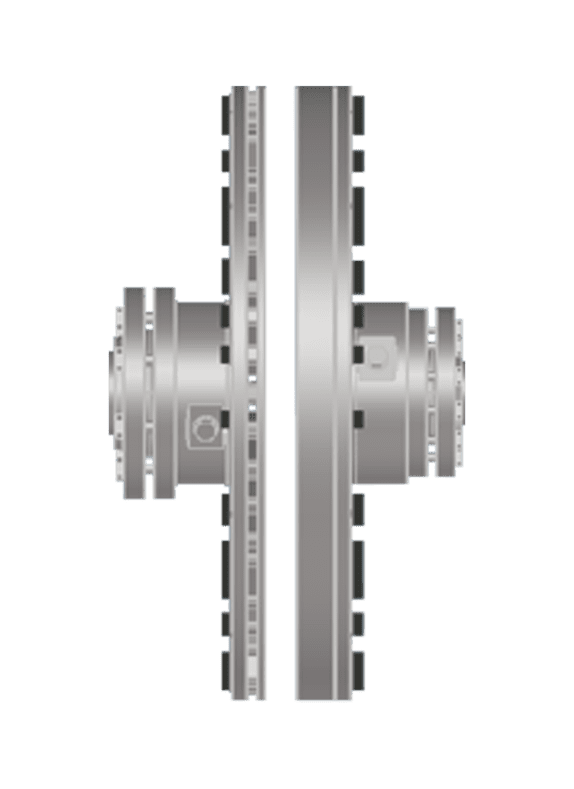
Zytec's non-contact magnetic drives address these failure modes at the source rather than through compensating controls. Key benefits that directly reduce RPN scores across the FMEA include:
- Elimination of mechanical contact: No wear components means no wear-related failure modes, removing entire categories of failure from the FMEA entirely.
- Vibration reduction up to 80%: Lower vibration reduces stress on bearings, seals, and connected equipment, lowering both Occurrence and Severity ratings for vibration-induced failures.
- No lubrication or alignment required: Removes maintenance-induced failure modes caused by incorrect re-assembly, misalignment after service, or lubrication contamination.
- Inherent overload protection: Torque peaks cannot propagate through the drivetrain, reducing the risk of cascading failures during fault conditions.
- Energy savings up to 50%: Lower energy consumption reduces thermal stress across the system, a common contributor to insulation and bearing failure modes.
If your organization is conducting a FMEA risk analysis on rotating equipment and finding that maintenance interventions and alignment-related failures are driving your highest RPNs, Zytec's non-contact drives offer a proven, engineered solution that eliminates those failure modes by design. Contact Zytec to discuss how non-contact drive technology can reduce your operational risk and lower your total cost of ownership.
Frequently Asked Questions
How do you get started with FMEA if your team has never done one before?
The best starting point is to select a single, well-defined process with a known history of quality issues or customer complaints, then assemble a small cross-functional team that includes people who actually work within that process. Use an existing process map or value stream map as your input so the team is working from a shared understanding of each step. Many organizations begin with a pre-built FMEA worksheet template (available from ASQ, AIAG, or quality management software platforms) to avoid getting bogged down in formatting and focus instead on the analysis itself.
What is a good RPN threshold for deciding which failure modes to act on first?
There is no universal RPN cutoff that applies across all industries or processes, which is one of the most common misconceptions about the tool. Rather than setting a fixed threshold like u0022act on anything above 100,u0022 best practice is to rank all failure modes by RPN within your specific FMEA, automatically escalate any item with a Severity score of 9 or 10 regardless of RPN, and then work down the ranked list based on available resources. The RPN is a relative prioritization tool within a single document, not an absolute pass/fail score.
How often should an FMEA be reviewed and updated after the initial Six Sigma project is complete?
An FMEA should be treated as a living document and reviewed whenever there is a significant change to the process, equipment, materials, or operating environment — not just on a fixed calendar schedule. In practice, many organizations set a minimum annual review as a baseline, with triggered reviews any time a new failure mode occurs in production, a process change is approved, or a customer complaint points to a gap in the current risk assessment. Keeping the FMEA current is what transforms it from a one-time project deliverable into a genuine operational risk management tool.
What are the most common mistakes teams make when completing an FMEA?
The three most damaging mistakes are underrating the Detection score because teams are overconfident in their current controls, conflating the failure mode with its effect (which distorts both the Severity rating and the root cause analysis), and completing the FMEA in a single meeting without input from operators or technicians who know where the process actually breaks down. A fourth common error is treating the FMEA as a compliance checkbox rather than an actionable risk register, which means corrective actions are documented but never implemented or verified. Involving frontline personnel and scheduling a dedicated follow-up session to review revised RPNs after actions are taken significantly improves the quality of the output.
Can FMEA be applied to service or transactional processes, or is it mainly for manufacturing?
FMEA is fully applicable to service and transactional processes, and its use in healthcare, financial services, logistics, and software development has grown substantially over the past two decades. In a transactional context, the u0022process functionu0022 column describes what a workflow step is supposed to accomplish (for example, u0022accurately capture customer order detailsu0022), and failure modes are defined as the ways that step could produce an incorrect or incomplete output. The same Severity, Occurrence, and Detection rating logic applies, though teams may need to adapt their rating scales to reflect service-specific consequences such as customer experience impact or regulatory compliance risk rather than physical product defects.
What is the relationship between FMEA and a Control Plan in Six Sigma?
The Control Plan is essentially the operational implementation of the FMEA's findings: it takes the high-priority failure modes identified in the FMEA and specifies exactly how each will be monitored, measured, and responded to during normal production or service delivery. Every critical process parameter or product characteristic linked to a high-Severity or high-RPN failure mode should have a corresponding entry in the Control Plan that defines the measurement method, sampling frequency, control limits, and reaction plan. Without this direct linkage, the FMEA risk analysis remains a project document rather than an embedded quality control mechanism.
How do you handle disagreements within the team when assigning Severity, Occurrence, or Detection ratings?
Rating disagreements are common and should be treated as a signal that the team needs more data or clearer definitions rather than a problem to resolve by averaging or deferring to the most senior person in the room. The most effective approach is to reference historical failure data, warranty records, or process capability studies to anchor the Occurrence rating in evidence, and to use industry-standard rating scales (such as those published by AIAG-VDA for automotive applications) to align the team on what each score level actually means. When genuine uncertainty remains, it is safer to assign the more conservative (higher-risk) rating and revisit it once additional data has been collected, rather than underestimating risk and leaving a significant failure mode under-prioritized.