What stages of a project require an FMEA?
FMEA is required at three core project stages: design development, process planning, and operational deployment. Each stage has a distinct purpose. Design FMEA identifies failure modes before hardware is built. Process FMEA identifies how manufacturing or assembly steps can introduce failures. Operational FMEA addresses failures that emerge once equipment is running in the field.
In practice, most industrial projects benefit from FMEA at the following points:
- Concept phase: When major design decisions are still open and changes carry the lowest cost
- Detailed design phase: When components, materials, and tolerances are being finalized
- Process planning phase: When installation, assembly, or commissioning procedures are being defined
- Pre-production or pre-commissioning: As a final check before the system goes live
- Post-incident review: After any unplanned failure or near-miss that revealed a gap in the original analysis
The key principle is that FMEA adds the most value when it informs decisions that are still being made. Conducting it after a design is frozen or a system is already installed limits the corrective actions available, though it still serves a useful documentation and risk-ranking function.
How early in the design process should FMEA begin?
FMEA should begin as early as the concept selection stage, before any detailed engineering work starts. The earlier the analysis begins, the wider the range of corrective options available. Changes made at the concept stage typically cost a fraction of what the same change would cost after detailed design, prototyping, or procurement has begun.
A useful benchmark from reliability engineering practice is that the cost of correcting a failure mode increases by roughly an order of magnitude at each successive project phase. A design change identified during FMEA at the concept stage is inexpensive. The same change identified during commissioning is significantly more costly, and the same failure discovered in service carries the full burden of downtime, repair, and potential safety consequences.
For rotating equipment applications specifically, early FMEA allows engineers to evaluate drivetrain risks before equipment is specified. This includes misalignment sensitivity, vibration transmission paths, coupling failure modes, and the consequences of overload events. Addressing these during design selection avoids the much harder problem of retrofitting solutions onto installed equipment.
In practical terms, FMEA should begin when the first functional block diagram or system architecture is available. It does not require completed drawings. Working from functional descriptions is sufficient at the concept stage, with the analysis becoming progressively more detailed as engineering definition increases.
When should FMEA be updated or repeated?
FMEA should be updated whenever a significant change occurs to the design, process, operating environment, or failure history of the system. It is a living document, not a one-time deliverable. Treating a completed FMEA as permanently valid is one of the most common reasons the methodology fails to prevent failures in service.
Specific triggers for updating or repeating an FMEA include:
- Design modifications: Any change to components, materials, tolerances, or interfaces that affects failure mode likelihood or effect severity
- Process changes: New installation procedures, revised maintenance intervals, or changes to operating parameters such as speed, load, or temperature
- Failure events: Any unplanned failure, near-miss, or warranty claim that was not anticipated in the original analysis
- New operating context: When equipment is redeployed to a different application, duty cycle, or environment
- Regulatory or standard changes: When new safety or compliance requirements apply to the system
- Scheduled review cycles: Many organizations set a maximum review interval, typically every three to five years for critical assets, regardless of whether changes have occurred
The review should be proportionate to the change. A minor component substitution may require only a targeted update to the affected failure modes. A significant redesign or change in operating environment may warrant a full re-analysis from the top level down.
What's the difference between DFMEA and PFMEA timing?
Design FMEA (DFMEA) and Process FMEA (PFMEA) address different failure sources and therefore occur at different project stages. DFMEA focuses on what the design itself can fail to do, and it begins during design development. PFMEA focuses on how the manufacturing, assembly, or installation process can introduce failures, and it begins during process planning, after the design is substantially defined.
The sequencing matters because PFMEA builds on DFMEA outputs. Once DFMEA has identified which design characteristics are critical to function and reliability, PFMEA examines whether the planned process can consistently achieve those characteristics. Running them in parallel or in the wrong order reduces the value of both.
DFMEA timing
DFMEA begins at concept selection and runs through detailed design. It should be substantially complete before design freeze, because its purpose is to drive design changes. A DFMEA completed after design freeze can still identify risks and inform control plans, but it cannot drive the structural changes that would eliminate failure modes at the source. For rotating equipment, DFMEA covers failure modes such as fatigue, corrosion, misalignment sensitivity, bearing overload, and seal degradation.
PFMEA timing
PFMEA begins once the design is defined well enough to plan the assembly or installation process. In industrial projects, this typically means after design freeze and before commissioning. PFMEA examines process steps such as alignment procedures, torque specifications, material handling, and testing sequences. It identifies where a process step, if performed incorrectly or omitted, could introduce a failure mode into an otherwise sound design. The outputs of PFMEA directly inform work instructions, inspection checkpoints, and commissioning procedures.
Who should be involved when FMEA is conducted?
FMEA requires a cross-functional team, not a single analyst working in isolation. The core team should include design engineers, process or manufacturing engineers, maintenance or reliability engineers, and a quality representative. For complex systems, operations personnel and safety engineers should also participate. The team composition directly determines the quality of the analysis.
Each function contributes a distinct perspective that the others cannot fully replicate:
- Design engineers understand how the system is intended to work and what the design assumptions are
- Process or installation engineers understand how the system will actually be built, installed, and commissioned
- Maintenance and reliability engineers understand historical failure patterns and the practical consequences of failure modes in service
- Operations personnel understand real-world operating conditions, including deviations from design intent that occur routinely in production
- Safety engineers evaluate failure effects that carry personnel or environmental risk
A facilitator with FMEA methodology experience is valuable for keeping the analysis structured and consistent, particularly for teams conducting FMEA for the first time. The facilitator's role is to guide the process, not to provide the technical content. That content must come from the people with direct knowledge of the system.
Team size should be kept manageable. Groups of four to seven people typically produce the most productive FMEA sessions. Larger groups slow the process and dilute individual accountability for action items.
Can FMEA be completed after equipment is already installed?
Yes, FMEA can be conducted after equipment is installed, and in many industrial environments it is. This is sometimes called a retrospective or operational FMEA. While it cannot prevent failures that have already occurred, it provides structured risk ranking of known failure modes, supports maintenance strategy development, and identifies the highest-priority interventions for reliability improvement.
Retrospective FMEA is particularly valuable in the following situations:
- When equipment was installed without a prior FMEA and reliability problems have emerged
- When a major failure has occurred and the organization needs a systematic review of remaining risk
- When a preventive maintenance program is being restructured around reliability-centered maintenance principles
- When aging assets are being evaluated for continued operation, modification, or replacement
The limitation of post-installation FMEA is that design-level corrective actions are largely unavailable. The analysis will identify failure modes, but the response options are typically limited to changes in maintenance frequency, operating procedures, monitoring strategies, and spare parts provisioning. Design changes require either accepting the cost of modification or waiting for the next major overhaul or replacement cycle.
Despite this limitation, operational FMEA still delivers meaningful value. It creates a documented risk register for the asset, provides a rational basis for maintenance task selection, and identifies which failure modes carry the highest consequence so that monitoring and inspection resources can be prioritized accordingly.
How Zytec Non-Contact Drives support FMEA-driven reliability strategies
One of the most consistent findings in FMEA for rotating equipment is that mechanical contact points, particularly couplings, generate a disproportionate share of high-severity, high-occurrence failure modes. Misalignment, wear, lubrication failure, and torsional shock are recurring entries on FMEA worksheets across pumps, fans, compressors, and conveyors in virtually every industrial sector.
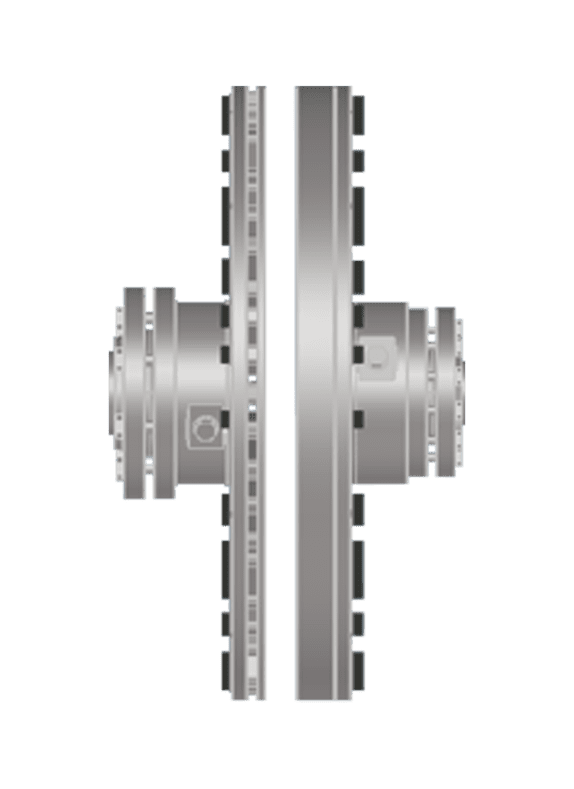
Zytec's non-contact magnetic drives address this directly by eliminating the mechanical contact that produces those failure modes:
- No wear components: The drive contains no elastomers, no lubricants, and no contact surfaces, removing the most common coupling failure modes from the FMEA entirely
- Inherent misalignment tolerance: Up to 12 mm radial dynamic misalignment capacity eliminates the misalignment-induced failure modes that account for a significant share of rotating machinery breakdowns
- Overload protection by design: The magnetic slip mechanism protects the drivetrain during overload events without mechanical damage, reducing the severity rating of overload failure modes
- No maintenance interventions required: Fewer scheduled interventions near rotating equipment mean fewer opportunities for human error during maintenance, a failure mode category that FMEA consistently rates as high-occurrence
- Rated component life exceeding 20 years: Extended service life reduces the frequency of replacement-related failure modes and supports long-term asset management planning under ISO 55000 principles
For reliability engineers working through an FMEA for a new installation or reviewing an existing asset's risk profile, replacing conventional couplings with a non-contact drive is one of the few interventions that reduces both occurrence and severity ratings simultaneously across multiple failure mode categories. Contact Zytec's engineering team to evaluate how non-contact drive technology applies to your specific rotating equipment and FMEA findings.
Frequently Asked Questions
How long does a typical FMEA session take to complete?
The time required depends heavily on system complexity and team preparation. A focused FMEA for a single rotating equipment assembly with a well-prepared team typically takes two to four working days. Larger systems or full process FMEAs may require several weeks of structured sessions. Preparation quality — including having up-to-date functional block diagrams, failure history data, and the right people in the room — has more impact on session efficiency than almost any other factor.
What is an RPN, and how should it be used to prioritize corrective actions?
RPN stands for Risk Priority Number, calculated by multiplying three ratings: Severity (S), Occurrence (O), and Detection (D), each scored on a 1–10 scale. It is used to rank failure modes so that team effort is directed toward the highest risks first. However, RPN should not be used in isolation — a failure mode with a high Severity rating but a moderate RPN may still demand immediate action regardless of its rank. Many reliability engineers now supplement RPN with a criticality matrix that weights Severity more heavily, particularly for failure modes with safety or environmental consequences.
What is the minimum documentation needed to start an FMEA on an existing installation?
For a retrospective or operational FMEA, the minimum useful inputs are a functional description of the system, a list of its major components, and any available maintenance or failure history records. Pu0026IDs, equipment datasheets, and OEM maintenance manuals add significant value but are not strictly required to begin. Starting with whatever documentation exists and supplementing it with direct knowledge from maintenance and operations personnel is a practical approach for assets that were installed without formal reliability documentation.
How do you handle failure modes where the probability is very low but the consequence is catastrophic?
Low-probability, high-severity failure modes require special treatment outside the standard RPN ranking system. Even a very low Occurrence score can be misleading when the Severity rating is at the maximum level — a catastrophic outcome that happens rarely is still unacceptable in most industrial contexts. Best practice is to apply a mandatory review threshold: any failure mode with a Severity rating of 9 or 10 should be addressed with a corrective action regardless of its RPN. The goal shifts from risk ranking to risk elimination or hard mitigation, such as redundancy, fail-safe design, or independent protective layers.
What is the most common mistake teams make when conducting FMEA for the first time?
The most common mistake is confusing failure modes with failure causes or failure effects, which leads to poorly structured worksheets and ineffective corrective actions. A failure mode is the specific way a component or function fails (e.g., bearing seizure), not why it happened (cause) or what it leads to (effect). A second frequent error is treating the FMEA as a paperwork exercise rather than a live decision-making tool — completing it after design decisions are already locked in. Both mistakes are best prevented by using an experienced facilitator for the first few sessions and establishing clear definitions before the team begins.
Can FMEA be integrated with other reliability methodologies like RCM or HAZOP?
Yes, and in well-structured reliability programs it typically is. Reliability-Centered Maintenance (RCM) uses FMEA outputs — specifically the ranked failure modes and their consequences — as the foundation for selecting maintenance tasks. HAZOP (Hazard and Operability Study) addresses process deviations and safety hazards at the system level, and its findings often identify failure modes that should be added to or cross-referenced with the FMEA. Using these methodologies together avoids duplication of effort and ensures that risk information flows consistently from design through operations and maintenance planning.
How should FMEA findings be communicated to stakeholders who are not involved in the analysis?
The most effective approach is a tiered summary: a full FMEA worksheet for the technical team and a concise risk register — listing only the top failure modes by severity and priority, along with assigned corrective actions and owners — for project managers and leadership. Visual formats such as a risk matrix plot (Severity vs. Occurrence) are particularly useful for communicating priorities to non-technical stakeholders without requiring them to interpret raw RPN scores. Ensuring that action items are tracked in a project management system, rather than left in the FMEA document itself, is critical for maintaining accountability.