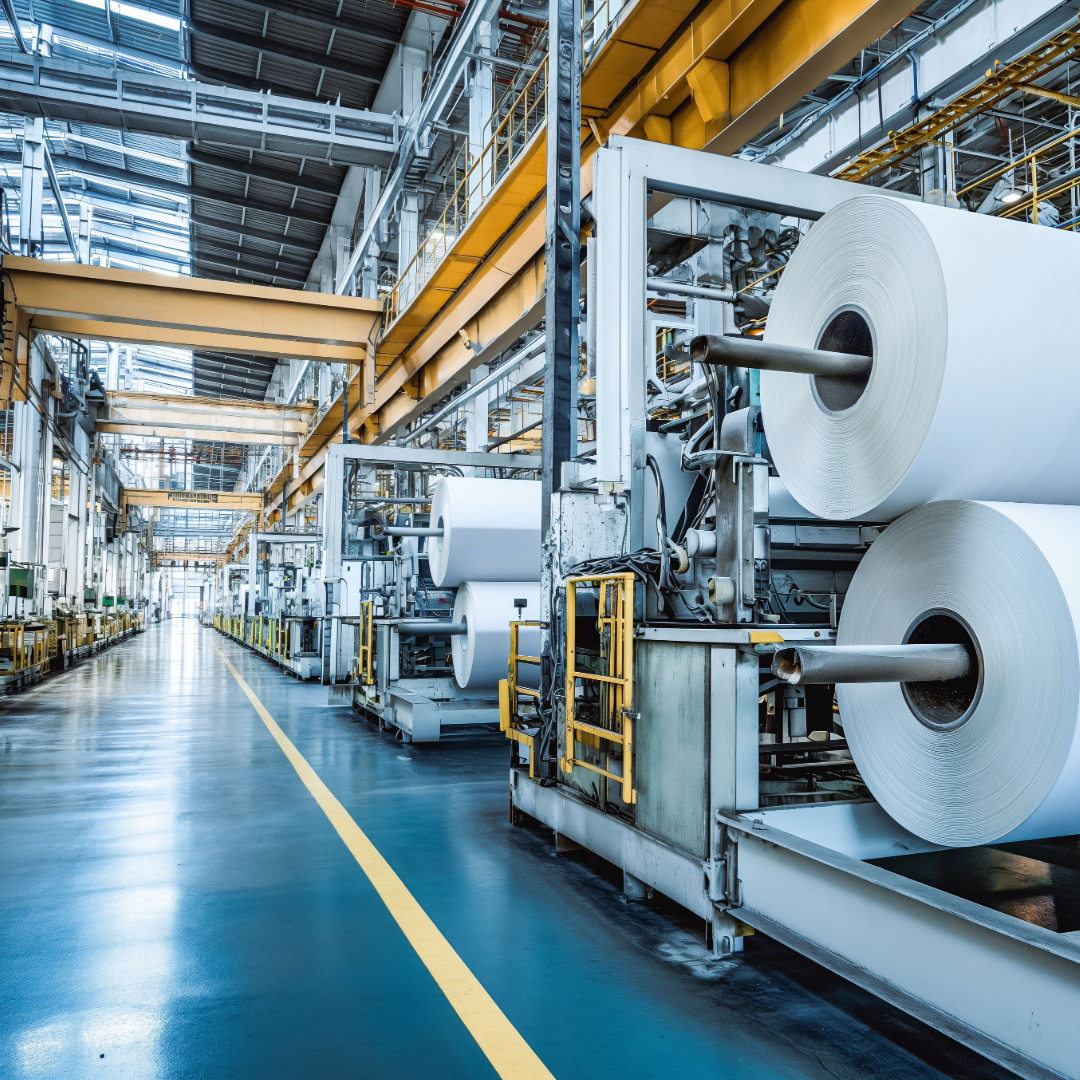
Paper industry
Improve Processes in the Paper Industry
The paper industry operates around the clock. In paper mills, centrifugal pumps play an essential role in various processes, such as water transport, pulp processing, circulation systems, and auxiliary installations. Because these pumps operate continuously, they have a significant impact on both process reliability and total energy consumption.
The working environment in the paper industry is demanding. Moisture, fibers, and contamination place additional stress on installations and increase the risk of wear and maintenance. Combined with continuous operation, this makes centrifugal pumps an important focus for process optimization.
For this reason, the paper industry offers significant opportunities to make processes more efficient, reliable, and energy-efficient.
Challenges in Processes with Centrifugal Pumps
In many paper mills, centrifugal pumps are essential for maintaining continuous production. At the same time, these applications bring several operational challenges.
Common problems include:
High energy demand
Centrifugal pumps often operate continuously and consume large amounts of electricity, especially in installations with high capacity requirements.
Wear caused by harsh conditions
The combination of moisture, fibers, and contamination places stress on bearings, seals, and drive components.
Continuous load on installations
Because production processes operate almost continuously, pumps are constantly under load.
These factors often lead to higher energy costs, increased maintenance, and a greater risk of unplanned downtime.

Where Can the Paper Industry Save?
By designing and optimizing drive systems more intelligently, paper mills can achieve significant savings.
Key saving opportunities:
Electricity savings
Centrifugal pumps often represent a major share of energy consumption within many processes.
Reduced maintenance and replacements
Less mechanical wear means less downtime and lower maintenance costs.
Improved reliability of installations
A more stable drive system reduces the risk of unexpected production stops.
Improving Industrial Processes with a Non-Contact Drive
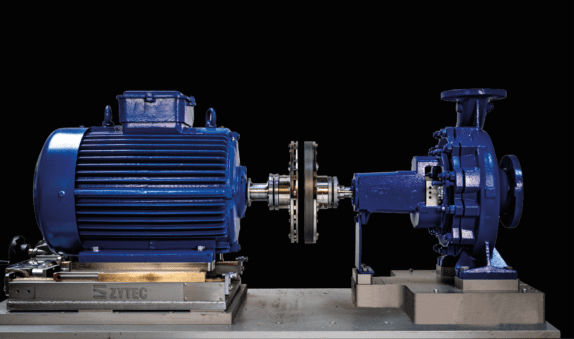
An innovative way to operate centrifugal pumps and other industrial installations more efficiently is by implementing a Non-Contact Drive.
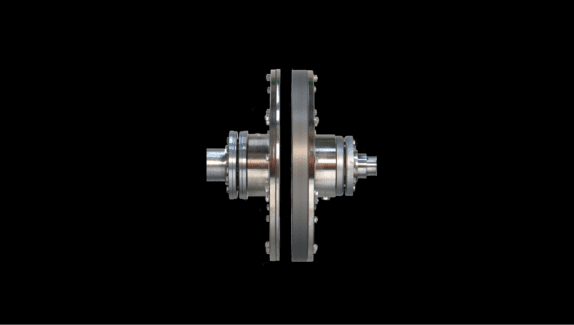
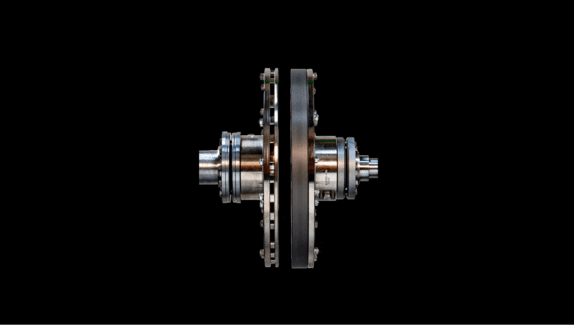
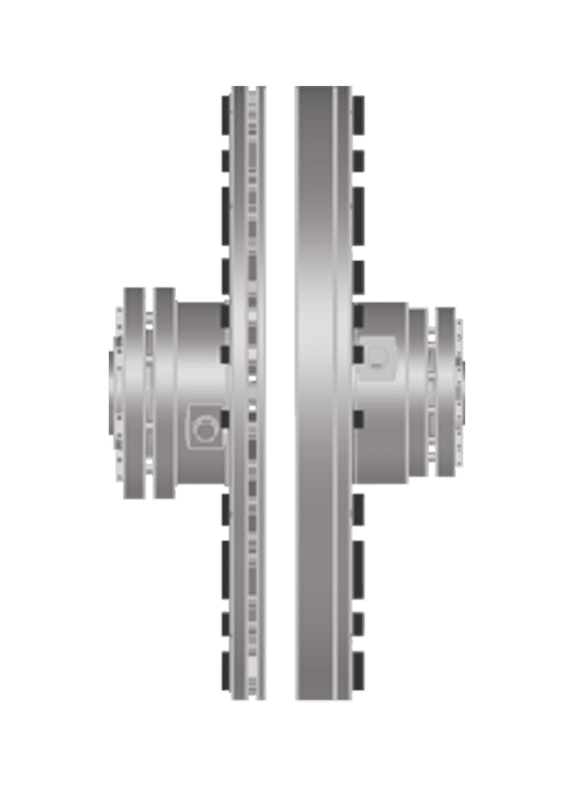
Unlike traditional drive systems, a Non-Contact Drive operates without fixed mechanical contact between the driving and driven components. Power is transferred magnetically, which reduces the direct transmission of vibrations, peak loads, and misalignment. This helps reduce wear within the system.
This makes the technology particularly suitable for demanding industrial environments such as the paper industry.
Benefits of a Non-Contact Drive:
- No fixed contact → reduced wear
- Lower maintenance costs
- Higher energy efficiency
- Reliable operation in humid and contaminated environments
- Longer lifetime of installations
- Reduced risk of unplanned downtime
By driving centrifugal pumps and other critical installations with a Non-Contact Drive, paper mills can improve process efficiency, sustainability, and operational reliability.
Discover the Non-Contact Drive
Would you like to know how your paper mill can reduce energy consumption while improving the reliability of your installations?
With the Non-Contact Drive, industrial processes can be optimized without the disadvantages of traditional mechanical drive systems.
Discover how this technology can contribute to:
- lower electricity costs
- reduced maintenance
- higher reliability of production processes
Discover the possibilities of the Non-Contact Drive and improve your industrial processes.