How does lean manufacturing classify downtime as waste?
Lean manufacturing classifies downtime as a form of muda, the Japanese term for waste, meaning any activity or condition that consumes time, resources, or energy without delivering value to the end customer. Specifically, downtime falls under the category of waiting waste, one of the eight wastes in lean thinking, where workers, machines, or materials sit idle instead of contributing to production flow.
The eight wastes in lean, often remembered by the acronym DOWNTIME, include Defects, Overproduction, Waiting, Non-utilized talent, Transportation, Inventory, Motion, and Excess processing. Equipment downtime directly causes waiting waste and frequently triggers secondary wastes. When a machine stops unexpectedly, workers may overproduce on other lines to compensate, inventory builds up ahead of the stopped process, and supervisors spend time on non-value-adding problem resolution instead of improvement work.
Lean philosophy treats downtime as a symptom of deeper systemic issues rather than an isolated event. A machine that breaks down repeatedly is not just a maintenance problem; it signals gaps in preventive care, equipment selection, or process design. This perspective is what drives lean teams to investigate root causes rather than simply restarting production and moving on.
What are the most common causes of downtime in lean environments?
The most common causes of downtime in lean manufacturing environments are equipment failures, poor maintenance practices, misalignment between machines and process demands, changeover delays, and human error during maintenance or setup. Each of these disrupts production flow and directly contradicts lean's core principle of continuous, uninterrupted value creation.
Breaking these causes down further:
- Unplanned equipment failure: Mechanical wear, component fatigue, and inadequate lubrication cause machines to stop without warning, making it the most disruptive category of downtime in lean environments.
- Poor or reactive maintenance: When maintenance only happens after a breakdown, repair times are longer, spare parts may not be available, and the same failure often recurs.
- Mechanical misalignment: In rotating equipment such as pumps, fans, and compressors, shaft misalignment accelerates bearing and seal wear, shortening component life and increasing failure frequency.
- Changeover and setup time: Slow product or tooling changeovers create planned but avoidable gaps in production, which lean addresses through Single-Minute Exchange of Die (SMED) techniques.
- Human error during maintenance: Incorrect bolt torque, improper reassembly, or missed alignment checks after a repair can introduce new failure modes immediately after a machine is returned to service.
- Operator skill gaps: Insufficient training means operators may not recognize early warning signs of equipment degradation before it escalates into a full stoppage.
Industry experience consistently shows that rotating machinery failures are a disproportionately large contributor to unplanned downtime in asset-intensive manufacturing. Misalignment alone is cited across engineering literature as responsible for a significant share of rotating machinery breakdowns, making drivetrain reliability a high-priority target for lean improvement programs.
What's the difference between planned and unplanned downtime?
Planned downtime is a scheduled production stop that the operation anticipates and prepares for, such as preventive maintenance, tooling changes, or line cleaning. Unplanned downtime is an unexpected stoppage caused by equipment failure, defects, or process breakdown. The key distinction is control: planned downtime can be minimized and optimized, while unplanned downtime is inherently disruptive and costly.
Planned downtime
Planned downtime includes activities like scheduled maintenance windows, product changeovers, operator shift changes, and calibration checks. While it still removes production capacity, lean teams work to compress these windows through standardized procedures, pre-staged materials, and cross-trained operators. The goal is not to eliminate planned stops entirely but to make them as short and predictable as possible so production schedules remain reliable.
Unplanned downtime
Unplanned downtime strikes without warning and carries a far higher cost than planned stops. Beyond the immediate loss of production, it triggers emergency maintenance labor, expedited spare parts procurement, quality risks from abrupt process interruptions, and knock-on delays across the supply chain. In lean terms, unplanned downtime is considered the more serious waste because it exposes fragility in the system and forces the entire operation into reactive mode, which is the opposite of the stable, predictable flow lean manufacturing aims to create.
Converting unplanned downtime into planned downtime, or eliminating it altogether, is one of the primary goals of Total Productive Maintenance (TPM), a lean methodology that puts equipment reliability at the center of operational excellence.
How is downtime measured in lean manufacturing?
Lean manufacturing measures downtime primarily through Overall Equipment Effectiveness (OEE), a composite metric that captures Availability, Performance, and Quality as a single percentage. Availability, the component most directly tied to downtime, is calculated by dividing actual operating time by planned production time. A machine that is available 80% of the time has 20% of its planned hours lost to downtime.
OEE provides a standardized language for comparing downtime impact across different machines, lines, and facilities. A world-class OEE benchmark is generally considered to be around 85%, though the more important goal for lean teams is consistent improvement from whatever the current baseline is.
Beyond OEE, lean teams use several complementary measures:
- Mean Time Between Failures (MTBF): The average operating time between unplanned stoppages for a given piece of equipment. A rising MTBF indicates improving reliability.
- Mean Time To Repair (MTTR): The average time required to restore a machine to operation after a failure. Reducing MTTR limits the production impact of each individual breakdown.
- Downtime frequency and duration logs: Simple records of when stoppages occur, how long they last, and what caused them. These logs feed Pareto analysis to identify which machines or failure modes deserve priority attention.
- Planned vs. unplanned downtime ratio: Tracking what proportion of total downtime is scheduled versus reactive gives a clear signal of how well the maintenance strategy is working.
Accurate downtime measurement is the foundation of lean improvement. Without reliable data, teams cannot prioritize correctly, cannot verify whether changes are working, and cannot build the business case for investment in better equipment or maintenance practices.
How do lean teams reduce downtime on the shop floor?
Lean teams reduce downtime by combining Total Productive Maintenance (TPM), autonomous maintenance by operators, root cause analysis, and standardized work procedures. The underlying approach is to shift from reactive firefighting to proactive prevention, ensuring that equipment problems are identified and resolved before they cause a production stop.
The most effective lean strategies for downtime reduction include:
- Total Productive Maintenance (TPM): A structured program that engages operators in daily equipment care, including cleaning, inspection, and minor adjustments. When operators are responsible for their machines, early warning signs of wear or misalignment are caught much sooner.
- Preventive maintenance scheduling: Replacing components based on time or usage intervals rather than waiting for failure. This converts potential unplanned stops into controlled, shorter planned ones.
- Root cause analysis (RCA): After every significant breakdown, lean teams use tools like the 5 Whys or fishbone diagrams to identify the underlying cause rather than just fixing the immediate symptom.
- SMED for changeover reduction: Single-Minute Exchange of Die techniques systematically separate internal (machine-stopped) tasks from external (pre-prepared) tasks, dramatically compressing changeover time.
- Visual management: Clear displays of machine status, maintenance schedules, and performance metrics keep everyone on the floor aware of equipment health and trigger faster responses when conditions deviate.
- Standardized maintenance procedures: Written, step-by-step instructions for every maintenance task reduce the risk of human error during repairs and reassembly, one of the most common sources of post-maintenance failures.
What role does equipment technology play in eliminating downtime?
Equipment technology plays a critical role in downtime elimination because many breakdown causes are built into the mechanical design of conventional components. Couplings, seals, and bearings that wear over time, require periodic alignment, or degrade under vibration will eventually fail regardless of how well they are maintained. Upgrading to technology that structurally removes these failure mechanisms is one of the highest-leverage actions a lean team can take.
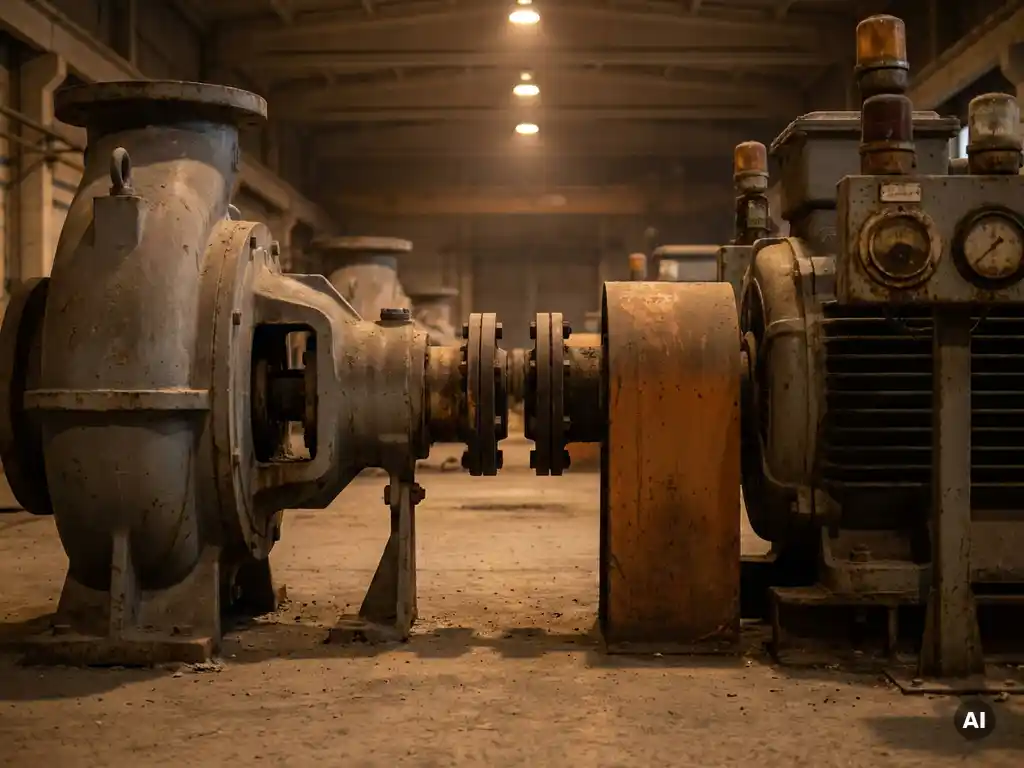
In rotating equipment applications, conventional mechanical couplings are a well-documented source of recurring downtime. They require precise laser alignment during installation and after thermal growth occurs during operation, periodic element replacement, lubrication, and careful reassembly after every maintenance intervention. Each of these steps is an opportunity for human error, and misalignment in particular is widely recognized across engineering practice as a leading driver of bearing and seal failures in pumps, fans, compressors, and similar equipment.
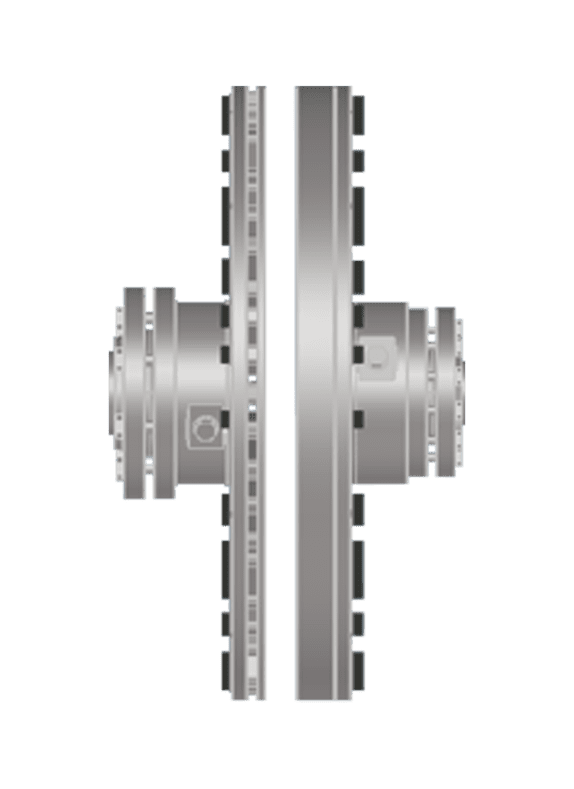
Modern non-contact drive technology eliminates these mechanisms at the design level. Because torque is transmitted across an air gap using magnetic fields rather than physical contact, there are no wear components, no lubrication requirements, and no coupling-induced forces acting on bearings and seals during operation. Dynamic misalignment caused by thermal expansion or pipe strain, which frequently exceeds installation tolerances in real operating conditions, is absorbed without transferring stress into the drivetrain. The result is a structurally longer interval between failures and a significant reduction in the number of maintenance interventions required over the asset's lifetime.
From a lean perspective, this matters because fewer maintenance interventions mean fewer opportunities for human error, lower exposure of personnel to rotating equipment hazards, and a more predictable production schedule. Technology that extends the P-F curve (the time between detectable degradation and functional failure) gives maintenance teams more lead time to plan interventions, which converts potential unplanned downtime into controlled, scheduled activity.
How Zytec helps eliminate downtime in lean manufacturing
Zytec's non-contact magnetic drives directly address the equipment-level root causes of downtime that lean manufacturing works to eliminate. Where conventional couplings introduce wear, misalignment sensitivity, and recurring maintenance requirements into rotating equipment drivetrains, Zytec's technology removes these mechanisms entirely. Key benefits relevant to lean downtime reduction include:
- No wear components: Zytec's non-contact drives contain no elastomers, no lubrication systems, and no friction elements, delivering a maintenance-free operational span of over 20 years for the coupling itself.
- No laser alignment required: Installation tolerates up to 12 mm of radial misalignment and accommodates dynamic misalignment during operation without transferring load into bearings or seals, eliminating one of the most common sources of post-maintenance failures.
- Vibration reduction up to 80%: Lower vibration extends the service life of bearings, seals, and connected equipment, reducing the frequency of unplanned stoppages across the entire drivetrain.
- Energy savings up to 50%: The A-TORQ variant eliminates overcapacity in pump and fan applications, reducing both energy consumption and the mechanical stress that accelerates component wear.
- Soft-start capability: Controlled torque transmission during startup reduces mechanical shock loads that are a common trigger for early bearing failure.
- Drop-in retrofit compatibility: Zytec drives are designed to replace conventional couplings without requiring new motors, new cabling, or laser alignment, making the upgrade straightforward within an existing lean improvement program.
For industrial operations where rotating equipment downtime is a persistent lean challenge, Zytec's non-contact drives offer a step-change reduction in both failure frequency and maintenance workload. Contact Zytec to discuss how non-contact drive technology can be applied to your specific equipment and process environment.
Frequently Asked Questions
How do I know which machines on my shop floor should be prioritized for downtime reduction first?
Start by running a Pareto analysis on your downtime frequency and duration logs to identify which machines account for the greatest share of lost production time. Cross-reference that data with OEE scores and unplanned-to-planned downtime ratios to surface assets that are both frequently failing and taking the longest to recover. Rotating equipment such as pumps, fans, and compressors that sit on critical production paths — where a single failure halts an entire line — should rank highest on your priority list regardless of how often they fail, because the consequence of each stoppage is disproportionately large.
What's the best way to get operators on board with autonomous maintenance under a TPM program?
The most effective approach is to involve operators in designing their own inspection checklists and cleaning standards from the start, rather than handing them a procedure written by engineers. When operators understand why each check matters — for example, how catching early vibration on a motor prevents a full breakdown on their shift — compliance and engagement increase significantly. Pairing this with visible before-and-after results, such as a machine that used to fail monthly now running for six months without interruption, builds the internal credibility that sustains the program over time.
Can SMED techniques really make a meaningful difference if our changeovers involve complex tooling and setups?
Yes — SMED consistently delivers significant results even in complex changeover environments, precisely because most of the time savings come from organizational changes rather than technical ones. The first step is simply filming a changeover and categorizing every task as either internal (requires the machine to be stopped) or external (can be done while the machine is still running); in most operations, 30–50% of internal tasks turn out to be convertible to external with basic preparation like pre-staging tools, pre-heating dies, or pre-assembling fixtures. Complex setups often have the most to gain because there are more tasks to reclassify, and even moving a single long internal task to external can compress the total changeover window substantially.
What's a realistic OEE improvement target for a lean team just starting out with downtime reduction?
Rather than targeting the commonly cited 85% world-class benchmark immediately, a more practical starting goal is a 10–15 percentage point improvement from your current baseline within the first 12 months. For most operations beginning a structured lean and TPM program, the early gains come quickly from basic fixes: clearing chronic small stoppages, implementing preventive maintenance schedules for the highest-failure assets, and reducing changeover time through SMED. Chasing the 85% number too early can distract teams from the more important discipline of measuring accurately, acting on the data, and sustaining gains before moving to the next improvement cycle.
How do we build a business case for investing in new equipment technology when management only sees the upfront cost?
Frame the investment around the fully loaded cost of current downtime rather than just the purchase price of the new technology. Calculate the cost per hour of unplanned downtime by combining lost production output, emergency maintenance labor, expedited parts procurement, and any quality losses from abrupt process interruptions — in most industrial environments this figure is significantly higher than managers initially estimate. Then model the payback period using conservative assumptions about failure frequency reduction and maintenance labor savings; for rotating equipment upgrades like non-contact drives, the combination of eliminated alignment labor, extended bearing and seal life, and reduced unplanned stoppages typically produces a payback well within a standard capital approval threshold.
What's the most common mistake lean teams make when trying to reduce downtime?
The most common mistake is treating every breakdown as a one-off event and jumping straight to the fix without investigating root cause. This keeps teams in a reactive loop where the same failure modes recur on a slightly longer cycle, consuming maintenance resources without improving the underlying reliability of the asset. Disciplined use of root cause analysis tools — even a simple 5 Whys exercise completed within 24 hours of a stoppage — breaks this pattern by ensuring that corrective actions address the mechanism of failure rather than just its visible symptom.
At what point does it make more sense to replace a piece of equipment entirely rather than continuing to maintain it?
A useful decision framework is to compare the total cost of ownership going forward — including projected maintenance labor, parts, energy consumption, and estimated downtime losses — against the annualized cost of a replacement asset. When cumulative maintenance costs over the next three to five years approach or exceed the cost of a modern replacement, and when the failure mode is structural rather than correctable through better maintenance practices, replacement is typically the stronger lean investment. Condition monitoring data such as rising vibration trends, increasing MTTR, and a declining MTBF trajectory are the clearest operational signals that an asset has moved past the point where incremental maintenance delivers a reliable return.