Downtime in manufacturing is any period when production stops or slows below its intended rate. It falls into two broad categories: planned downtime, which is scheduled in advance for maintenance, changeovers, or inspections, and unplanned downtime, which occurs without warning due to equipment failure, process faults, or human error. For most industrial operations, unplanned downtime is the more costly and disruptive of the two. The sections below unpack the causes, costs, measurement methods, and practical strategies for reducing production downtime across manufacturing environments.
What are the different types of manufacturing downtime?
Manufacturing downtime divides into two primary types: planned downtime and unplanned downtime. Planned downtime is intentionally scheduled and includes activities such as preventive maintenance, equipment changeovers, cleaning, and regulatory inspections. Unplanned downtime is unexpected and results from equipment failures, process upsets, or supply disruptions. A third category, minor stoppages, covers brief interruptions that individually seem insignificant but collectively erode overall equipment effectiveness (OEE).
Understanding the distinction matters because each type demands a different response. Planned downtime can be optimized by compressing its duration and scheduling it during low-demand windows. Unplanned downtime, by contrast, cannot be scheduled away. It must be prevented through better equipment design, smarter maintenance strategies, and real-time monitoring.
Within these two broad categories, manufacturers commonly distinguish between the following types:
- Equipment failure downtime: Caused by mechanical breakdown, electrical faults, or component wear on rotating or static equipment.
- Changeover downtime: Time lost switching a production line between products, formats, or configurations.
- Scheduled maintenance downtime: Planned stoppages for inspections, lubrication, part replacement, or calibration.
- Supply-related downtime: Halts caused by missing materials, components, or tooling.
- Quality-related downtime: Stops triggered by out-of-specification output requiring investigation or rework.
- Operator-related downtime: Delays linked to shift changes, skill gaps, or procedural errors.
Each type has its own root cause profile and therefore its own most effective countermeasure. Equipment failure downtime, for example, responds well to predictive maintenance and drivetrain improvements, while changeover downtime is better addressed through lean manufacturing techniques such as SMED (Single-Minute Exchange of Die).
What causes unplanned downtime in manufacturing?
Unplanned downtime in manufacturing is most commonly caused by mechanical equipment failure, particularly on rotating equipment such as pumps, fans, compressors, and conveyors. Bearing failures, seal degradation, coupling wear, and misalignment are among the leading mechanical causes. Electrical faults, control system errors, process upsets, and human error during maintenance also contribute significantly to unexpected production stoppages.
Rotating equipment is central to most manufacturing processes, and it is disproportionately responsible for unplanned downtime. Industry experience consistently points to misalignment as a major driver of rotating machinery failures. When a motor shaft and a driven machine shaft are not precisely aligned, the resulting forces accelerate bearing and seal wear, generate vibration, and shorten the service life of every component in the drivetrain. Because misalignment often develops gradually through thermal expansion, foundation movement, or pipe strain, it is easy to overlook until a failure occurs.
Beyond mechanical causes, several other factors regularly trigger unplanned production downtime:
- Inadequate maintenance practices: Reactive maintenance strategies mean faults are addressed only after failure, not before.
- Human error during maintenance interventions: Incorrect reassembly, missed torque specifications, or imperfect realignment after servicing introduce new failure modes.
- Aging equipment: Components operating beyond their design life accumulate failure risk at an accelerating rate.
- Vibration and shock loads: Excessive vibration propagates through drivetrains, damaging bearings, seals, and structural connections.
- Electrical and control faults: Variable frequency drive (VFD) failures, sensor malfunctions, and PLC errors can halt production instantly.
- Supply chain disruptions: Unavailability of critical spare parts extends the duration of any mechanical downtime event.
The cumulative effect of these causes is significant. Maintenance-induced failures deserve particular attention: every time a technician intervenes on rotating equipment, there is a probability of error. Incorrect bolt torque, imperfect alignment, or a missing fastener can introduce a failure that would not have occurred had the intervention not taken place. This is one reason why reducing the frequency of required maintenance interventions is itself a reliability strategy.
How much does manufacturing downtime cost?
The cost of manufacturing downtime varies widely by industry, plant size, and the criticality of the stopped equipment, but the financial impact is almost always larger than it first appears. Direct costs include lost production output and wasted materials. Indirect costs, which are often far greater, include emergency labour, expedited spare parts, contractor fees, penalty clauses for missed deliveries, and the ripple effects on downstream processes and customer relationships.
When calculating the true cost of a downtime event on rotating equipment, the purchase price of a failed component is typically the smallest element. The dominant cost drivers are the secondary consequences: lockout/tagout and permit-to-work administration, disassembly and reassembly time, precision laser alignment, spare parts logistics, contractor coordination, and the risk premium associated with non-routine maintenance work. Lost production during the repair window compounds these costs further.
For asset-intensive industries such as oil and gas, chemical processing, water and wastewater, and pulp and paper, a single unplanned stoppage on a critical pump or compressor can represent tens of thousands of euros in lost output within hours. Over the course of a year, recurring downtime events on rotating equipment can account for a substantial share of total maintenance expenditure and erode plant availability to a degree that directly affects commercial performance.
This is why total cost of ownership (TCO) is the correct lens for evaluating downtime risk. A component or system that appears inexpensive at the point of purchase may carry far higher lifecycle costs once the full burden of maintenance interventions, alignment requirements, wear part replacement, and associated downtime is accounted for.
How is downtime measured and tracked in manufacturing?
Downtime in manufacturing is measured by recording the start and end time of each production stoppage and categorizing the cause. The primary metric is total downtime hours per period, which feeds into broader performance indicators such as Overall Equipment Effectiveness (OEE), Mean Time Between Failures (MTBF), and Mean Time To Repair (MTTR). Together, these metrics give operations teams a clear picture of equipment reliability and maintenance efficiency.
Key downtime metrics explained
OEE is the most widely used manufacturing performance metric. It combines three factors: availability (the proportion of scheduled time the equipment is actually running), performance (whether it runs at its intended speed), and quality (whether it produces conforming output). A downtime event reduces the availability component of OEE directly. World-class OEE is generally considered to be 85% or above, though many plants operate well below this level.
MTBF measures the average time between equipment failures. A rising MTBF indicates improving reliability. MTTR measures how quickly the maintenance team restores equipment to operation after a failure. Reducing MTTR requires both skilled technicians and readily available spare parts. Reducing MTBF requires addressing root causes rather than symptoms.
Tracking methods and tools
Manual downtime tracking using paper logs or spreadsheets is still common in smaller operations, but it is prone to underreporting and categorization errors. More sophisticated plants use Manufacturing Execution Systems (MES) or Computerized Maintenance Management Systems (CMMS) to capture downtime data automatically and link it to equipment records, work orders, and spare parts inventories.
Real-time monitoring using vibration sensors, temperature probes, and current measurement on rotating equipment extends tracking beyond simple stoppage recording. These systems detect the early signs of developing faults, giving maintenance teams the opportunity to intervene before a failure causes unplanned downtime. This is the foundation of condition-based and predictive maintenance strategies.
What is the difference between preventive and predictive maintenance for reducing downtime?
Preventive maintenance is time-based: tasks are performed at fixed intervals regardless of equipment condition. Predictive maintenance is condition-based: tasks are triggered by actual data indicating that a component is approaching failure. Both strategies aim to reduce unplanned downtime, but predictive maintenance is generally more efficient because it avoids unnecessary interventions on equipment that is still performing well.
Preventive maintenance follows a schedule. Bearings are replaced every six months, couplings are inspected quarterly, and lubrication is applied at fixed intervals. This approach reduces the likelihood of unexpected failure but introduces its own risks: maintenance-induced failures caused by the intervention itself, and the cost of replacing components that still have usable life remaining.
Predictive maintenance uses real-time or periodic condition data to determine when maintenance is actually needed. Vibration analysis, thermal imaging, oil analysis, and ultrasonic inspection are common techniques. When a bearing's vibration signature begins to shift, or a coupling's temperature rises above baseline, the maintenance team is alerted before the fault progresses to failure. This approach maximizes component utilization, reduces unnecessary interventions, and extends the window between planned stoppages.
The PF curve is a useful framework for understanding the difference. It maps the timeline from the point at which a defect becomes detectable (P) to the point of functional failure (F). Predictive maintenance aims to detect faults early on the PF curve, when there is still time to plan a controlled intervention. Preventive maintenance, by contrast, does not respond to the actual condition of the equipment and may miss faults developing between scheduled intervals or trigger unnecessary work on healthy components.
For most manufacturing operations, the most effective approach combines both strategies: preventive maintenance for low-cost, easy-to-replace items, and predictive maintenance for critical, high-consequence assets where unplanned failure would be most disruptive.
How can manufacturers reduce unplanned downtime on rotating equipment?
Manufacturers can reduce unplanned downtime on rotating equipment by addressing the root causes of failure rather than managing their consequences. The most impactful actions are eliminating misalignment as a failure driver, reducing the frequency and risk of maintenance interventions, implementing condition monitoring on critical assets, and selecting drivetrain components with longer service lives and lower maintenance requirements.
Rotating equipment, including pumps, fans, compressors, and conveyors, accounts for a disproportionate share of unplanned production stoppages in most industrial plants. Because these machines operate continuously under load, even small mechanical issues compound over time. The following strategies address the most common failure drivers:
- Eliminate misalignment at the source: Misalignment between motor and driven equipment generates bearing and seal overload, vibration, and premature wear. Choosing drivetrain components that tolerate or eliminate misalignment reduces the frequency and severity of related failures.
- Reduce maintenance touchpoints: Every maintenance intervention is a potential source of human error. Drivetrains that require fewer scheduled inspections, no lubrication, and no periodic element replacement structurally reduce the risk of maintenance-induced failures.
- Implement vibration and condition monitoring: Early detection of developing faults on bearings, seals, and couplings allows planned interventions before failure occurs, converting potential unplanned downtime into controlled, scheduled maintenance.
- Adopt a total cost of ownership perspective: Component selection decisions made purely on purchase price often result in higher lifecycle costs. Evaluating reliability, maintenance frequency, and downtime risk as part of the selection process leads to better long-term outcomes.
- Optimize variable speed control: Running pumps and fans at the speed actually required by the process, rather than at full speed with throttling, reduces mechanical stress and energy consumption simultaneously.
- Train maintenance teams in reliability-centred practices: Skilled technicians who understand failure modes and root cause analysis are more effective at preventing downtime than those focused solely on reactive repair.
The cumulative effect of these measures is a longer mean time between failures, shorter repair windows when stoppages do occur, and a more stable, predictable production environment.
How Zytec helps reduce downtime in manufacturing
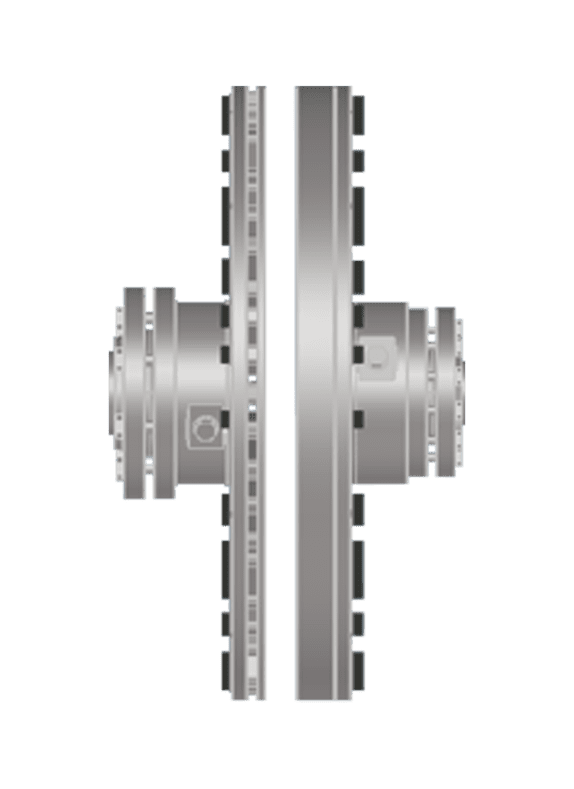
Zytec develops non-contact magnetic drives specifically engineered to address the root causes of unplanned downtime on rotating equipment. By transmitting torque across an air gap using powerful magnets rather than physical contact, Zytec's drives eliminate the wear mechanisms that make conventional couplings a persistent maintenance burden and reliability risk.
The practical impact on manufacturing downtime is direct and measurable:
- No wear components: Zytec's non-contact drives contain no elastomers, no lubrication systems, no gear teeth, and no friction elements. Torque transmission characteristics do not degrade with age or operating hours, delivering a maintenance-free operational span of over 20 years.
- Misalignment tolerance by design: The drives accommodate up to 12 mm of radial dynamic misalignment without transmitting forces into bearings or seals. This eliminates the bearing and seal overload that misalignment-induced failures cause in conventional drivetrains.
- Fewer maintenance interventions: With no scheduled coupling inspections, no lubrication, and no periodic element replacement required, the number of human touchpoints on rotating equipment is dramatically reduced, lowering the risk of maintenance-induced failures.
- Energy savings up to 50%: The A-TORQ and V-TORQ drives eliminate overcapacity in pump and fan applications, reducing electrical consumption and mechanical stress simultaneously.
- Vibration reduction up to 80%: Lower vibration levels extend the service life of bearings, seals, gearboxes, and structural connections across the entire drivetrain.
- Fast payback: With a total cost of ownership that accounts for reduced maintenance spend and downtime losses, the payback period is often under two years.
Whether you operate pumps, fans, compressors, conveyors, or generators, Zytec's non-contact drives are engineered to make your rotating equipment more reliable and your production more predictable. Contact Zytec to find out how non-contact drive technology can reduce unplanned downtime in your facility.
Frequently Asked Questions
How do I know if misalignment is already causing damage to my rotating equipment?
The most common warning signs of misalignment-induced damage include elevated vibration levels, abnormal noise (particularly a rumbling or knocking sound from bearings), premature bearing and seal failures, and unusual heat generation around couplings or bearing housings. If your plant is experiencing recurring failures on the same machines, or if bearings are being replaced more frequently than their rated service life would suggest, misalignment is a likely contributing factor. A baseline vibration survey using a portable analyser or permanently mounted sensors will confirm whether misalignment forces are present and how severe they are.
What is a realistic OEE target for a manufacturing plant just starting to address downtime?
For plants that are early in their reliability improvement journey, a practical near-term target is 65–75% OEE, with a roadmap toward the widely cited world-class benchmark of 85%. However, the most important step is not hitting a specific number immediately but establishing accurate, consistent downtime tracking so you can identify your biggest loss categories and prioritise accordingly. Many plants discover that a small number of chronic equipment failures account for the majority of their lost availability, meaning early gains can be significant once those root causes are addressed.
How do I build a business case for investing in predictive maintenance technology?
The strongest business case for predictive maintenance is built on actual downtime cost data from your own facility. Start by calculating the fully loaded cost of your last three to five unplanned stoppages on critical rotating equipment, including lost production, emergency labour, expedited parts, and contractor fees. Compare this figure against the annual cost of the monitoring solution you are evaluating. In most asset-intensive operations, a single avoided failure on a critical pump or compressor is enough to justify the investment. Presenting the case in total cost of ownership terms, rather than as a capital expenditure, also tends to be more persuasive to finance stakeholders.
What is the best way to prioritise which equipment to focus on first when trying to reduce downtime?
The most effective starting point is a criticality assessment that ranks your equipment by the consequence of failure, not just the frequency. Equipment that, when it fails, stops an entire production line, poses a safety risk, or has no standby redundancy should be your highest priority for reliability improvements and condition monitoring. Cross-reference this criticality ranking with your historical downtime records to identify machines that are both high-consequence and high-frequency failure points. Addressing those assets first delivers the greatest reduction in total downtime risk for the least investment.
Can non-contact magnetic drives be retrofitted to existing equipment, or do they require a full drivetrain redesign?
Non-contact magnetic drives such as those developed by Zytec are designed to be retrofitted to existing rotating equipment installations without requiring a full drivetrain redesign. They are engineered to fit within standard motor-to-pump or motor-to-fan configurations and replace conventional couplings in the drivetrain. In many cases, the retrofit also removes the need for precision laser alignment to the same tolerance as a rigid coupling installation, which simplifies the installation process and reduces the time the equipment is offline during the changeover.
How does reducing vibration levels extend the life of equipment beyond just the coupling itself?
Vibration in a drivetrain does not stay localised to the coupling. It propagates through the entire mechanical system, accelerating wear on bearings, degrading shaft seals, fatiguing structural bolting and baseplate connections, and in some cases affecting gearboxes, impellers, and downstream process equipment. Reducing vibration at the source therefore delivers a compounding reliability benefit across the whole drivetrain. A reduction in vibration of 80%, for example, can meaningfully extend bearing service life, reduce seal replacement frequency, and lower the risk of fatigue-related structural failures, all of which contribute directly to fewer unplanned stoppages.
What common mistakes should manufacturers avoid when trying to reduce production downtime?
The most common mistake is focusing exclusively on reducing Mean Time To Repair (MTTR) — getting faster at fixing failures — without investing equally in preventing those failures from occurring in the first place. A second frequent error is treating downtime tracking as an administrative task rather than a strategic tool, which leads to poorly categorised data that cannot drive meaningful root cause analysis. Finally, many plants underestimate the cost of maintenance-induced failures: every unscheduled intervention on rotating equipment carries a risk of introducing new faults, so reducing the number of required touchpoints is as important as improving the quality of each individual intervention.